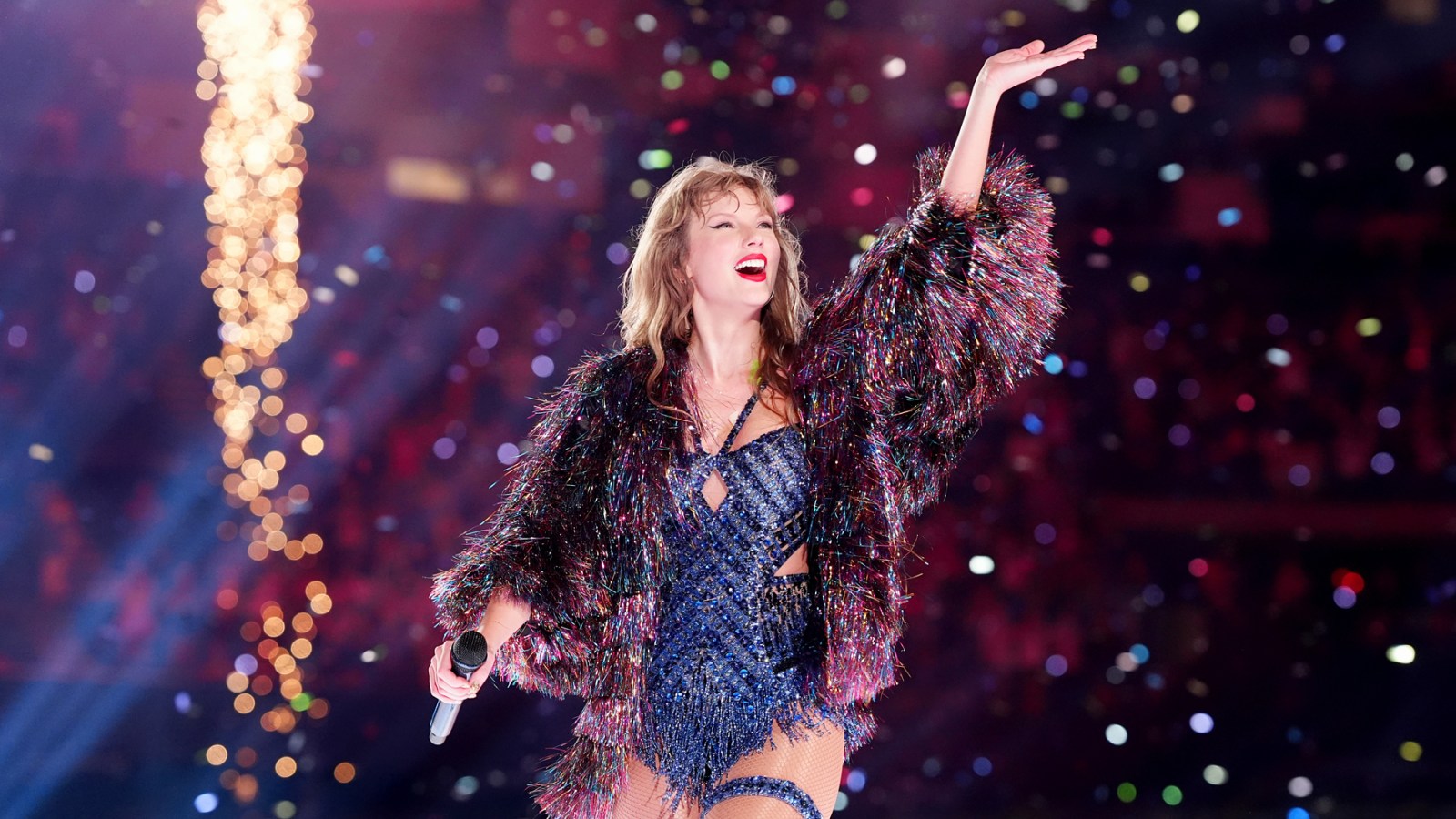

Taylor Swift‘s Eras Tour will go down in history as a record-breaking feat that managed to bring tremendous amounts of joy to millions of fans, even when that didn’t seem possible. In the Disney+ documentary series, The End of an Era, filmmakers Don Argott and Sheena M. Joyce, along with the star subject herself attempt to chronicle all the many facets of the tour. “Every single night, no matter what’s going on, we’re going to do everything in our power to blow your mind,” Swift says in the series, referring to the show.
She might as well be referring to the series itself, too. Over six, nearly hour-long episodes, The End of an Era takes fans behind-the-scenes of some crucial moments and shows just how the magic came together. Despite the series’ length and scope, there’s still a lot of questions left unanswered. Maybe in 50 years this will all be declassified version, but, for now, we’re left wondering about some major moments and logistics, compiled below.
Why did filming start in the middle of the European leg of the tour?
In the first episode of The End of the Era, Taylor reveals to Ed Sheeran that the crew filming them at that very moment was supposed to start rolling in Vienna, Austria. Of course, Swift and her team were forced to cancel three nights in the city after a terrorist plot was foiled. It makes sense that the team began filming in London, instead, but it’s not totally clear why filming for the docu-series in general began in the middle of the European leg of the tour. Footage from the first day of rehearsal for the Eras Tour or general planning is included, which would have been well before the tour opener in March 2023. There’s so much that happened in the first year of the tour, from surprise guests to album announcements, it feels like a missed opportunity to not have documented it.
Why wasn’t Taylor’s self-titled debut included in the official set list?
The allure of the Eras Tour has always been about how the show chronicles Taylor’s music and life, moving through each definitive chapter’s songs and vibe. In the doc series, Taylor talks about how re-recording her first six albums after the masters were sold in a controversial deal helped her to recast the whole ordeal as “celebrating your past” and “all the different girls I was until I was this one.” And yet, in that celebration she missed the album that kickstarted her career: her 2006 self-titled debut. Despite shots in the doc of a Post-It note wall of the setlist that features some pivotal Taylor Swift tracks like “Picture to Burn” and “Tim McGraw,” the official setlist never featured any songs from the album. Sure, Taylor chose those songs for some surprise song moments throughout, but the album never got its due with a fully produced era in the show. As the singer explains the 40-song setlist to the crew in the doc, she still never mentions her self-titled LP or the reasons why she didn’t include it. Justice for debut!
How exactly did she make the song cuts to fit The Tortured Poets Department?
So, yeah about that setlist… When Taylor decided to debut The Tortured Poets Department era in Paris, she told the crowd, “Let it be said about the Eras Tour, we’re tricksy…we enjoy good, healthy set list hijinks.” And there sure were hijinks — “The Archer,” “Long Live,” “‘Tis the Damn Season,” “Tolerate It,” “The 1,” and “The Last Great American Dynasty” were all cut from the official setlist. In the doc series, she mentions the “entirely new order of the chapters” and how “it feels crazy to take all of the pieces apart and then put them together in a different order.” Well, yes, it was crazy. But it’s crazier that Taylor doesn’t walk us through the difficulty of those cuts and swaps.
How did Taylor select different costumes?
In episode three, audiences get a true behind-the-scenes look at discussions Taylor has with her longtime stylist Joseph Cassell. Just before the second U.S. leg of the tour, Cassell shows the singer the swath of new looks and designs. At one point, Taylor grabs an orange and pink gown and decides, “Yeah this probably should be first” as Cassell remarks on the sunset-like colors, which feel perfect for the kick-off shows in Miami. But beyond that moment, we don’t get a comprehensive look at the decision process for each night’s rotation of color options. Were the 1989 sets and surprise song gowns Easter Eggs or picked on a whim? We may never know.
The Reputation bodysuit change gets runtime, but not an official explanation
Similarly, the doc spends a lot of time on the momentous change to the gold Reputation bodysuit — and fans’ reactions to it. But neither Taylor or Cassell share many details on why the change occurred in the first place, or what took so long. We find out that the bodysuit was made of an exclusive fabric that ran and out and designers scrambled to get it done in time with Miami. As for why the new bodysuit had to be debuted in Florida (!!!), that’s a mystery.
No real acknowledgement of the “Errors Tour”
A tour as ambitious and stellar like the Eras Tour doesn’t go off without a hitch — or two. Throughout the 149 shows, there were many mishaps and some people online even jokingly dubbed the mistakes as the “Errors Tour.” In the doc, Taylor does reference one moment where she tripped backstage during a costume change and she cut her hand, only to emerge right on time for the Reputation set. But there is no acknowledgement of the onstage moments where things didn’t go as planned. What was going on in Taylor’s mind when her stage malfunctioned and didn’t open for her to dive off or her piano went haywire after a rain show? Well, in true showgirl fashion, she keeps those details to herself.
How did the surprise song mash-ups come together?
We get to see plenty of great moments of Taylor at the piano, tinkering through surprise song mash-ups like “This Is Me Trying” and “Daylight” or that final gut-punch of “Long Live,” “New Year’s Day,” and “The Manuscript.” It’s a special glimpse into the inner workings of the musician’s artistry, but there’s no explanation of the song selections. There were so many brutal and beautiful mash-ups (still not over the unhinged “Cassandra,” “Mad Woman,” “I Did Something Bad” one), it would have been cool to hear more about the process. How much in advance did Taylor choose mash-ups and surprise songs? How did she get the inspiration for two songs to be paired; was it always tracks in the same key or did she select them based upon lyrical parallels between songs? So many questions, so little answers!
How does a showgirl stay grounded after such a tremendous spectacle?
Throughout the doc series, we see Taylor discuss the dichotomy of being Taylor Alison Swift, the person, and Taylor Swift™, the larger-than-life persona and billion-dollar business. Unsurprisingly, it’s not easy — especially as life continues to toss challenges on both ends of the spectrum, from thwarted terror plots to breakups. Taylor credits the tour with giving her the strength to keep going. “The tour has never been the hard thing in my life, the tour has been the thing that has allowed me to find purpose,” she says in the series.
But the success of the Eras Tour catapulted Swift, the conglomerate, into a new echelon of success. In one scene, Gracie Abrams texts Taylor a picture of the singer plastered on the side of a hotel in Indianapolis. “I used to have this joke… I’m a 5’10 woman followed around by a five hundred foot monster shadow,” she says, adding, “Me being that size tall on a hotel… That’s kind of how it feels sometimes.” Even as Taylor touches on this, The End of an Era doesn’t show how she keeps keeps her sense of self. We see Taylor lean on fiancé Travis Kelce, her mom, and her brother for emotional support but there’s never a moment where audiences are privy to the Taylor that works through the emotions felt on songs like “I Can Do It With a Broken Heart” and “The Life of a Showgirl.”