
Cameron Crowe’s memoir, Paul McCartney’s oral history of Wings, and the timeline of rock & roll through the stories of its drummers
Our favorite books this year (in no particular order) included definitive memoirs by music figures as varied as Ozzy Osbourne, Lionel Richie, and Cameron Crowe; chronicles of bands long gone and those still making music; and dissertations on important scenes from Orange County, California, to Stillwater, Oklahoma. There’s also an immersive history of an alt-country record label that changed roots music forever and a canonical rock album that just turned 50, along with a sobering look on the price we pay to stream any song, anywhere, at any time.
Photographs in illustration By
© Neal Preston; Gus Stewart/Getty Images; J. Shearer/WireImage; Ian Dickson/Redferns/Getty Images
-
‘The Hours Are Long But the Pay Is Low,’ Rob Miller

The story of Bloodshot Records, one of the country’s most well-regarded roots-leaning labels, is a thrilling, sensory-filled journey through the life of its co-founder, Rob Miller, who had a front-row seat to independent music in Chicago during the last three decades. Miller’s writing is at once funny, moving, insightful, and full of pathos, as are his tales of crossing paths with and releasing records from all sorts of indie luminaries across genres, from Alejandro Escovedo to Neko Case to Lydia Loveless. “We didn’t invent this grassroots wheel,” Miller writes, “but it felt like in the wake of the mad alt-rock cash grab and ill-considered scramble for the gravy train, such outreach had been forgotten in the name of going big.” Miller’s well-told, page-turning tale is of one label that never forgot. —Jonathan Bernstein
-
‘Last Rites,’ Ozzy Osbourne


The Prince of Darkness completed his final memoirs, Last Rites, in July between his monumental farewell blowout bash, Back to the Beginning, and his shocking death less than three weeks later. Throughout the book, Osbourne recounts the various health setbacks that forced him off the road in 2018, as well as reflections on his time in Black Sabbath and early years as a solo artist, with his trademark black humor and inimitable bleepable vocabulary. The closing chapter is the best and most emotional, as the artist, who always felt like an underdog, comes to terms with his legacy and the impact he had on his fans and music in the days after singing “Paranoid” for a final time. Equally heart-wrenching and hilarious, Last Rites is the last word on all things Ozzy Osbourne. —Kory Grow
-
‘The Uncool: A Memoir,’ Cameron Crowe

Long before Cameron Crowe became synonymous with films like Say Anything, Jerry Maguire, and Almost Famous, he was a fresh-faced, teenaged writer for this magazine. He zeroes in on those formative years in The Uncool, a charming, vulnerable memoir that celebrates both rock & roll and journalism during a time when both, but especially the latter, can feel devalued. To Crowe, they remain lifeblood. He revels in recounting surreal, detail-rich hangs with Led Zeppelin and Lynyrd Skynyrd, along with a wee-hours run-in with Gregg Allman that is downright frightening. It’s that Allman Brothers tale that inspired Almost Famous. “One person that you meet, interviewing them for the magazine introduces you to another person, and that chain-link fence becomes your life and your dream,” Crowe told RS‘s Angie Martoccio this year. “The book is really about that.” —Joseph Hudak
-
‘Mood Machine: The Rise of Spotify and the Costs of the Perfect Playlist,’ Liz Pelly

The streaming economy is so ubiquitous in the 2020s that it’s easy to forget there’s a Faustian bargain behind it: Dip into a vast ocean of recorded music whenever you please, just don’t ask too many questions about whether the artists who make it are able to earn a living. This essential read aims to expose that complicated reality and force us to think about it. With a winning combination of diligent reporting and skillful argument, Pelly shows how the Spotify model became the norm, explores how playlists make us more passive listeners, and points toward the possibility of a fairer future. —Simon Vozick-Levinson
-
‘Wings: The Story of a Band on the Run,’ Paul McCartney

How do you form another band after the Beatles? Only Paul McCartney had the guts to start from scratch. Wings, an oral history of McCartney’s other band, draws from hours of interviews with him and his bandmates and chronicles the group’s ascent. It’s easy to think that Beatle status would have made things easy for McCartney, but the book contextualizes all he was up against, including facing sexism for including his wife Linda in the lineup (“People don’t realize how important [Linda’s harmonization] was,” Denny Laine says) and the daunting challenge of living up to your own legend. “The idea from the beginning had been to start small, not really knowing what we’re doing,” McCartney says in the book. Once running, they recorded Band on the Run, toured in a school bus, and established a second legacy for a musician who could’ve just coasted for the rest of his life. —K.G.
-
‘Custom Made Woman: A Life in Traditional Music,’ Alice Gerrard

American music legend Alice Gerrard has lived an extraordinary life in the arts and politics: She formed the foundational duo Alice & Hazel, participated in the pioneering Southern Folk Cultural Revival Project, and helped create the blueprint for studying traditional American music via her founding of the publication The Old-Time Herald. This book from the old-time/bluegrass musician is as inviting, unassuming and unconventional in form — part photo book, part autobiography, part collection of profiles of the musicians she studied with — as it is illuminating. “Instead of heading down paths of more popular folk music…I took the road less traveled,” Gerrard writes. “I had a need to understand not only the music but its context, the everyday of it, the politics of it; to understand cultures different from my own.” —J.B.
-
‘Tearing Down the Orange Curtain: How Punk Rock Brought Orange County to the World,’ Nate Jackson & Daniel Kohn

With No Doubt about to headline Sphere in Las Vegas next year and bring radio staples like “Don’t Speak” and “Just a Girl” to well-heeled ticket-buyers, it’s important to remember where the band came from: the DIY punk and ska incubator of Orange County, California. In their exhaustive history of the scene, authors Nate Jackson and Daniel Kohn trace the rise of the Orange County sound from house shows and dive bars to arenas and stadiums through interviews with its key players, including members of No Doubt, the Offspring, Sublime, the Adolescents, and the Vandals. Social Distortion, godfathers of gritty SoCal punk, figure prominently, including tattooed leader Mike Ness, who wrote the book’s foreword: “When I got into punk,” he said, “I finally found my voice and my place in the world.” With Tearing Down the Orange Curtain, Jackson and Kohn help that voice carry. —J.H.
-
‘Tonight in Jungleland: The Making of Born to Run,’ Peter Ames Carlin

Thirteen years after the publication of the truly definitive Bruce Springsteen biography Bruce, Peter Ames Carlin returned with an in-depth examination of Born to Run just in time for the album’s 50th birthday. Thanks to unprecedented access to the raw session tapes, official video vault, and new interviews with Springsteen, Jon Landau, and the E Street Band, Carlin dove deep into the saga and emerged with a stunningly fresh tale of a troubled artist at the brink of a massive breakthrough, and all the chaos and setbacks he fought through to get there. Springsteen’s life can be neatly divided into everything that came before Born to Run, and everything that came after. If they hadn’t gone with the Warren Zanes Nebraska book, this would have made an equally compelling film. —Andy Greene
-
‘Night People: How to Be a DJ in ’90s New York City,’ Mark Ronson

Mark Ronson’s debut doesn’t linger on the moments that align the most with his caliber of celebrity. Set in the Nineties, the memoir only mentions his hits with Lady Gaga and Bruno Mars to clarify that he won’t be writing about them at all. But even the superstar names that do jump off its pages, from Biggie and Beyoncé to Aaliyah and Michael Jackson, are only blips. The true heart of the story beats to the sound of the music that Ronson played in clubs with sticky floors after hauling pounds of vinyl into whatever DJ booth he made his home for the night. Night People triumphs in its emphasis on the memories that melodies hold, with Ronson sprawling about late nights and niche releases that shaped him not only as a DJ and a producer, but as a person. He makes the past feel tangible. —Larisha Paul
-
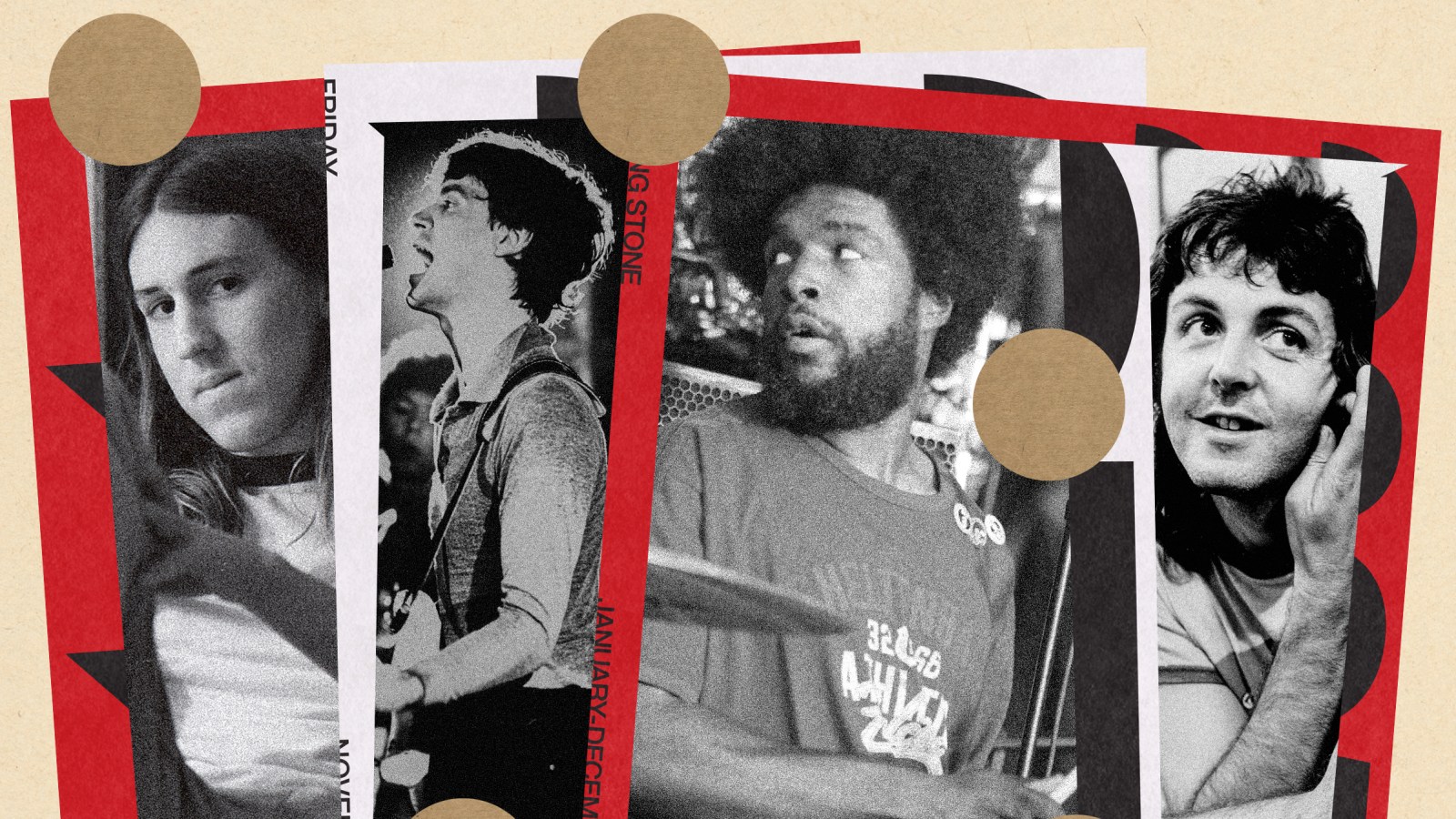
‘Backbeats: A History of Rock and Roll in Fifteen Drummers,’ John Lingan

So many books have written on the broad history of rock & roll that it’s some marvel that John Lingan, who’s previously tackled the stories of Creedence Clearwater Revival and Patsy Cline, has found an entirely fresh way to tell its story. This selection of mini profiles on drummers ranging from Charlie Watts to Questlove is a revelation for the way it reorients American popular music around a single instrument, and for the way the book manages to tackle the music itself in a way that’s both broadly accessible and enlightening to non-musicians. “Drums gave rock and roll its energy, motion, volume and rhythm,” writes Lingan, “and they are the source of much of its innovation.” —J.B.
-
‘Only God Can Judge Me: The Many Lives of Tupac Shakur,’ Jeff Pearlman

While a seasoned sports journalist might seem like an odd authority for a 400+ page biography on the life and musical history of hip-hop legend Tupac Shakur, sportswriter Jeff Pearlman brings receipts, interviews, and dozens of never-before-seen artifacts to his all-encompassing biography Only God Can Judge Me: The Many Lives of Tupac Shakur. Pearlman approaches the historic rapper like a puzzle, using scholarship, research, and first-person interviews to turn Shakur from a musical god into a lovesick 15-year-old from East Harlem. Only God Can Judge Me isn’t just about the man and lyrical genius Shakur became — it’s a meticulously researched accounting of how Shakur’s fame changed music and pop culture for an entire generation. —CT Jones
-
‘Truly,’ Lionel Richie

Lionel Richie — that guy has it all figured out. He gives a tour of his long life in the music biz in his gigantic memoir Truly — nearly 500 pages — but he’s a great raconteur because he’s totally devoid of bitterness. He’s got no scores to settle, no axes to grind; he’s just got millions of funny stories about practically everybody he met along the way, with plenty of self-deprecating humor. He’s a humble Tennessee college kid who rises up in the Sixties with the Motown funk band the Commodores, then graduates to solo stardom with ballads like “Hello” (which he calls “the corniest shit ever”), writes “We Are the World” with Michael Jackson, and dominates Eighties radio. “How could you not be sick of him already?” he asks in the third person. “In fact, I was sick of me.” But he’s all charm. —Rob Sheffield
-
‘The Colonel and the King: Tom Parker, Elvis Presley, and the Partnership That Rocked the Word,’ Peter Guralnick

In nearly every telling of the Elvis Presley story, Colonel Tom Parker is the villain who controlled his life and career, denied him crucial opportunities, forced him into bad movies, and ultimately robbed him blind. This was even true to some degree in Peter Guralnick’s twin Elvis biographies, Last Train to Memphis and Careless Love. But after gaining access to unseen papers from throughout Parker’s lifetime, a much different story materialized for Guralnick. It’s the tale of an immigrant with an incredible eye for talent, strong business sense, and an impulsive client who made plenty of bad choices all on his own. This won’t be the final book about Elvis, but it should serve as the last word on Parker. —A.G.
-
‘Never Say Never: Cross Canadian Ragweed, the Boys From Oklahoma, and a Red Dirt Comeback Story for the Ages,’ Josh Crutchmer

In 2024, Cross Canadian Ragweed singer Cody Canada swore to Rolling Stone contributor Josh Crutchmer that under no circumstances would the influential Red Dirt band ever reunite. Canada swallowed those words this year when the group played a series of highly successful comeback concerts that, to this day, still seem highly unlikely, given Ragweed’s bitter breakup. In Never Say Never, Crutchmer documents the hard road back to the stage and why it matters not just for Canada, his bandmates, and the group’s fans, but for the very state of Oklahoma — ground zero for the Red Dirt movement. Crutchmer, a native of Okmulgee, has been churning out books about Red Dirt artists since 2020. This one, triumphant in its message, reads like a story even the author can’t believe. —J.H.
-
‘Such Great Heights: The Complete Cultural History of the Indie Rock Explosion,’ Chris DeVille

It might hurt for millennials to admit it, but the indie boom that defined our youth in the 2000s is now far enough in the rearview for a well-written, entertaining history book like this to feel right on time. DeVille, a longtime Stereogum contributor who knows this subject as well as anyone on earth, explores what it meant for idiosyncratic acts like MGMT, the Postal Service, and Bon Iver to become national stars, delivering plenty of fresh insight. He zooms his lens backward to include Nineties legends like Radiohead and Pavement, too, and takes us all the way into the late 2010s with Mitski, Phoebe Bridgers, and more. If you have fond memories of any of those generation-defining acts, make sure to check this book out before you file for your AARP card. —S.V.L.
-
‘Fahrenheit-182: A Memoir,’ Mark Hoppus

Throughout his memoir Fahrenheit-182, Mark Hoppus is obsessed with the odds. He mentions, on no less than a dozen occasions, these very specific “one-in-a-million” chances — the odds of making something out of his life in the California desert, the odds of turning Blink-182 into one of the biggest bands in the world, the odds of beating cancer. He balanced blind confidence with a crippling sense of anxiety as he constantly breezed past his own expectations. Even in the moments when Hoppus is convinced he will be hauled away from the life he built for himself, he seems happy to have made it that far in the first place. And yet, through trauma and tragedy, he always brings himself back from the brink, living to fight another day and crack another tasteless joke on another Blink song. “One-in-a-million happens to me all the time,” Hoppus wrote. —L.P.
-
‘Burning Down the House: Talking Heads and the New York Scene That Transformed Rock,’ Jonathan Gould

David Byrne told Rolling Stone in no uncertain terms this summer that Talking Heads would not be reuniting. But disappointed fans of the groundbreaking New York art-rock band can still revisit the glory years in Jonathan Gould’s extraordinary Burning Down the House. The book chronicles Talking Heads’ origins in the East Village in the Seventies all the way through their mainstream success and eventual dissolution. But Gould also succeeds in providing a snapshot of a long-ago New York City, where the future was bleak, and crime and unrest waited just outside the doors of CBGB’s. That the band was able to find the beauty in that environment and transform it into both avant-garde art and radio-ready rock is what makes their story so fascinating. —J.H.