
Looking at the trajectories of 25 different female country stars’ radio careers before and after having children, a distressing trend is clear.
It used to be possible for women in country music to grow their radio careers after having kids. There’s not one single example of that in modern-day country.
What Country Stars Had the Most No. 1 Radio Hits After Becoming Moms?
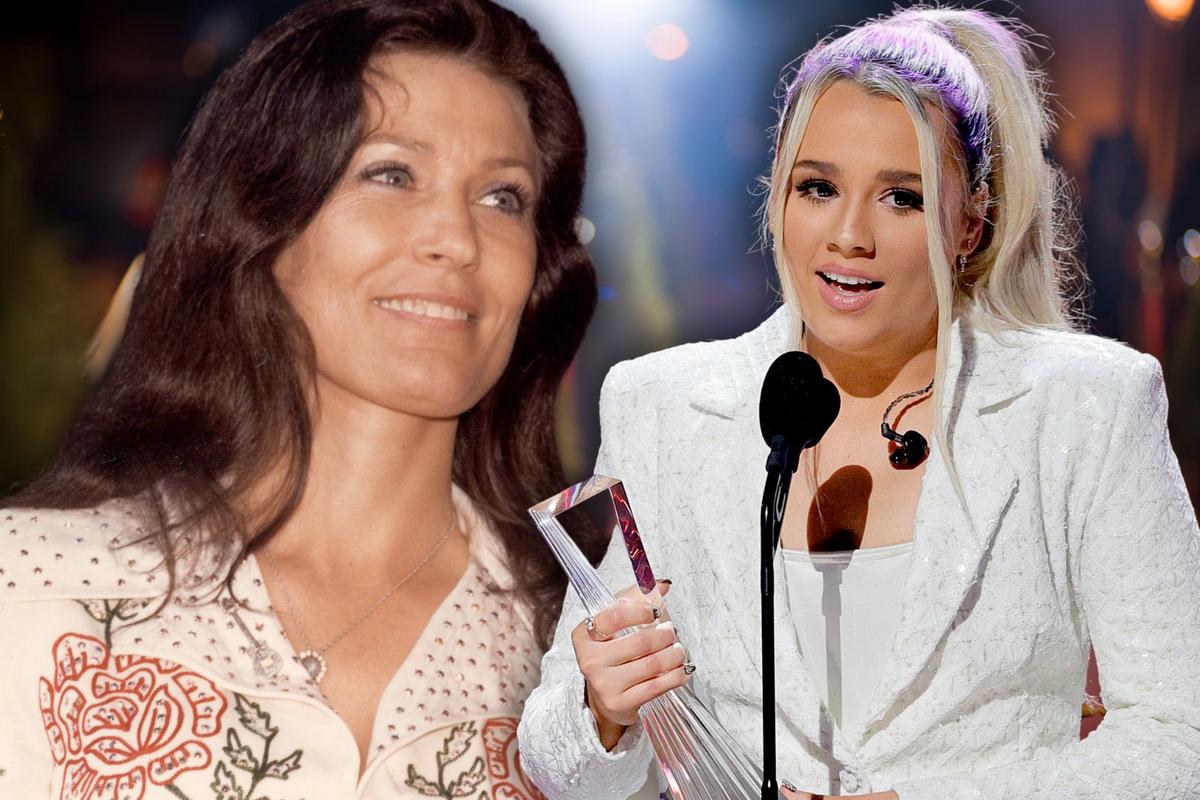
Tammy Wynette and Loretta Lynn are two stars who came into the genre as teen moms, and flourished. Wynette, who first topped the charts in 1967, had 20 No. 1 hits over the ’60s and ’70s. Lynn, whose first No. 1 was also in 1967, notched 16 over a similar time period.
Anne Murray and Reba McEntire are two more examples of stars whose careers continued an upward trajectory after they had children.
Read More: 22 Country Stars With the Most Kids — No. 1 Will Shock You!
Martina McBride and Sara Evans, while not seeing quite such dramatic success after having kids, are two ’90s performers who had more hits after becoming mothers than they did beforehand.
But in contrast, the women of country within the past five years who’ve had children are more likely to quit music, or leave the genre, than they have to see their stars rise.
Which Modern-Day Female Country Stars Have Been Most Successful After Having Kids?
In tallying up the data, we didn’t include singers who’ve had their first babies within the past year or two, like Lauren Alaina. There simply hasn’t been enough time to see where their careers will go next.
Joy Malone, Getty Images
The moms who saw the biggest radio success after having kids were those who maintained their spot at radio. Carrie Underwood and Lady A‘s Hillary Scott have continued to place No. 1 hits on the radio as they grew their families, but in both cases, it was at a slower pace than before they became mothers.
What Happened to Other Women’s Country Careers After They Had Children?
Maddie & Tae and Maren Morris, two of the female acts who’ve both scored No. 1s and had babies in recent years, each saw a significant shift in their careers.
Maddie & Tae announced their decision to go on hiatus at the end of 2025. Taylor Kerr will be a stay-at-home mom to her two kids, while Maddie Font will pursue a solo career.
Read More: Maddie & Tae Deserved More Than They Got From Country Music
Morris announced in the fall of 2023 that she was stepping away from country music. She’s since released music with a broader scope of influences, and a more relaxed approach to genre boundaries.
To be clear, neither move was a direct, obvious result of the women’s decision to have children. Though Kerr did step away from her band to prioritize raising her family, her duo partner Maddie Font still plans to pursue music as a working mom.
Morris left country after growing increasingly vocal about inequality and bias in the genre, and said she felt frustrated by country music’s refusal to reckon with its racist history.
But it’s worth noting that Morris has said that she became more invested in vocalizing her beliefs after having her son Hayes in 2020.
And in terms of industry recognition and radio success, the country music world cooled on both Morris and Maddie & Tae after they had children.
Is Ageism Part of the Problem?
Undoubtedly, yes.
This 2013 breakdown of how country radio abandons older artists, both male and female, still applies today, showing how even successful artists can be left behind when their label deals expire, and record companies must decide whether to resign them at a higher royalty rate despite tastes changing and trends moving on to the next hot, young thing.
Read More: No Country For Old(er) Men?
Data compiled by Taste of Country’s Billy Dukes shows that in 2005, the average age for an artist who hit No. 1 was 37, and the average age for a woman with a No. 1 was 35.
But in 2016, the average overall age was 35 — and the average age for a woman with a No. 1 was 28.
In 2025, not every artist is very young when they break into the genre. Jelly Roll won the CMA’s New Artist of the Year Award at age 39. Riley Green, though he had his first radio hit at 29, is now at the top of his game at age 37.
Terry Wyatt, Getty Images
Luke Bryan, Blake Shelton and Jason Aldean all continue to enjoy vast stardom and robust radio airplay at the end of their 40s. And Keith Urban, Tim McGraw and Garth Brooks, at 58, 58 and 63 respectively, still have significant touring and recording careers.
So do some female country veterans, such as Reba McEntire, though she hasn’t had a solo No. 1 country hit since 2011. Dolly Parton, the genre’s oldest female star, hasn’t had a solo No. 1 hit since the late ’80s (though she did have one for a duet with Brad Paisley in 2006.) Trisha Yearwood, despite releasing her stellar The Mirror album in 2025, hasn’t had a No. 1 country radio hit since 1998.
It’s not news that country music has a bias against women. It’s also not news that country radio’s gender gap has increased. Data has consistently shown a decline in airplay of female artists.
Country radio’s most-played women are in their 20s and 30s. Ella Langley is 26, Megan Moroney is 28, Lainey Wilson is 33, Kelsea Ballerini is 32 and Carly Pearce is 35.
Compare that to the most-played artists of 2025 overall (all men, with the exception of Jessie Murph as a featured artist on Koe Wetzel‘s “High Road.”). Wetzel is 33, Murph is 21, Morgan Wallen is 32, Shaboozey is 30, Jelly Roll is 41 and Thomas Rhett is 35.
Read More: The 40 Most-Played Country Songs of 2025
While the age gap isn’t dramatic, it is consistent. Women are typically a few years younger than their male counterparts when they have success, and they’re also younger when they move from hitmaker to legacy status.
Country Women Who Have Children Face Even Greater Challenges
Almost none of the female artists receiving major radio airplay are mothers. Langley, Pearce, Ballerini, Wilson and Moroney are all childfree at this point in their careers. The most dominant moms at country radio are Carrie Underwood, who had her most recent No. 1 in 2021 with a Jason Aldean duet, and Lady A, who last hit No. 1 in 2019.
But bias against moms isn’t quite the same thing as ageism.
Even young moms are at a disadvantage at country radio. Consider artists like Gabby Barrett, who had two major No. 1 hits with her debut “I Hope” and followup “The Good Ones” in 2019 and 2020, then dropped down the charts after her first child was born in 2021.
Read More: Gabby Barrett Responds to Claims She’s ‘Ruining Her Career’
Barrett’s been vocal about prioritizing her family over superstardom, and she’s said she’ll turn down male-female duets that are too romantic for comfort for her and her husband Cade Foehner. She’s also hit pause on touring when her kids are newborns, and homeschools them while juggling a recording and touring career.
But she’s also continued to release new music, including a 2025 breakup song called “The Easy Part” that seemed ready-made for radio. The charts didn’t take the bait.
Maddie & Tae band mates Maddie Font and Taylor Kerr were both 30 when they announced their decision to split, still well within the age group that many female artists are making radio airplay waves. But by that point, they hadn’t had a No. 1 hit for over five years, before they started having babies.
Rick Diamond, Getty Images
And if we consider young country music moms who never got a No. 1 hit but still saw a career decline after having kids — like 34-year-old Runaway June frontwoman Naomi Cooke and 31-year-old RaeLynn — the career prognosis for young female singers with kids is even more depressing.
Especially so when you remember that artists like Lynn, Wynette, Murray, McEntire, Barbara Mandrell and The Judds all got to have complete career arcs as mothers in a way that simply doesn’t happen today.
Keep reading for a breakdown of 26 female artists and how their careers fared before and after becoming moms.
Which Female Country Stars Had the Most No. 1 Hits After Having Kids?
Looking at 26 different female country artists’ careers before and after having children, a distressing truth comes into view: More moms had success in country music in the ’70s, ’80s and ’90s than do today. Tammy Wynette and Loretta Lynn are two stars who enjoyed massive success after coming into the industry as teenage moms. There’s simply not an example of a star with a trajectory like that in recent years.
Gallery Credit: Carena Liptak