
With its roots in the ’60s and the honky-tonk style forged by Hank Williams, outlaw country music began to snowball in the early ’70s as more and more artists bristled against the genre’s commercialism, social conventions and the slick and shiny “Nashville Sound.”
What is Outlaw Country?
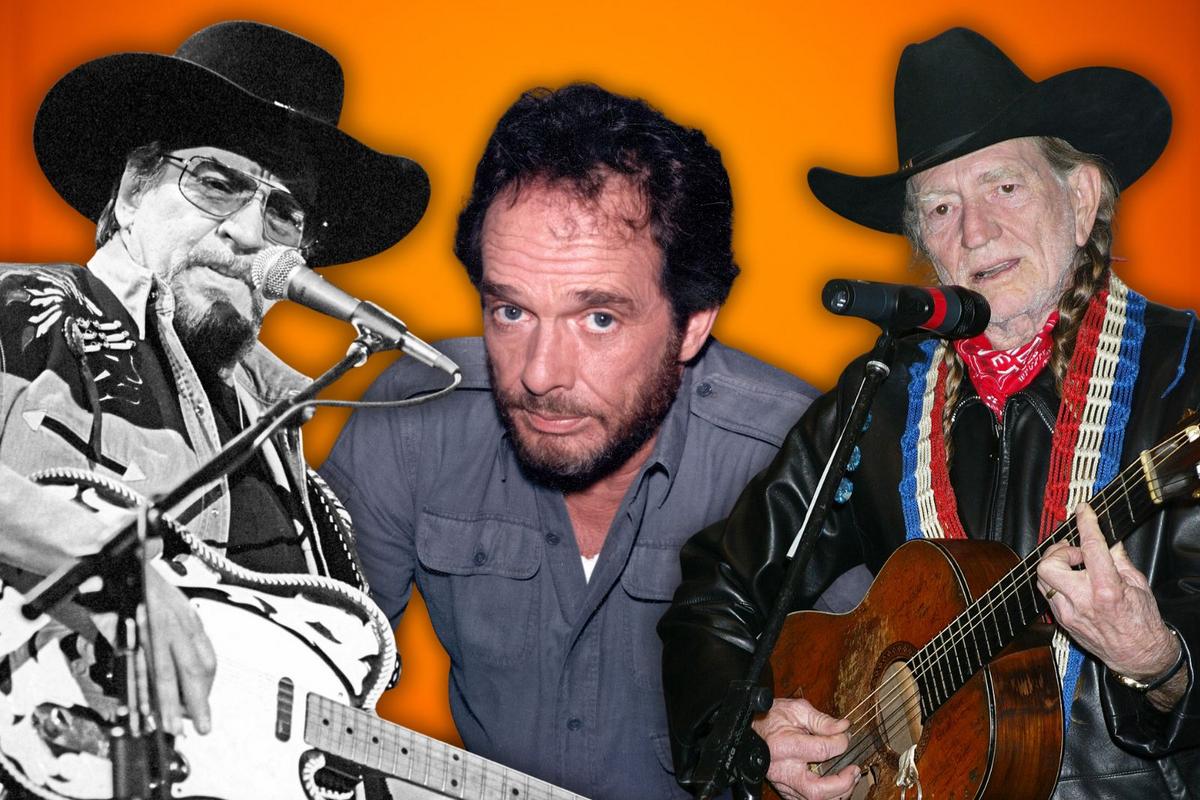
When most people think of outlaw country, they think of Waylon Jennings, Willie Nelson, David Allan Coe and Merle Haggard.
These titans of the subgenre propelled the movement — both individually, and in some cases, collaboratively — by recording songs that they’d often written themselves, and featured production that more closely mirrored a live performance experience in comparison to the pop-influenced studio sound popular in Music City recording studios.
Rusty Russell, Getty Images
When Did Outlaw Country Start?
The term outlaw country and its parameters solidified across the late ’60s and early ’70s, making it hard to pinpoint an early start date.
But the term likely came into popular usage thanks to the song “Ladies Love Outlaws,” originally by Lee Clayton, after Jennings released his version in 1972.
In the years leading up to the ’70s, Jennings had grown progressively more disillusioned with Nashville’s country music industry and the limits it imposed on how he presented himself and the kind of music he recorded.
Read More: The Best Waylon Jennings Songs Show His Outlaw Side
Jennings had been a top earner for RCA Records in the ’60s, but in 1972, he hired a new manager named Neil Reshen to help him reject the label’s resigning terms and forge greater artistic control.
Jones/Evening Standard/Hulton Archive/Getty Images
Around that same time, per Holler, Kris Kristofferson was preparing to release his first studio album, and he was similarly leery of caving to record labels’ restrictions or produce a conventional Nashville sound. Other artists, like Nelson, were also running into friction with the industry’s limits, too.
Wanted! The Outlaws
On Jan. 12, 1976, Waylon Jennings, Tompell Glaser, Willie Nelson and Jessi Colter released a compilation album called Wanted! The Outlaws.
Many of the songs had already been released in the years before that point, often by other artists such as Billy Jo Shaver, Steve Earl, Buck Owens and Jimmie Rodgers. Also featured was a cover of “Suspicious Minds,” which was written and recorded by Mark James but popularized by Elvis Presley.
The project served as a capsule of what outlaw country music sounded like at the time. It also proved that this daring, experimental subgenre could be commercially successful despite rebelling against the existing tropes and formula of Music City.
It became the first country music album in history to be platinum certified, meaning it reached sales of a million units.
What is Outlaw Country Music About?
Creative freedom was a hallmark of outlaw country when it came to lyrical subject matter, too. In this list, you’ll find a lot of lines about travel and the open road, more than a few about drugs and some that don’t make any attempt at all to hide their contempt for the Nashville powers that be.
Though some artists, such as Coe and Johnny Paycheck, served jail time before ascending to stardom, this movement wasn’t specifically about being a literal outlaw.
Hulton Archive/Getty Images
The label applied more broadly to artists who rejected the status quo, who wanted to side step Nashville’s country hit formula of the day in order to fulfill their own artist-driven, independent vision.
(That being said, the outlaws sure did break or bend the law a lot: But those are stories for another day.)
Keep reading for Taste of Country’s recap of 30 songs that defined the first iteration of the outlaw country movement. Most of these classics were released in the ’70s, though some came out in the ’80s and ’90s, and one or two even released in the 2000s.
What you’ll find here is an essential songbook, and not an attempt to define what counts as outlaw country music today. It turns out, trying to pinpoint an outlaw sound in 2026 is a bit of a complicated endeavor, and deserves an examination all its own.
Keep watching Taste of Country for more on that later, and for now, read on to revisit the 30 songs that define the outlaw country movement.
30 Outlaw Country Songs That Define The Movement
With its roots in the ’60s and the honky-tonk style forged by Hank Williams, outlaw country music began to snowball in the ’70s as more and more artists bristled against the genre’s commercialism, social conventions and the slick and shiny “Nashville Sound.”
Though some artists like Johnny Paycheck and David Allan Coe had served jail time before their success, the “outlaw” label applied more broadly to those artists who rejected the status quo in Nashville. Many of the definitive songs of the movement speak directly to that rebellion, while others simply embody an artist-driven, independent musical vision that sidestepped Nashville’s country hit formula of the day.
Keep reading for a round-up of 30 songs that define the outlaw country movement.
Gallery Credit: Carena Liptak