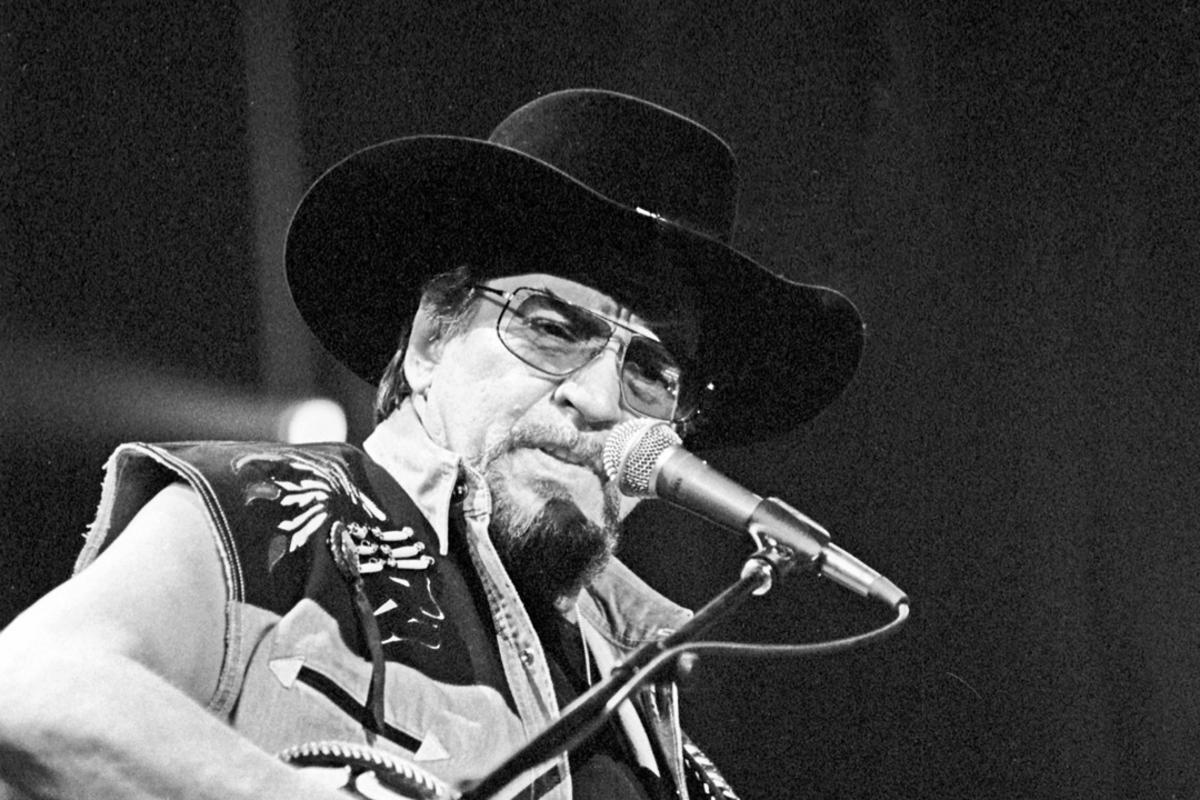

Waylon Jennings died in 2002 at the age of 64, one year after being inducted into the Country Music Hall of Fame.
Throughout his career, he remained an honest artist fighting to record his music the way he wanted it to be heard. In all of country music history, he’s among the artists who have been most successful at carving out creative freedom while still retaining massive commercial success.
How Did Waylon Jennings Rise to Fame?
Jennings’ career began in 1958, when he became a member of Buddy Holly’s Crickets. Holly produced Jennings first single, “Jole Blon,” which he released that same year.
Jennings was working as Holly’s bass player at the time of the infamous plane crash on Feb. 3, 1959, that killed Holly, Ritchie Valens, the Big Bopper and pilot Roger Peterson. In fact, the only reason why Jennings wasn’t on the plane is because he’d volunteered his seat so the Big Bopper could ride with Holly.
READ MORE: 11 Country Stars Who Died in Tragic Plane Crashes
The tragedy reportedly haunted the country star for the rest of his life. Still, after this incident, Jennings spread his wings as a solo artist and found a home of his own in country music.
He moved first to Phoenix, Ariz., and then Los Angeles, Calif., before landing in Nashville, where he shared an apartment in the Nashville suburb of Madison with Johnny Cash.
webvan94, YouTube
“I sincerely thought you would never amount to anything,” Cash joked of that time later on, when Jennings was a guest on The Johnny Cash Show in 1970.
Jennings’ first country hit was “Stop the World (And Let Me Off)” in 1965, and he included it on his debut album Folk-Country.
It was the first of a series of albums Jennings would release on RCA Records in the ’60s, which enjoyed commercial success. But Jennings was growing increasingly frustrated with label restrictions and the sleek production popular at the time, known as the “Nashville Sound.”
The Rise of Outlaw Country
Most of the Jennings songs fans know and love best today come from after the rise of “outlaw country,” a subgenre that Jennings championed and helped rise to prominence.
John Minihan/Daily Express/Hulton Archive/Getty Images
In 1972, he hired a new manager named Neil Reshen, who helped negotiate resigning terms with RCA and wrest greater creative control of the music he made.
Read More: 30 Outlaw Country Songs That Define the Movement
That fight turned out to be a pivotal moment in country music history, snowballing into a broader movement including stars like Billy Joe Shaver, Willie Nelson, David Allan Coe and Kris Kristofferson who were also chafing against the artistic confines of mainstream Nashville, and itching for a move away from the Nashville Sound.
It was a grassroots movement, but eventually, the powers that be in Nashville saw the dollar signs on the wall and hopped onboard.
Toward the end of the ’70s, RCA proposed a compilation album from Jennings, Nelson, Tompall Glaser and Jessi Colter called Wanted! The Outlaws, which grouped some of the most iconic songs of the outlaw movement.
Read More: Remember When Wanted! The Outlaws Made Country Music History?
The record would eventually go on to be the first country album certified RIAA platinum.
Wanted! The Outlaws Album
Below, Taste of Country has compiled a list of songs that best represent the career of this legendary outlaw, from popular Willie Nelson duets to the theme from The Dukes of Hazard to final chart toppers including “Wrong” and “Rose in Paradise.”
These are the Top 20 Waylon Jennings songs.
The Top 20 Waylon Jennings Songs
Waylon Jennings’ 20 best songs show why he’s among the largest-looming figures of the outlaw country movement. But they also prove his versatility.
Jennings’ discography includes some ambitious covers of songs that were already massive hits — and without exception, his versions could stand toe-to-toe with the originals. It also features some lesser-known cult classics and a tender love ballad or two.
Keep reading to hear the songs that prove that country music wouldn’t be country music without Jennings’ incredible influence.
Gallery Credit: Carena Liptak