
Like many albums in Bob Dylan‘s extensive discography, Desire didn’t start the way it ultimately ended.
Coming off the comeback success of the recently released Blood on the Tracks, the greatest singer-songwriter of his generation ushered a huge band into the studio to record its follow-up in July 1975.
More than two dozen musicians were initially gathered — a violin player, an accordion and mandolin player, even Eric Clapton at one point — to work on Desire, but by the time it was released on Jan. 16, 1976, its scale had lessened by quite a bit.
READ MORE: Bob Dylan ‘Bootleg Series’ Albums Ranked
It’s still one of Dylan’s most ambitious records, built around two sprawling narratives cowritten with Jacques Levy, a New York-born psychologist, theater director and lyricist. If that wasn’t enough, Dylan framed three of the record’s other songs around a screenplay based on a forgotten Joseph Conrad novella.
What Type of Songs Are on Bob Dylan’s ‘Desire’?
After the highly personal Blood on the Tracks, Desire was a return, concerted or not, to the type of songs he was writing back when he was building his legend more than a decade earlier.
Listen to Bob Dylan’s ‘Hurricane’
The album’s centerpieces were rooted in real-life drama. The album’s opening track and highlight, “Hurricane,” was based on the plight of boxer Rubin Carter, who was charged with three murders in 1966.
A decade later, his case was protested by activists, who claimed that racism drove both his arrest and trial. Dylan picked up on Carter’s story and wrote an eight-and-a-half-minute song about him, which was both controversial and eye-opening. (In 1985, Carter was released after a judge found that he didn’t receive a fair trial 20 years earlier.)
It also — surprisingly, given its subject matter and length — became a Top 40 hit, Dylan’s second-to-last (“Gotta Serve Somebody” went Top 25 in 1979).
What Is Bob Dylan’s ‘Joey’ About?
The other track, “Joey,” which opened side two, told the story of mobster Joey Gallo, who was murdered in 1972. And like he did on “Hurricane,” Dylan paints a compassionate portrait of his subject.
But this one was a bit more troubling, given Gallo’s violent past. Still, Dylan lays out a defense over 11 winding minutes, and like some of his songs from an earlier era — most notably “The Lonesome Death of Hattie Carroll” — he lets his vivid storytelling set the scene.
Listen to Bob Dylan’s ‘Joey’
It helped that the band, stripped of its larger original lineup to a quintet that included Dylan, singer Emmylou Harris and violin player Scarlet Rivera, who gives the album its distinctive sound, was locked in.
Is ‘Desire’ Bob Dylan’s Last Great Album of the ’70s?
The nine-song set — which also features the great “Mozambique” and the album-closing “Sara,” a love letter of sorts to his crumbling marriage — ended up being his last great album before a period of mediocre shrugs, slight rebounds and embarrassing disappointments left him dangling until a career resurrection at the end of the ’90s.
Like the two albums before it, Blood on the Tracks and Planet Waves, Desire hit No. 1. It would be his last chart-topping record until Modern Times reached the spot in 2006.
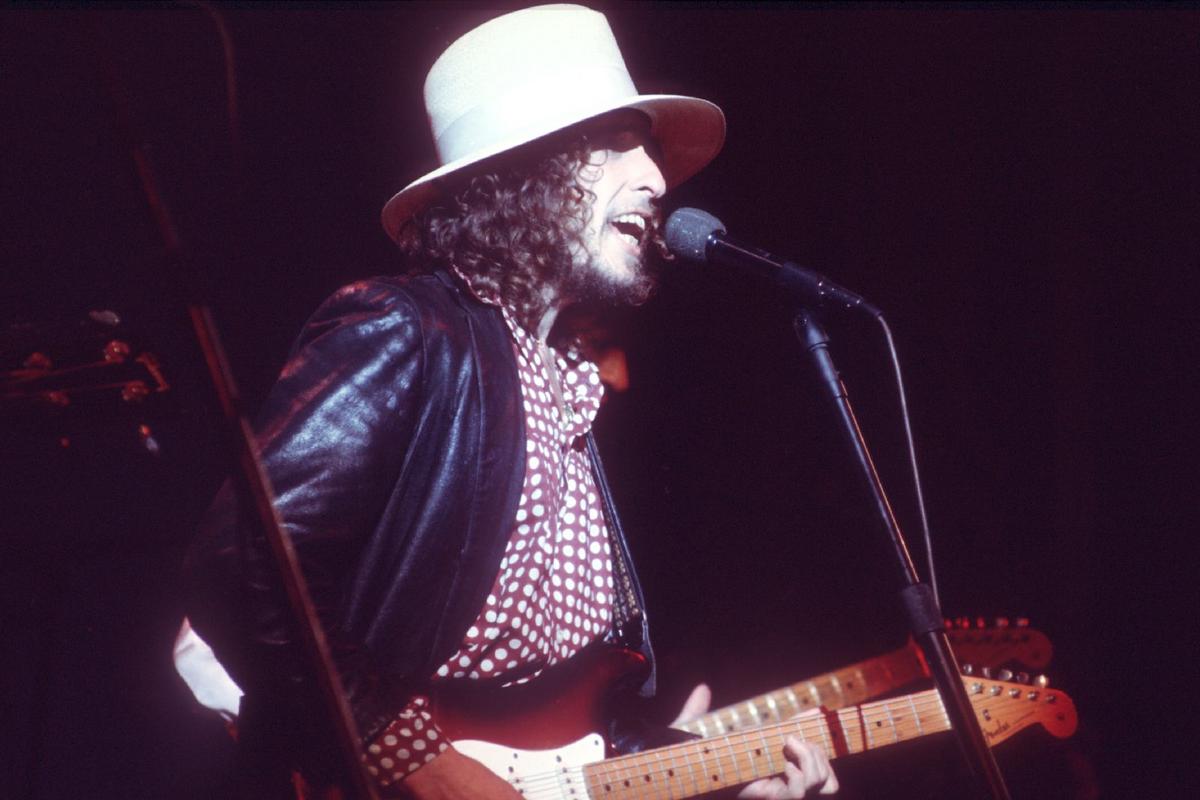
Shortly after recording the album, Dylan took most of the group, along with many of his friends and other guest musicians, on the road for the Rolling Thunder Revue, a caravan of sounds that picked up Desire‘s gypsy troubadour aesthetic. It would be a while before his music would contain this much spirit again.
Bob Dylan Albums Ranked
Through ups and downs, and more comebacks than just about anyone in rock history, the singer-songwriter’s catalog has something for just about everyone.
Gallery Credit: Michael Gallucci