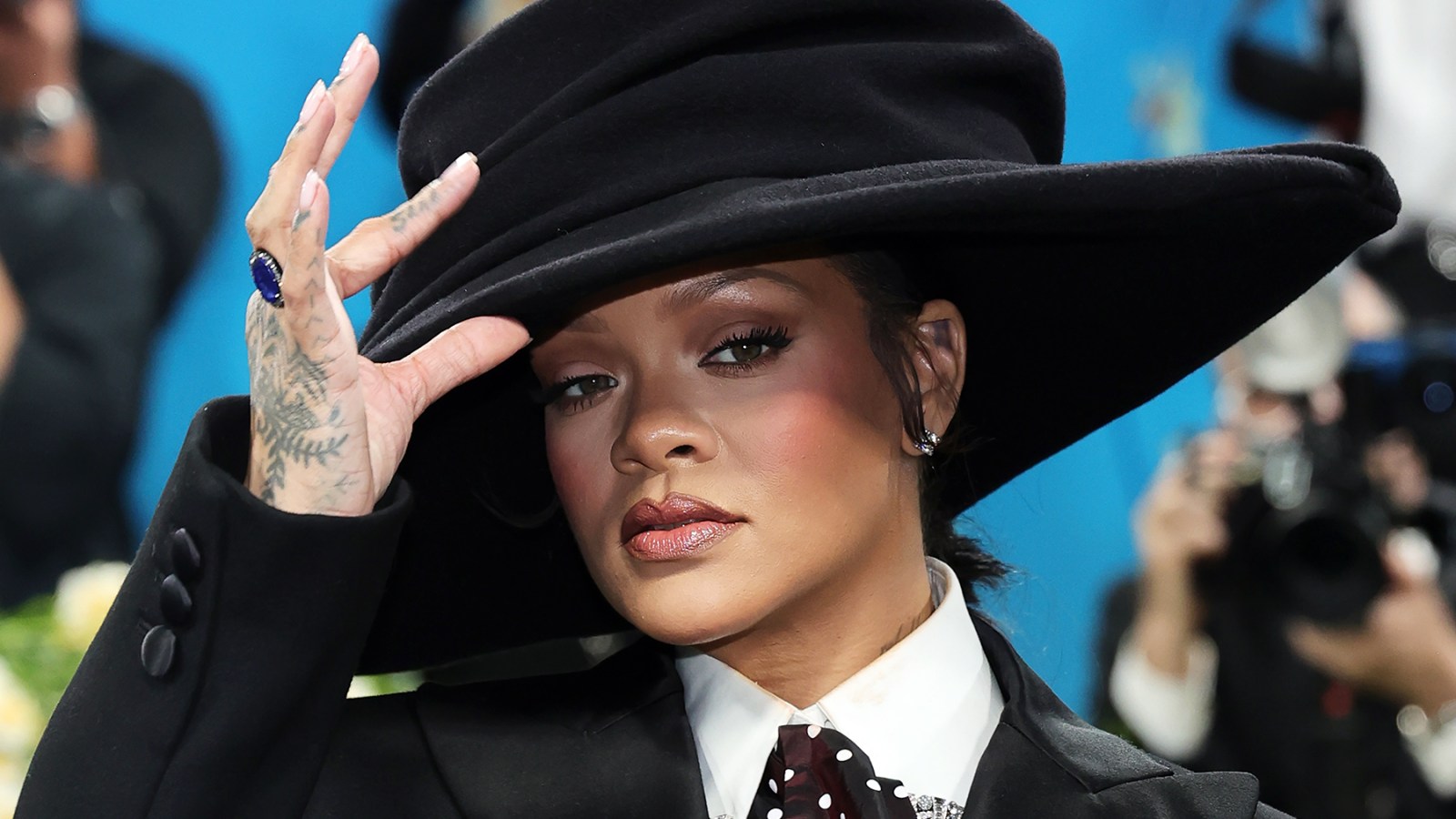

For all of the overwhelming nostalgia for 2016 that has defined these early weeks of 2026, very little of this collective cultural reminiscing has mourned the reign of Rihanna.
It’s not for lack of rationale. A decade ago, for anyone who’s forgotten, Rihanna was a dominating force. “Work” spent nine weeks at Number One. “This Is What You Came For” reached Number Three. “Needed Me” became Rihanna’s longest-running Hot 100 hit, lasting 45 weeks. “Kiss It Better,” “Sex With Me,” and “Love on the Brain” were slow-burners, but so undeniable they felt ubiquitous.
So why aren’t we feeling sadder today, as Anti — her career-defining opus, on which but one of those aforementioned records appeared on — celebrates its 10th anniversary, with no follow-up album in sight? Well, because grief requires absence. Something has to be missing, regrettably different, or out of reach, and Rihanna has never been any of those. By remaining strides ahead, she has ensured that she will always be leading the moment rather than chasing it.
Our first introduction to Rihanna, the propulsive debut single “Pon de Replay,” was a near-immediate hit in 2005. Then there was “SOS” in 2006, “Umbrella” in 2007, “Disturbia” in 2008, “Run This Town” in 2009, and “Only Girl (In the World)” — plus “Rude Boy,” “S&M,” “What’s My Name?” and “Love the Way You Lie” — in 2010. In 2011, “We Found Love” and its accompanying music video became a feast for the Tumblr age. “Diamonds” joined her collection of Number Ones the following year (she has 14 to date). When she broke her seven-year streak of yearly album releases in 2013 — yes, we count Good Girl Gone Bad: Reloaded — she still dominated radio with “The Monster” and “Stay.” That isn’t even everything.
Rihanna was pop’s puppetmaster even when she wasn’t recording the songs herself. In 2013, Miley Cyrus released the pivotal single “We Can’t Stop” and Selena Gomez broke out with “Come and Get It.” Both were originally intended for Rihanna, who already had her fill of hits on Talk That Talk (“You Da One”) and Unapologetic (“Pour It Up”). Even Usher’s 2010 hit “DJ Got Us Fallin’ in Love” was among the 200 songs she had cut for Loud. Major Lazer wanted her on “Lean On,” released in 2015, but they were a little too late. She’d already done the EDM thing with “Where Have You Been” four years prior. Everyone else was just catching up.
It would be unfair to claim that pop has been roaming aimlessly without Rihanna for the past decade. Ariana Grande, Dua Lipa, Sabrina Carpenter, Billie Eilish, Olivia Rodrigo, and more have become reigning figures in the post-Anti years. Still, the genre remains obsessed with impressing — and at times imitating — her.
“Rihanna has the best taste out of anyone,” Ed Sheeran told The Tonight Show last year. “Every single album that I’ve ever done, I’ve always gone, on the side, ‘Let’s try and write a song that we can pitch to Rihanna.’” That’s how “Shape of You” and Justin Bieber’s “Love Yourself” began. Carpenter once cited “Consideration,” the SZA collaboration that opens Anti, as an inspiration, telling Teen Vogue in 2018, “I look up to her so much … She’s always doing something that we never expect.” In 2023, songwriter Evan Bogart told Rolling Stone he has used AI songwriting tools, particularly voice clones, to cut demos that sound like Rihanna in order to make them more appealing for other artists.
As the blueprint and the standard, Rihanna hasn’t generally responded to these siren calls from the rest of the industry. She’s not someone who has had to compete for accolades this past decade, or been driven by flattery and validation. That would be antithetical to her status as a premier trendsetter and tastemaker. She’s too cool for it. Pop, in her absence, has become bound to an unceasing supply and demand chain: Fans constantly demand more and more, often with little regard for the quality of what is delivered, and artists respond by selling them a dozen different versions of their latest product.
Rihanna might be loyal to her fans — occasionally appeasing them with brief updates about R9, an album that could very well remain a figment of everyone’s imagination, in interviews promoting literally anything but music — but she isn’t beholden to them. Last year, someone left a comment on her Instagram reading, “We want an album forehead.” Rihanna responded four hours later, writing, “Listen Lorenzo! You ain’t cute enough to be calling me by my black name you dizzy fuck!” Remember, this is the same Rihanna who once told Ciara, “Good luck with booking that stage you speak of,” and a tabloid, “Your pussy is way too dry to be riding my dick like this.” Plenty of pop stars have been driven offline by their fans’ entitlement. Not Rihanna.
It’s obvious to note that Rihanna has also remained at the forefront of culture because of the extramusical empire she built beginning in 2017. Fenty Beauty, which pushed competing brands to formulate more inclusive products after it launched with a 40-shade foundation range, could be valued at somewhere between $1 billion to $2 billion, according to Reuters. The brand has been name-dropped on records by Grande (“Highlight of my life, just like that Fenty Beauty kit”), Bieber (“Ain’t no need to beat your face in Fenty”), and Doja Cat (“I could be the CEO, just look at Robyn Fenty”).
In 2021, valuation for the lingerie brand Savage x Fenty reached $1 billion. That same year, its accompanying fashion show featured runway appearances from artists like Carpenter, Erykah Badu, and Troye Sivan, plus performances from Normani, Jazmine Sullivan, Daddy Yankee, and more. The Savage x Fenty Show — which hasn’t aired since 2022, when Johnny Depp was regrettably featured in the show — stood out because it put a spotlight on the range of bodies Victoria’s Secret wouldn’t cast in its own fashion show. Once again, Rihanna was leading the charge.
Still, the business of Rihanna is only supplemental, a money-making aside that hasn’t completely eclipsed the musical legacy some assume she has abandoned. She never actually left it behind. While Anti has been sitting comfortably on the Billboard 200 since 2016, racking up more than 500 nonconsecutive weeks on the chart, the Hot 100 has seen the singer make recurring appearances over the years. In 2017, she hit Number Two alongside DJ Khaled on “Wild Thoughts” and Number 14 alongside Kendrick Lamar on “Loyalty.” Another Top 40 hit followed when she joined N.E.R.D. on “Lemon” later that year, rapping, “Mothafucka, we ain’t finished/I told you we won’t stop.”
She meant that. More than two decades into her career, Rihanna remains one of the most intriguing figures in pop, and in culture at large. Just last year, the Good Girl Gone Bad deep cut “Breakin’ Dishes” debuted on the Hot 100 more than 18 years after its release thanks to a TikTok surge. In 2023, she received her first Academy Award nomination with a Best Original Song nod for “Lift Me Up,” a luminous ballad from Black Panther: Wakanda Forever. That same year, Rihanna headlined the Super Bowl LVII halftime show and revealed her second pregnancy during the career-spanning set (she now shares three children with partner A$AP Rocky).
Ten years is a long time, even longer through the distorted lens of music consumption in the streaming age. Britney Spears and Frank Ocean, for example, haven’t released LPs since 2016, either. For Spears, Glory is a drop in the bucket of her legacy, and that’s OK. Ocean’s Blonde is a modern classic, not unlike SZA’s Ctrl, which she followed with SOS five years later. It was worth the wait. It almost always is when musicians can successfully escape the grip of the pressure and expectations that build in their absence.
In two years, we’ll be celebrating the 30th anniversary of The Miseducation of Lauryn Hill, a singular musician’s one-and-done solo album. It’s as important now as it was back then, its influence endlessly tangible. It should be appreciated, then, that the years that have passed since Anti have only reinforced its illustrious reputation. Rihanna has always known when to switch gears and move on. She’ll know exactly when it’s time to return with a new plan for pop. In the meantime, turn up the volume on “Desperado” and listen closely. “You need me,” Rihanna sings. “There ain’t no leaving me behind.”