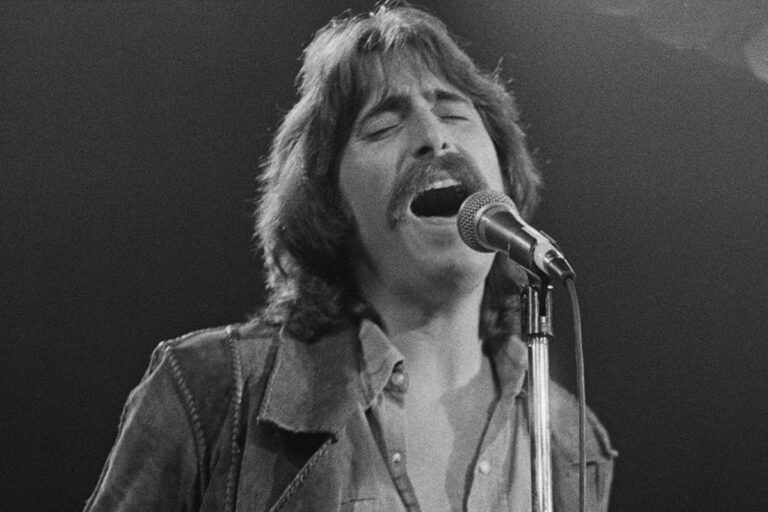

Chuck Negron, one of the founding members and lead singer of rock hounds Three Dog Night, died on Monday, Feb. 2. He was 83.
Negron passed away at his home in Studio City, California, surrounded by family, according to a representative for the artist. Although a cause of death was not given, a statement said that the singer battled chronic obstructive pulmonary disease, or COPD, for decades, and in his final months, suffered from heart failure.
Born in Manhattan, New York City, on June 8, 1942, Negron sang in doo-wop groups and played basketball while growing up in the Bronx. After high school, he was recruited to play basketball at Allan Hancock College in Santa Maria, California, and later at California State University in Los Angeles.
After landing in Los Angeles, Negron began exploring Hollywood’s music industry, and in 1967, he founded Three Dog Night with Danny Hutton and Cory Wells. With roots in R&B, rock-n-roll, and doo wop, the group would land their first big hit with “One (Is The Loneliest Number),” written by Harry Nilsson, and peak at Number Five on the Billboard Hot 100. The band would go on to garner 21 consecutive Top 40 hits between 1969 and 1975 through songs written by other musicians, including two-time Grammy-nominated “Joy to the World” (Hoyt Axton), Eli’s Coming” (Laura Nyro), “Mama Told Me Not to Come” (Randy Newman), and “An Old-Fashioned Love Song” (Paul Williams).
In a 1972 Rolling Stone cover story, Three Dog Night was described as “the discoverers, in the sense that they put them on the pop charts, of Nyro, Nilsson, Newman, and even Elton John and Bernie Taupin,” noting that any song the group put on an album “is liable to become a hit single by album airplay and radio station responses.” At the time, as the band began selling out every headlining show, the Dogs were out-grossing the likes of Sly and the Family Stone, Creedence Clearwater Revival, Elvis Presley, and even the Rolling Stones.
Then, at the height of the band’s career, the wild success broke down due to Negron’s struggles with drug abuse and heroin addiction. For a time, the singer lived on Los Angeles’ Skid Row after losing the millions he had made on drugs. The group disbanded in 1976 and reunited in 1982 before breaking up again in 1985 following Negron’s relapse. Hutton and Wells continued under the Three Dog Night banner, and Hutton, the lone original member, still tours today.
After 37 stints in rehab and 13 years, Negron was able to get clean in 1991 and launched a solo career, releasing seven albums between 1995 and 2017. He documented his journey’s vast highs and lows in his 1999 book, Three Dog Nightmare.
In 2015, his bandmate Cory Wells died from blood cancer. After decades of estrangement from Hutton, Negron and Hutton met last year “in a timely effort to exchange apologies and bury the hatchet,” according to a statement.
In a 1998 interview with the Las Vegas Sun, Negron reflected on what he wanted out of life at that point in his career. “I’ve learned that for me, going out there and trying to make 50 No. 1 records or sell another 90 million records won’t do anything for me,” he said. “I know what fixes me: Doing the work, being a musician … earning a living, taking care of my family and having my priorities in order.”
“You must find some peace inside; you must come to terms with the gifts you have, the faults you have … and learn to embrace your life,” he said. “I’m getting more out of life than I ever have because of that.”