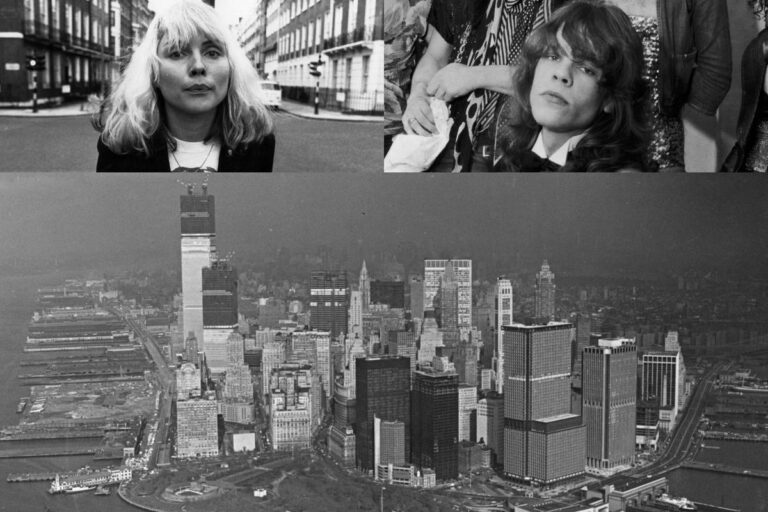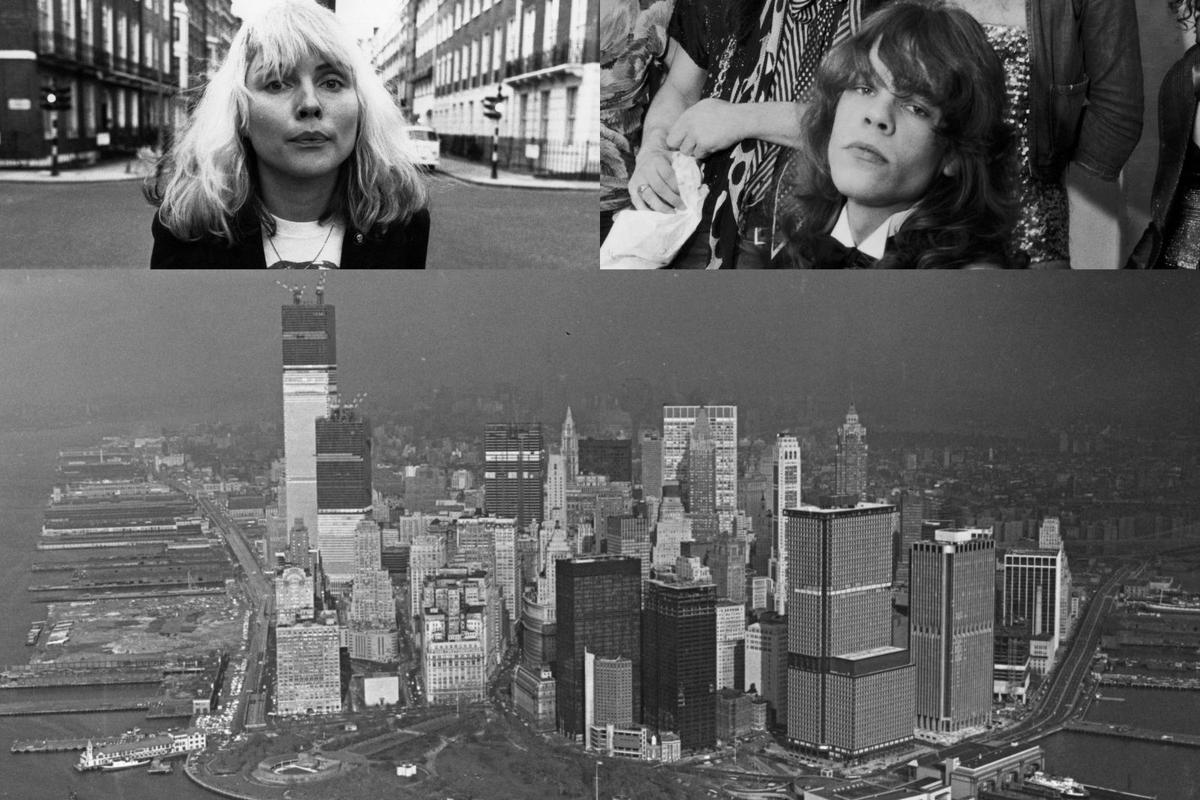

New York City in the ’70s was a place of reinvention and variety the likes of which could hardly be compared to other places. In the same evening, you could attend a poetry reading in a church on St. Mark’s, go see an up-and-coming punk band at CBGB and then perhaps end the evening by dancing the night away at Studio 54.
Life in New York at that time was gritty, no doubt. Violent crime rates were high, economic crisis loomed and a general sense of alarm was palpable — at one point in the summer of 1975, the NYPD began passing out “Fear City” pamphlets bearing an image of a hooded skull, subtitled “A Survival Guide for Visitors to the City of New York.”
And yet, art and music continued to thrive. Punk and New Wave gained a firm foothold in the local scene, as did disco, glam rock and a bit of early hip-hop. Small venues hosted countless acts per night, allowing for a constant stream of new artists to showcase their talent and point the musical landscape in a different, wilder direction. Let’s put it this way: Bob Dylan moved out of NYC in 1973, David Bowie moved in in 1974.
Below, we’ve somehow narrowed it down to four of the most prominent and influential NYC artists of the ’70s.
1. The New York Dolls
You might not think that a band like the New York Dolls, who formed in 1971, released only two albums (1973’s New York Dolls and 1974’s Too Much Too Soon) and then promptly broke up in 1976 would really mean anything to the bigger musical picture, but they absolutely did.
New York is world famous for being the sort of place one can freely dress and express themselves however they see fit — something the Dolls embodied perfectly in the ’70s. They’d rummage through thrift store bins and other sorts of vintage boutiques, picking out high heels, makeup and various things made of latex, satin and sparkles to create a band look that clearly nodded to drag culture, blurred the lines between male and female fashion, and yet was still somehow rough around the edges. Here was glam rock in all its glory.
The New York Dolls weren’t all that technically proficient, or some might say talented at all, at least from a purely musical standpoint. But that hardly mattered. Their flamboyant presence, coupled with an astounding blast of dirty, anarchic, blasphemous, proto-punk music, made them one of New York’s most iconic acts.
“It was just part of evolution, I think, you know?” frontman David Johansen, who passed away in 2025, said to NPR in 2004. “And everything kind of transcends and goes beyond what went before. And otherwise, what’s the use of doing anything, you know?”
2. Ramones
The Ramones formed in Queens in 1974, but it did not take very long for them to make a name for themselves in Manhattan. Drawing from a huge range of influences — the Beatles to the aforementioned New York Dolls and beyond — the Ramones were one of the earliest examples of punk music taking shape in New York City, which in turn led the way for pop punk and alternative rock in later decades.
A lot can be done with a mere three or four chords, as the Ramones easily demonstrated. Whatever they lacked in songwriting sophistication they more than made up for in their raw sound, high-energy live shows and all around unbridled attitude. At this point in music history, it wasn’t totally clear where rock ‘n’ roll might head next, and the Ramones were evidently tired of the same old lengthy guitar solos and jam sessions. Why not take it back to basics? As one Trouser Press writer put it: “New York’s Ramones blasted open the clogged arteries of mid-’70s rock, reanimating the music.”
Like the Dolls, the Ramones’ affect – both in the ’70s and still today — did not come from their literal skill. Instead, they showed that old influences combined with new energy and an open mind could be just as riveting. (Down the line, the Ramones’ impact can clearly be heard in bands like Green Day, Blink-182, Fall Out Boy and many more.)
“Punk means somebody that — it’s an attitude and it’s something that’s osmose in your guts [sic] that makes you swing,” Joey Ramone said in a 1988 interview. “It’s like I don’t wanna to conform, I don’t wanna be like everybody else, I don’t wanna be a part of the masses. I wanna be my individual self just the way I see it, having your own ideals and own set of principles and doing it your way, when a lot of people, they’re gonna turn on you because you’re going against the rules or the grain or whatever. And there’s nothing wrong with that at all. That’s the right way to be.”
READ MORE: The Night the Ramones Played Their Last Show
3. Kiss
We could not possibly describe Kiss‘ impact in just a few paragraphs — whole books have been written on the matter. But here is what we will say…
The original and most iconic lineup of Kiss (Paul Stanley, Gene Simmons, Ace Frehley and Peter Criss) formed in 1973 and their first show together was for just a handful of people at a place called the Popcorn Club in Queens, but by the end of the year, they’d secured a record deal via a demo tape made with producer Eddie Kramer and were already in the process of recording their first album.
In reality, the first half of the ’70s weren’t all that great for Kiss — both their debut album and their follow up did poorly on the charts. But one thing that was more than obvious to everyone around Kiss was that here was a band of performers. Sure, rockstars had worn makeup before, but certainly not in the full-blown theatrical way Kiss did. And yeah, there were bands that dabbled in some intricate stage props, but if you went to a Kiss concert you could expect to see Frehley’s guitar bursting into real flames and dangerous looking sparks popping out of Criss’ dum kit.
Major commercial success did not find Kiss until the latter half of the decade with albums like Alive! and Rock and Roll Over, but what Kiss seemed to understand from the very beginning is that to make it in show business, especially in world-famous New York City, you have to put on, well, a good show.
4. Blondie
Blondie‘s most successful era came as the ’70s gave way to the ’80s, but that didn’t mean they hadn’t been working their tails off, both as individuals and as a band, for years. Singer Debbie Harry, a former waitress and Playboy bunny, came from a folk rock background, while guitarist Chris Stein had first met Harry in a band called the Stillettoes.
Almost immediately after their formation, Blondie became regular performers at places like CBGB, Max’s Kansas City and more — if you know anything about the history of music in New York, you know that this was the moment in which punk and New Wave finally began to descend on the city, and Blondie appeared at what seemed like all of the hip venues. The precise definitions of those genres were up for some interpretation, but you generally knew it when you saw it, and Blondie was smack in the middle of it. By the end of the ’70s, they had four albums to their name, two of which were big chart hits in both the U.S. and U.K.
Harry in particular represented a certain kind of New Yorker that has since become iconic. Friends with the likes of Andy Warhol, Fab Five Freddy and Bowie, Harry had her finger on the city’s pulse, from art to music to social scenes. She appeared to care little for whatever dated standards were expected of women then, choosing instead to embrace her femininity and sexuality in the coolest of ways in front of audiences — the punkish Marilyn Monroe of New York City.
Top 20 New Wave Bands
As a musical movement, new wave is hard to pin down.
Gallery Credit: Corey Irwin