
Before albums became the benchmark for those wishing to make big statements, singles were the best representation of an artist’s merit. If something couldn’t be said in a three and a half minute song, then it probably wasn’t worth saying.
As albums gained popularity and significance, singles lost some of their value. But music is still carried by songs, slices of life distilled into immediately memorable, radio-friendly moments of joy, sadness, anger, nostalgia and all the other emotions. And that’s where singles still matter. The formats have changed over the past century — from shellac to vinyl to CDs to digital and to vinyl again — but their purpose has remained relatively the same for more than a century: to sell the song.
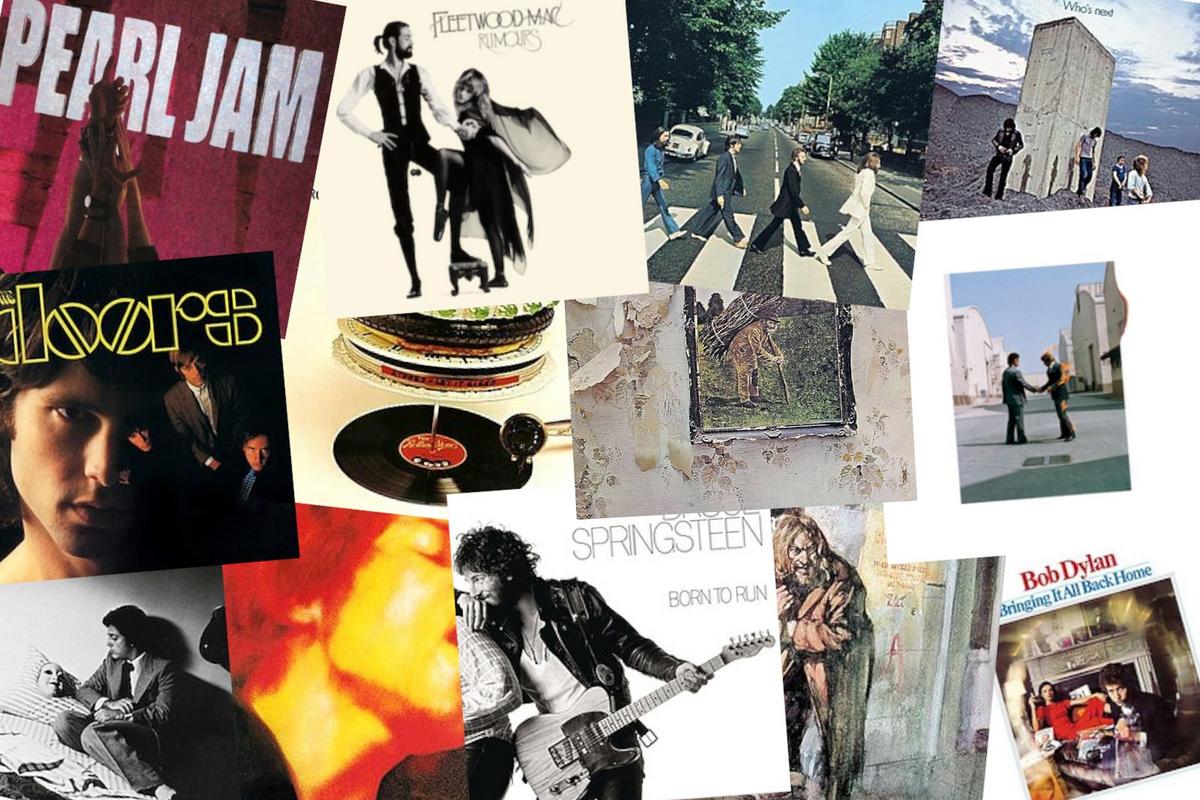
The following list of 40 Classic Rock Songs Never Released as Singles includes dozens of tracks that fit the criteria for singles, from constant airplay to near-immediate familiarity. But they are all album tracks. For clarification, these songs weren’t singles at the time of their original release in the U.S. or the U.K.; however, several were released as singles in non-English-speaking regions such as Belgium, France and the Netherlands, sometimes years after they were first issued. Also, the list features songs that weren’t single A-sides, even though they may have been tucked away on the flip.
Jethro Tull, “Aqualung” (From Aqualung, 1971)
Jethro Tull‘s breakthrough 1971 album Aqualung contained two singles, but its familiar title track, a longtime popular radio and live favorite, wasn’t one of them. The band’s fourth LP was their first U.S. Top 10, thanks to songs such as “Cross-Eyed Mary,” “Hymn 43” and “Locomotive Breath.” But much of its success can be attributed to the six-and-a-half-minute opening “Aqualung” and its defining riff and invigorating flute solo.
The Who, “Baba O’Riley” (From Who’s Next, 1971)
It wasn’t the unconventional length that kept the Who‘s “Baba O’Riley” from being released as a single from Who’s Next; the longer-running “Won’t Get Fooled Again” was the album’s first single after being trimmed for AM radio. The extended synthesizer passages probably weren’t a hurdle either (again, see “Won’t Get Fooled Again”). But outside of select European countries, this classic never saw a proper single release.
Pearl Jam, “Black” (From Ten, 1991)
Technically, Pearl Jam‘s early single releases are sketchy, initially relegated to album tracks that received plenty of radio airplay. “Black,” one of the most popular songs from their debut album, Ten, which slowly gained an audience in the year following its August 1991 release. The band’s label urged them to release “Black” as a single, but they refused. The song still reached No. 3 on Billboard‘s Mainstream Rock Tracks.
READ MORE: 40 Songs That Weren’t on the Albums They Were Named After
Creedence Clearwater Revival, “Born on the Bayou” (From Bayou Country, 1969)
“Proud Mary”‘s B-side is almost as famous as Creedence Clearwater Revival‘s first Top 10 hit. According to Doug Clifford, “Born in the Bayou” was supposed to be the A-side but was exiled to the flip, even though it was a favorite among the band members. California-born John Fogerty set the song in the South, a place he’d rarely visited, and practically defined swamp rock in the process. It remains a favorite among CCR fans.
Joni Mitchell, “Both Sides Now” (From Clouds, 1970)
Folk singer Dave Von Ronk released the first version of Joni Mitchell‘s classic “Both Sides Now” in 1967; Judy Collins had a No. 8 hit with her version the next year. Mitchell’s version was released in 1969, on her second album, Clouds. Partly because of Collins’ well-known version, Mitchell’s acoustic rendition remained an LP track, while another frequently covered Mitchell song, “Chelsea Morning,” was released as a single.
Grateful Dead, “Casey Jones” (From Workingman’s Dead, 1970)
The Grateful Dead wasn’t known as a singles band and rarely put much effort into making or marketing them. (Their first Top 40 song, “Touch of Grey,” arrived in 1987, more than 20 years after their debut.) Their popularity and growing live reputation in 1970 led to some airplay. The single taken from Workingman’s Dead, however, was “Uncle John’s Band,” their first charting song, and not the fan favorite “Casey Jones.”
Fleetwood Mac, “The Chain” (From Rumours, 1977)
Almost any of Rumours‘ 11 songs could have been singles; four of them actually were. Side 2 opener, fan favorite and the only track on the album written by all five Fleetwood Mac members, “The Chain,” was designated as an LP-only cut and stands out not only for its interconnecting musicality but also as a statement of purpose for the splintering group. For years, the band opened its concerts with the unifying “The Chain.”
The Beatles, “A Day in the Life” (From Sgt. Pepper’s Lonely Hearts Club Band, 1967)
From the start, the Beatles envisioned Sgt. Pepper’s Lonely Hearts Club Band as an album statement, with none of its 13 songs released as singles (though two songs recorded at the start of the sessions, “Penny Lane” and “Strawberry Fields Forever,” were issued four months before the LP). The album’s closing masterwork, “A Day in the Life,” was pieced together from separate songs by John Lennon and Paul McCartney.
Led Zeppelin, “Dazed and Confused” (From Led Zeppelin, 1969)
Led Zeppelin was against singles from the day they formed, citing a desire for their LPs to be taken as complete works; their record company pushed back. “Good Times Bad Times,” clocking in at 2:43, was the only single from their 1969 debut, reaching No. 80 in the U.S. Most of Led Zeppelin‘s other songs weren’t as lean, including concert showpiece “Dazed and Confused,” a holdover from Jimmy Page‘s Yardbirds days.
Traffic, “Dear Mr. Fantasy” (From Mr. Fantasy, 1967)
Traffic had placed three singles in the U.K. Top 10 before their debut album, Mr. Fantasy, was released in December 1967. One track from the LP was released as a single, but Steve Winwood‘s “No Face, No Name and No Number” only skimmed the Top 40 and is barely remembered today. Better known and one of the band’s best songs, “Dear Mr. Fantasy,” closed Side 1 but was oddly never chosen as a single.
Eagles, “Desperado” (From Desperado, 1973)
Despite its appearance on the Eagles‘ best-selling Their Greatest Hits (1971–1975) compilation album, “Desperado” was neither a hit nor a single. The soft-rock ballad served as the title track of their second LP, a concept record about the Old West and its outlaws, drawing parallels with contemporary rock artists. Its popularity was instantaneous, with Linda Ronstadt‘s cover version released just 10 months later.
READ MORE: The 50 Best Title Tracks From Classic Albums
The Rolling Stones, “Gimme Shelter” (From Let It Bleed, 1969)
The Rolling Stones‘ foreboding Let It Bleed opening song sounded like both a warning and the death knell of the ’60s. Altamont was only 10 days away; the literal end of the decade was just weeks away. “Gimme Shelter” begins as a dark storm moves in; four-plus minutes later, the wreckage surfaces in the aftermath among worn gospel voices and frayed souls. It’s not too surprising that the dark song was never a single.
The Beatles, “Here Comes the Sun” (From Abbey Road, 1969)
Only one George Harrison song was issued as a Beatles A-side, and it wasn’t “Here Comes the Sun.” The honor goes to Harrison’s other Abbey Road contribution, “Something” (which reached No. 1 and shared its single status with John Lennon’s “Come Together”). “Here Comes the Sun,” though, has become more popular over the years, the most-played Beatles song on Spotify, and their first to reach a billion plays.
The Velvet Underground, “Heroin” (From The Velvet Underground & Nico, 1967)
A seven-minute song that may be glorifying hard drug use, bathed in distortion and feedback? No wonder the Velvet Underground‘s “Heroin” wasn’t released as a single. Then again, the New York City band was far from singles material ever. Their debut album, The Velvet Underground & Nico, famously pulled away from Summer of Love conventions as so many others cozied up to them. “Heroin” is a harrowing centerpiece.
The Doors, “The End” (From The Doors, 1967)
Really, it’s not so surprising that the Doors‘ debut album-closing epic “The End” was never a single: It runs more than 11 and a half minutes, and its themes of Oedipal lust and death aren’t exactly radio-friendly. Indeed, despite its popularity and legacy as one of the band’s greatest songs, “The End” wasn’t a great presence at FM radio either until later. Poetic, artsy and a mix of Summer of Love idealism and fear, it still resonates.
Van Morrison, “Into the Mystic” (From Moondance, 1970)
One of Van Morrison‘s most popular songs is the spiritual core of his great 1974 live album It’s Too Late to Stop Now, the title of which comes from a line in “Into the Mystic.” But the Moondance album track was never released as a single, despite its popularity among fans and FM radio programmers in the ’70s. “Into the Mystic” has become a signature song for Morrison and his decade-spanning quest for divine enlightenment.
Led Zeppelin, “Kashmir” (From Physical Graffiti, 1975)
By 1975, Led Zeppelin had their own record company and limitless creative freedom. While they were still against issuing singles, they reluctantly continued to do so throughout their career. The double-LP Physical Graffiti was assembled from a mix of new songs and leftover tracks going back to their third album. The eight-and-a-half-minute, Morocco-inspired “Kashmir” was an immediate favorite, but never a single.
Fleetwood Mac, “Landslide” (From Fleetwood Mac, 1975)
Stevie Nicks‘ heartfelt ode to fading youth became a favorite over the years, but in 1975, when she and Lindsey Buckingham made their Fleetwood Mac debuts, no one considered releasing “Landslide” as a single. The song has been played live on almost every Fleetwood Mac tour since 1975, as well as in Nicks’ solo shows. A live version from the 1997 reunion LP The Dance was eventually issued as a belated single.
Jackson Browne, “Late for the Sky” (From Late for the Sky, 1974)
Like many of his singer-songwriter peers in the first half of the ’70s, Jackson Browne wasn’t all that concerned with being a singles artist as much as a musician committed to making album-length expressions. His third LP, 1974’s Late for the Sky, was the first to fully commit to the concept, with many of its songs exceeding the period’s usual radio airplay run time. The album’s title song was later memorably used in the film Taxi Driver.
The Jimi Hendrix Experience, “Little Wing” (From Axis: Bold as Love, 1967)
For all his guitar-playing showmanship and ambassador-to-psychedelic-music legend, Jimi Hendrix was an expert songwriter whose undervalued talent in composing straightforward melodies is rarely mentioned with the same lauded breath. Exhibit A can be found in “Little Wing,” a two-and-a-half-minute ballad found near the end of Axis: Bold as Love‘s first side — an influential number covered by Derek and the Dominos.
Bob Marley & the Wailers, “Lively Up Yourself” (From Natty Dread, 1974)
Reggae was a few years from becoming a dorm-room staple in the mid-’70s, so record companies pushed albums to FM radio audiences and gave secondary attention to U.S. singles. Catch a Fire introduced Bob Marley & the Wailers to the mainstream in 1973; Burnin’ and Natty Dread inched closer to the Top 40. “Lively Up Yourself” was first recorded in 1971, but it’s the 1974 remake as Dread’s opener that everyone knows.
Yes, “Long Distance Runaround” (From Fragile, 1971)
Progressive music was never really suited for the singles market. Radio-unfriendly song lengths, mystical themes and a distaste for pop’s uncomplicated framework tend to deter most groups. Yes was one of the few bands to have hit singles without compromising their prog integrity. The catchy “Long Distance Runaround” runs for a pop-friendly three and a half minutes but, surprisingly, was never released as a single.
Paul McCartney, “Maybe I’m Amazed” (From McCartney, 1970)
Paul McCartney’s love letter “Maybe I’m Amazed” is the highlight of his debut solo album from 1970, released three weeks before the Beatles’ final album, Let It Be, arrived. Although he made a point of not issuing any singles from McCartney, the song was an early solo favorite as the four Beatles prepared to go their separate ways. A live version with Wings was included on 1976’s Wings Over America and hit the Top 10.
Bob Dylan, “Mr. Tambourine Man” (From Bringing It All Back Home, 1965)
The Byrds released their electric folk-rock version of “Mr. Tambourine Man,” a No.1 hit, a month after Bob Dylan included his original acoustic take on his fifth album, Bringing It All Back Home. That likely had little to do with Dylan’s decision to forgo the singles route with his version in 1965. More likely: the song’s five-and-a-half-minute run time and winding, wordy verses, which were incongruous with much of pop music at the time.
Billy Joel, “New York State of Mind” (From Turnstiles, 1976)
Billy Joel was a year away from becoming one of the biggest artists of the next decade when he released his fourth album in 1976. The title song from 1973’s Piano Man gave Joel his first Top 40 hit, but follow-ups mostly struggled until 1977’s The Stranger scaled the charts. He had been playing “New York State of Mind,” always a local favorite, before the song closed Turnstiles‘ first side. Its stature has grown over the decades.
The Band, “The Night They Drove Old Dixie Down” (From The Band, 1969)
While the Band rarely broke into the Top 40 — their biggest hit, “Up on Cripple Creek,” reached No. 25 — they received unanimous praise from their contemporaries. The Dylan connection certainly helped, but Robbie Robertson‘s detailed songs were also a huge part of their popularity. “The Night They Drove Old Dixie Down,” from their second album, was the B-side of “Creek.” Joan Baez took a 1971 cover into the Top 10.
Bruce Springsteen, “Rosalita (Come Out Tonight)” (From The Wild, the Innocent and the E Street Shuffle, 1973)
At seven filler-free minutes, Bruce Springsteen‘s “Rosalita (Come Out Tonight” never would have made it onto AM radio playlists in 1973. The song has been included on several Springsteen compilations over the years, including 2009’s Greatest Hits and 2024’s Best of Bruce Springsteen, despite never appearing as a single. A concert showstopper for Springsteen and the E Street Band, “Rosalita” never fails to excite.
Billy Joel, “Scenes From an Italian Restaurant” (From The Stranger, 1977)
Billy Joel said his longest song, the centerpiece of his breakout 1977 LP The Stranger, was inspired by the second side of the Beatles’ Abbey Road. Stitched together from five distinct pieces and unfurled over seven and a half minutes, “Scenes From an Italian Restaurant” has been a staple of Joel compilations over the years, even though it was never released as a single. Four other songs from the album did reach the Top 25.
Led Zeppelin, “Stairway to Heaven” (From Led Zeppelin IV, 1971)
Probably the most famous song never released as a single, Led Zeppelin’s “Stairway to Heaven” dismantles so many pop radio rules that it’s little wonder the song only found its footing on FM. (The group’s aversion to singles also stalled its release as a single.) At eight minutes and divided into three sections, including an acoustic opening and a cappella ending, “Stairway to Heaven” helped set the template for later power ballads.
The Rolling Stones, “Sympathy for the Devil” (From Beggars Banquet, 1968)
After their fling with psychedelic music on 1967’s Their Satanic Majesties Request, the Rolling Stones returned to a darker shade of their blues roots on the next year’s Beggars Banquet. The opening song, “Sympathy for the Devil,” laid out their intentions and launched a creative new era for the group. The murky, disorienting percussion that introduces the track gives way to six-plus minutes of morbid, terrifying uncertainty.
The Monkees, “(Theme From) The Monkees” (From The Monkees, 1966)
The theme song from The Monkees TV show was released as a single in several countries, including Australia, Japan, Norway and Italy, which had its own native rendition. The full version of “(Theme From) The Monkees,” running nearly two and a half minutes, was featured as the opening track on the group‘s self-titled debut album. Despite reaching No. 1 in many countries, it wasn’t a single in their U.S. homeland.
Bruce Springsteen, “Thunder Road” (From Born to Run, 1975)
Bruce Springsteen’s third album arrived in late August 1975 with burning industry and mainstream buzz. Born to Run was greeted by fans and peers with enough enthusiasm to crown him rock’s Next Big Thing. The album’s title track became his first Top 40 single, finishing just outside the Top 20, but the opening cut, “Thunder Road,” set the LP’s tone from its opening lines. It became an immediate concert favorite.
READ MORE: Bob Dylan Albums Ranked
Bob Dylan, “The Times They Are A-Changin'” (From The Times They Are A-Changin’, 1964)
Never released as a single in the U.S., but pulled for release as a single in the U.K. more than a year after its initial appearance on Bob Dylan’s third album, “The Times They Are A-Changin'” seemed like an obvious fit in 1964. The folk movement’s mainstream influence was never stronger, and Dylan was quickly becoming a household name. Yet, the song remained an album track and one of his most popular.
The Rolling Stones, “Under My Thumb” (From Aftermath, 1966)
A repeating presence on Rolling Stones compilations (appearances on Hot Rocks, Forty Licks and GRRR!, among others) deceives many to assume “Under My Thumb” was issued as a single upon its release in 1966. Yet it’s an album track from Aftermath that evolved on its own from the band’s first LP-length masterwork. Despite its unconventional structure, “Thumb” was a popular concert choice for decades.
The Jimi Hendrix Experience, “Voodoo Child (Slight Return)” (From Electric Ladyland, 1968)
Bypassed in favor of his celebrated cover of Bob Dylan’s “All Along the Watchtower” and his own “Crosstown Traffic” as singles from the Jimi Hendrix Experience’s third album, Electric Ladyland, the double LP’s closing “Voodoo Child (Slight Return)” developed in the studio the day after the album’s nearly 15-minute jam “Voodoo Chile” was recorded. This shorter version is definitive and one of Hendrix’s greatest pieces.
The Beatles, “While My Guitar Gently Weeps” (From The Beatles, 1968)
The Beatles famously released no singles from Sgt. Pepper’s Lonely Hearts Club Band; when they returned a year later with an eponymously named LP in a plain white sleeve, they issued no singles from it either. But that didn’t stop fans and adventurous radio stations from playing their favorite cuts. George Harrison’s sublime “While My Guitar Gently Weeps” is one of the album’s greatest songs. But it was never a single.
The Allman Brothers Band, “Whipping Post” (From The Allman Brothers Band, 1969)
The studio version of “Whipping Post” from the Allman Brothers Band‘s self-titled 1969 debut runs at an economical five-plus minutes; it’s the live take found on 1971’s At Fillmore East that made its reputation at nearly 23 minutes. Unsurprisingly, the epic concert take was never issued as a single; more surprisingly, the sturdy studio version was passed over for the more conventional blues of “Black Hearted Woman.”
Pink Floyd, “Wish You Were Here” (From Wish You Were Here, 1975)
By 1975, Pink Floyd, renewed by the success of The Dark Side of the Moon, wasn’t very interested in turning their impeccably crafted albums into singles, especially since FM radio was now eager to play their albums in full. Even though their label wanted Wish You Were Here‘s title song to become a single, the group resisted. No matter — “Wish You Were Here” became a much-played classic anyway.
Carole King, “You’ve Got a Friend” (From Tapestry, 1971)
Many of Carole King‘s best songs were covers by others, starting in 1960 with the Shirelles’ No. 1 “Will You Love Me Tomorrow” and continuing through the decade with “The Loco-Motion” (Little Eva) and “(You Make Me Feel Like) A Natural Woman” (Aretha Franklin). While King first included “You’ve Got a Friend” on 1971’s era-defining Tapestry, it was friend James Taylor who had a hit with the song a few months later.
David Bowie, “Ziggy Stardust” (From The Rise and Fall of Ziggy Stardust and the Spiders From Mars, 1972)
The key song on David Bowie‘s landmark 1972 album — it sums up the protagonist’s story in a little more than three minutes — wasn’t a single at the time, but a live version of “Ziggy Stardust” was released as a single from the Santa Monica ’72 album in 1994. Though a concept record, The Rise and Fall of Ziggy Stardust and the Spiders From Mars‘ 11 tracks stand on their own; “Ziggy Stardust” is one of its best.
From The Beatles to Led Zeppelin and More: The Top 35 Double Albums
When twice the amount of music really matters.
Gallery Credit: Michael Gallucci