
J
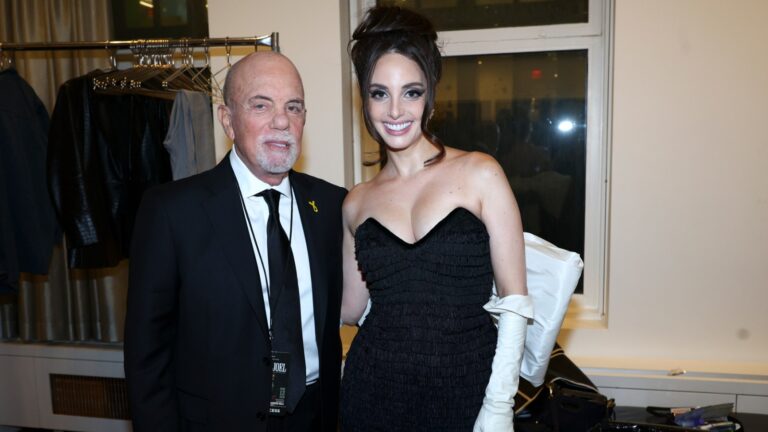
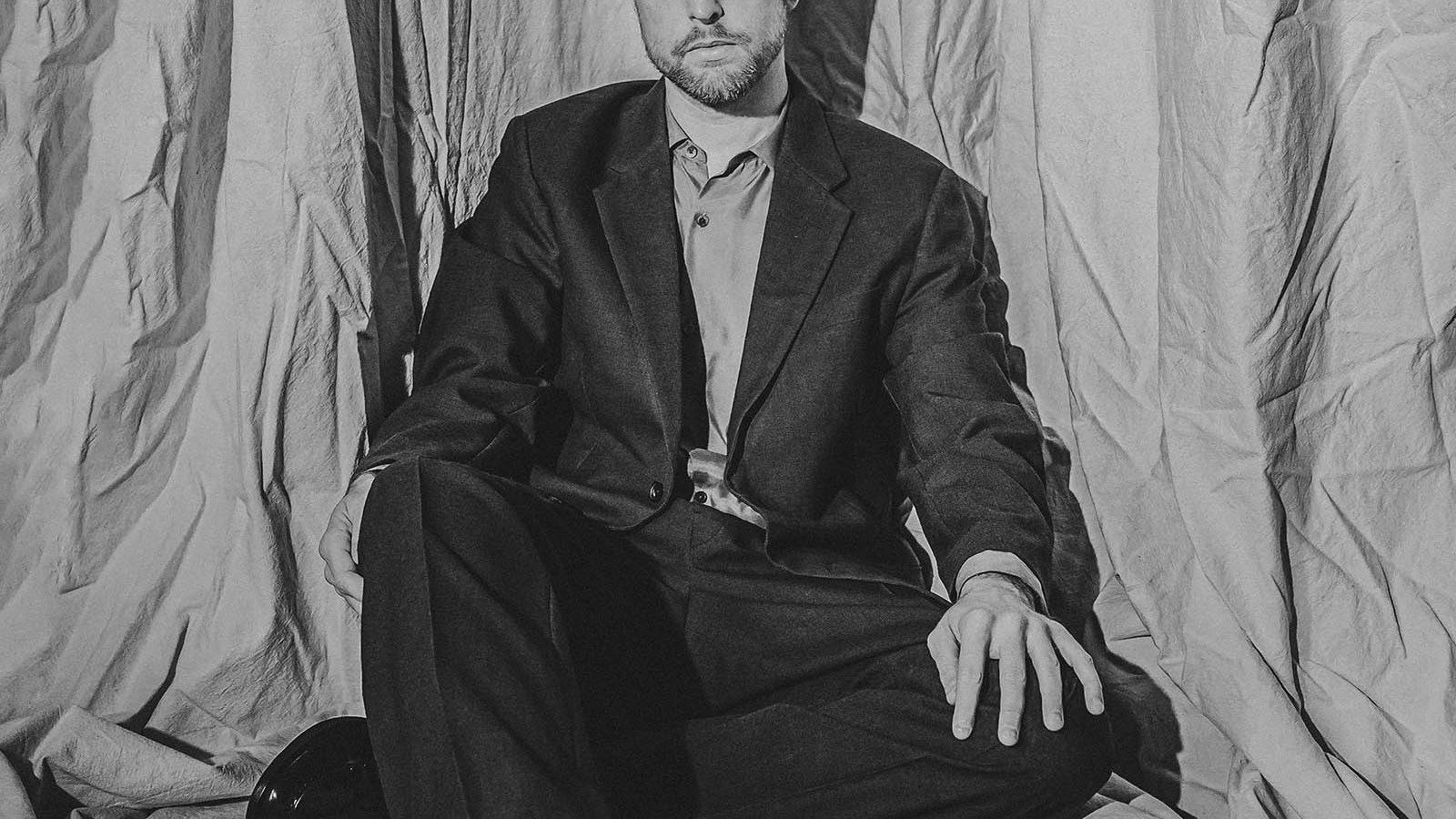
ames Blake is feeling back at home in London. He and longtime partner Jameela Jamil made the move in 2025 after living in Los Angeles for 11 years — almost the amount of time that Blake, 37, has been one of the music industry’s most potent secret weapons, having worked with everyone from Beyoncé to Bon Iver. He’s in New York on a press run for his album Trying Times, a collection that finds him at his most confident musically and offers an introspective view of the world we’re in. Sonically, it glides between the sounds and instincts that have been present throughout Blake’s career, from the brooding and expansive ballads of his 2013 breakout, Overgrown, to the ambient experimentation of 2023’s Playing Robots Into Heaven.
As a collaborator, Blake’s harmonic vocals have their own kind of gravitational pull, capable of infusing any sonic environment with emotional heft. Across genres, from hip-hop and R&B to alternative and beyond, Blake has had as prolific a career shaping the sounds of other artists as he has evolving his own musical output. Even so, there are still hours of collaborations that, as he points out, will likely never see the light of day. For Blake, it’s all in a day’s work. “I don’t think of it like landing a track with someone,” he says, “I just care about the music if it’s good.”
As his seventh studio album and first full-length released independently on his own Good Boy Records, Trying Times also arrives as a statement of artistic self-possession. U.K. rap heavyweight Dave offers a vibrant flow that affirms his countryman’s current hot streak on “Doesn’t Just Happen,” while the album’s lead single, “Death of Love,” has the melodic groove of a velvety Eighties pop hit. Blake’s penchant for electronic soundscapes, meanwhile, has been subdued. “The process of production has veered so far into the automated, it almost feels rebellious to pick up a guitar,” he quips.
So, Trying Times. Tell me about the process of making the album.
It’s been a few years in the making. Some of the tracks were started during the pandemic, actually. A lot’s happened since then. I wrote it with a very small crew of people who are like my chosen musical family: Don Maker, Jameela, Bob Mackenzie, Josh Smith. These people have been mainstays in my musical writing for a long time. And, yeah, [I’m] just trying to reflect the world as I see it through my own lens.
The title is striking. We are living in trying times. What inspired you to look in that direction?
Trying Times is quite an understatement. In England, if you’re going through something truly hellish, you might say, “Trying times.” So it’s meant to be a little bit of an understatement, really. I think everyone will feel that way when they see that as the description.
I feel like your music is often quite romantic. It’s interesting that you’ve got this song “Death of Love” that’s the opposite of that.
Well, it’s not a breakup song, as much as it might seem like one. It was written at a time when I think online discourse was approaching maximum lack of empathy. I think people’s desire to be seen was blocking their ability to see others. I think now we’re starting to realize how much of it is bot-driven and algorithmically driven, and how much of it is purposeful. I was reading a leaked email where somebody within their own company had basically sent this email saying, “We want maximum engagement. We need maximum anger. We need maximum rage bait.” And these are company directives, right? So, how far back does that go? How much of what we’ve seen has been real? So “Death of Love” covers that idea. I don’t know if I arrived at any answers.
Your previous record was leaning back into the more electronic roots of your earliest releases. And then this one, it seems like a lot of the songwriting is on guitar and more traditional instruments.
I’m known in a way as a sort of electronic leaning musician, right? I’ve always tweaked my voice and made it sound disembodied and alien, but I think now so much of music sounds like that anyway. Even when people are trying to sound natural, because of production techniques, there’s actually such an alien disembodied quality to a lot of music anyway. The novelty wears off. The process of production has veered so far into the automated, the compressed, or the flat-lined, and especially with AI techniques, that it almost feels rebellious to just pick up a guitar. It’s kind of weird how things come around like that. But to just really focus in on your instrument, actually, not even just pick up a guitar, but to try and master it. Not that I did at all, but with the piano I feel like that’s what I’ve set out to do.
I think you were using modular synths for your last record, and now it’s like you’re almost doing the same technique, but by hand, almost, right?
So, with what I was using on Playing Robots, it was a lot of modular synths, and they’re notoriously hard to control and to replicate as well. To repeat a trick, it’s very difficult. Because the way you wired it up, how it’s all reacting to each other, it’s not really repeatable, to be honest. And if it were, it would be boring, and people probably wouldn’t use it. That’s why people like it. But this record, I didn’t really use any modular synths. What I did use was a lot of strange sequencing stuff on songs like “Rest of Your Life.” There’s the piano that’s kind of that ’90s rave-style piano that’s going on. It’s kind of arpeggiating everywhere. That was done on a sequencer called the Torso T1, and it’s a kind of generative sequencer, but you’re essentially applying parameters within which it will kind of … I mean, you are actually inputting parameters that should lead to a specific result, but because there are so many parameters, it gets out of control very fast. I was just sitting on a plane. I made it on headphones on a plane.
So in a situation like that, is it almost like whatever comes out is this impromptu sound that you end up running with?
Yeah. I almost always improvise something, then chop it or create something from it. I go through a lot of different gear. I try different things. I’ve probably sat with for at least a few hours every sequencer on the market, just to see, or something analogous to it, just to see what I can come up with. And it’s a privilege to be able to do that because I don’t sell a lot of it. I just buy it and then it just sits there.
Where does it all live?
It lives in my sort of hellish hoarding storage unit. Which I’m clearing out at the moment.
You’ve been with Jameela Jamil for some years now. How does she help you creatively?
She’s the exec producer, but she is also producing on the tracks. They’re sort of two kinds of different roles. So it’s the same job description as the other producers on the record, basically, but in terms of arranging, referencing, bringing things to their fullest potential, that relationship started because she always had very impactful observations about songs, where I was like, “I don’t know how to get it there.” And she would unlock things creatively, even back to The Colour in Anything. To have the sort of acumen and knowledge to get you there is very special. So I feel lucky that that’s my partner — partner in life, but also in music.
One of our future music cover stars is Lola Young, and I know you guys have been working together. What was that like? How’d you guys meet?
I’m pretty sure I got in touch with her. I said I wanted to work together. She is amazing. She’s just got one of those voices. I was saying this the other day that I think there’s a misconception about voices, that you just have a voice. I don’t think you’re just born with a voice and then maybe refine it a little bit; I think the voice is carved over time because it’s a physicality, right? The way the voice resonates around your skull, basically, and there are other things that are involved in it.
But it’s like, your voice is, I think, carved out and arrives at that because of the message. I think to accommodate the message that you’re being given or that you’re trying to send, right? And whatever spiritually you receive through here, it’s kind of like it just evolves to pass that message on. And so, I feel like with Lola that it’s just very obvious that that’s happening. Whenever I hear her voice, I’m like, it’s like more than the sum of its parts. There are some voices that are more than the sum of their parts, and to have that so young is actually really unique. And I just love her, I think she’s a great person, and I just always wish the best for her. I’m just rooting for her.
Did you find yourself relearning instruments or techniques in real time on this record?
I tend to learn by trying things rather than by studying. But when something requires it, I go, “OK, let’s give this a go.” “Just a Little Higher,” for example, is that. That end section where the strings go from this very euphonic, primary-colors, sweet-harmony thing to this very chaotic, dramatic moment with some quite angular chord changes was one of my favorite moments on the record. It took a lot of work, but it was just so worth it.
This is also your seventh full-length album.
Fucking hell, yeah.
How much stuff is left on the cutting-room floor?
If I think about that, I’ll probably cry. There’s at least three albums with people who are a few of my favorite artists of all time that haven’t come out.
How does that work when you get the call from someone and it’s X, Y, Z, and then you work, spend all these hours doing it, and then you kind of just go home and hope for the best?
Yeah. I’d say 99, not 99. 95 percent of the work I’ve done was unpaid.
Unpaid?
Yeah.
How’s that happen?
Well, because as a producer, you’re just throwing paint, you’re throwing stuff at a wall and seeing what sticks. And sometimes a lot of things that people don’t put out or that sits on a hard drive for a long time. And that includes my own stuff, by the way. But actually, well, if I was including my own stuff, the percentage would probably be higher. But yeah, I’d say the 10,000 hours that we talk about arriving at some kind of mastery of something, I probably spent that just doing things that never came out, which is nuts really.
It’s not even a complaint. It’s just the way the industry kind of is that producers don’t get paid by the hour. If you land something with someone, but I don’t think of it like landing a track with someone, I just care about the music if it’s good. And probably sounds like a bit of an embarrassing statistic to say they didn’t even release. But actually, it’s more like hours spent on things, right? So you can spend a lot of hours on a piece of music, and then the direction of a record can change. And that can happen with me too. I can just wake up one day and just realize, “Oh shit, we’ve been going in the wrong direction.” And then five to 10 songs just disappear.
God.
And that happens all the time. I think it’s just part of the creation of music. I think a song needs to represent you when you first make it, but it also needs to represent you when you put the album out and a lot can change in that time. And then there’s just huge life changes that people go through, but yeah, it’s an unusual industry for sure in terms of the way things are re-enumerated, the way time is rewarded. I think to come up against that kind of numbers game, I think you have to have a really true obsession with create, making music.
You mentioned with “Death of Love” that you had written that or started on it in 2020, and in between that, you dropped like three records. How do you shift gears between projects like that?
ADHD. Yeah. I’ve just got really good sort of … Well, it’s funny because at once, ADHD allows you to be highly functional at doing lots of things at once, but it also stops you from being able to do one thing well and for an extended period of time, right? And actually, this year, I feel like my primary goal has just been to fix my brain. And so I’ve been really on one with that because I want to be able to focus on things. I want to be able to focus on this record. And I think a huge amount of my lack of, I say like I just carried on making music. It’s like I wasn’t able to just follow through on things. I’d make a record, be so excited about it, and then I’d just go, “Well, I’ve done that now.” And then I wouldn’t promote it, which is a crazy thing to do when you put that much money, money, time into it, actually to be fair.
I didn’t know how to apply myself for an extended period of time. I saw a clip of Tyler saying, “I’m still promoting this record after two, two, three years.” And that’s amazing advice for artists. You never know when that thing’s going to catch, and if you just keep laboring it, keep putting it in people’s faces, keep being like, “Listen to this, listen to this new music.” Often, people give up too early, and I give up basically day one. I’d just be like, “Cool, I did some interviews. Now let’s just go make another song.”
Yeah. I feel like your whole career, you haven’t really been a huge promotion type of guy.
No, I haven’t. Apart from today, obviously, where I’m having a huge amount of fun, and it’s fucking relentless. It’s absolutely relentless. I can see why people don’t do it, but it’s also rewarding in a sense that you know that you’re pushing this rock up a hill and you want to really show people this thing you love and that you’re proud of. And that’s why I’m doing this time. And I think literally just being like, okay, if I had a kid and they’re bouncing off the walls, can’t focus on anything and then just move on from everything, it’s like, what would I do? And I’d be like, well, probably wouldn’t give them sugar, wouldn’t give them processed food, and I’d make sure they were exercising. So now I just walk around going, I’m five, what would I do? What should I do? And that’s actually kind of fixing it, to be honest. I think that is the hack.
If you could pick a collaborator, living or dead, who would it be?
Somebody I really wanted to collaborate with, who then passed away, was Ryuichi Sakamoto.
It’s almost surprising that it didn’t happen. I feel like you were right there.
You know what? It’s so sad. I just thought I had more time. I was going to reach out, I just thought I had more time. You just think these people will live forever. So, if anyone wants to collaborate with me, just get in touch soon.