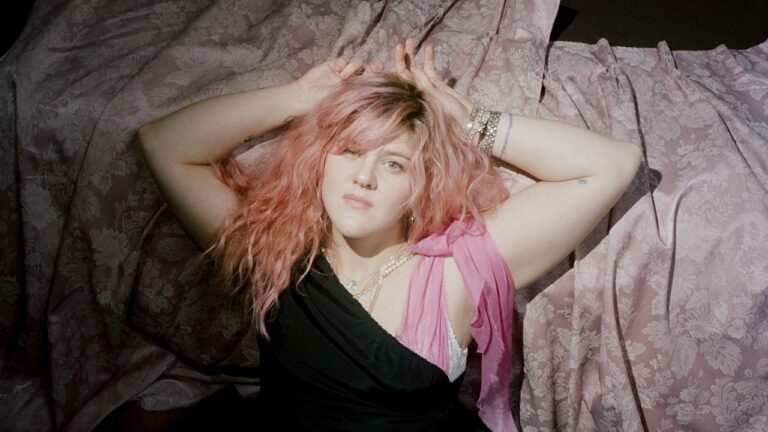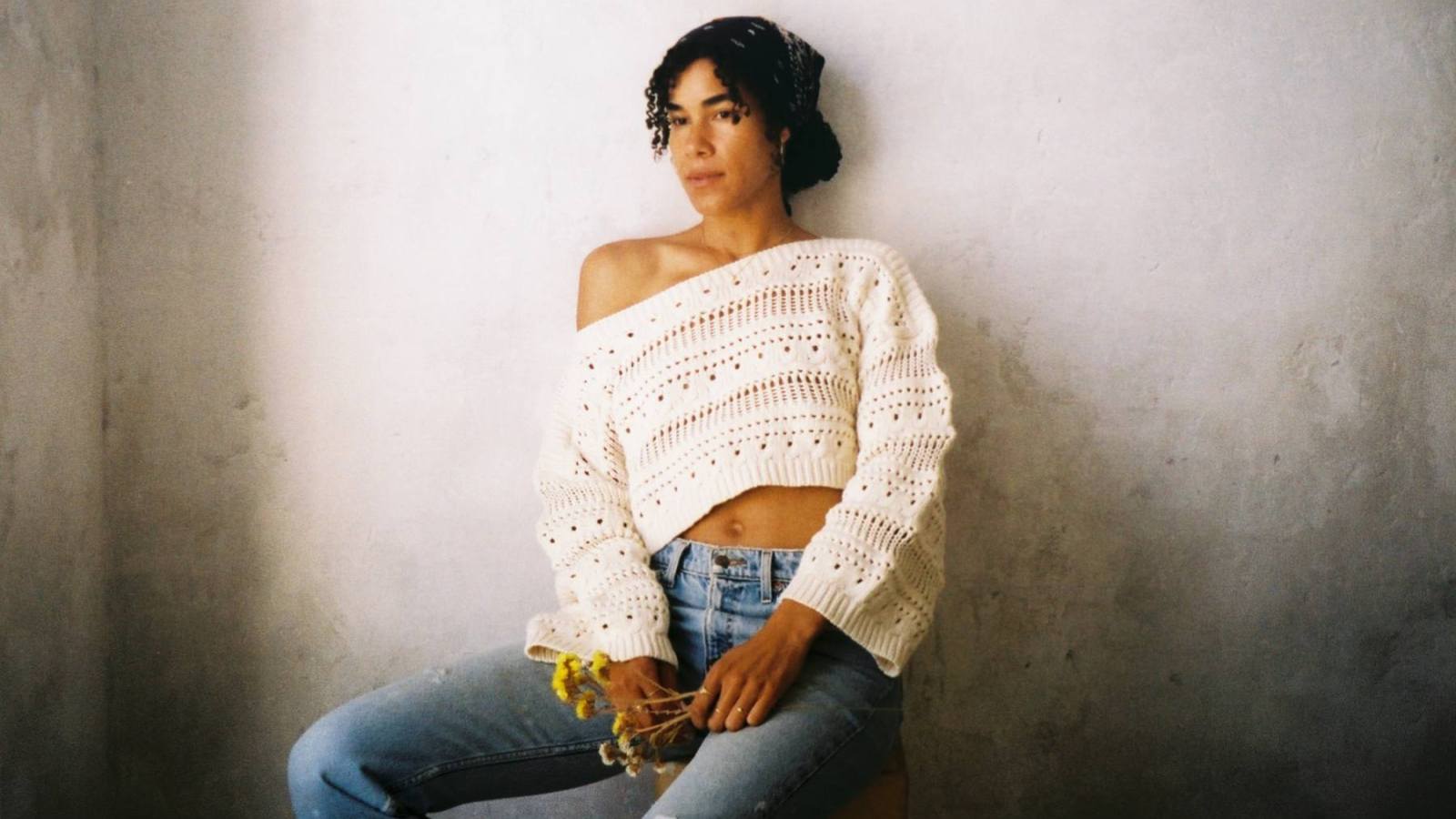

Malia doesn’t believe in chance. The singer-songwriter from Texas holds her paper cup of tea as she says this and continues, “It’s my destiny and my journey to be on this path. I couldn’t quite get away from it. I actively tried. I really wasn’t thinking about music at all until I was about 28. I liked to sing, and it always made me really happy in my heart, but I was not actively thinking about pursuing music in that way.” She pauses and adds, “Once I said yes to the journey, doors started opening for me.”
Her words echo 2017’s Late Bloomer, one of her early breakthroughs, a lush EP that explored a period of self-growth and new love, while introducing her signature velvet voice to a new audience. For the project, she collaborated with producer Nick Green, whose resume includes Zayn, The Internet, and Kaytranada, among others, plus a co-writing credit on Beyonce’s Grammy-winning song, “Plastic Off the Sofa” off Renaissance. (Malia and Green would collide again years later, more on that Hollywood-coded moment in a bit.)
Since then, Malia has steadily delivered an evolving repertoire of music rooted in her striking vocals and vivid storytelling that has often been lifted from the pages of her journal. At 39, Malia is speaking with Rolling Stone and looking back at a journey that has just begun but at times feels heavy with the highs and lows of an industry that can both reward and devastate you. From Alicia Keys requesting a cover for the 20th anniversary of Songs in a Minor to signing away the masters to Late Bloomer, the road that led Malia to music has continued to be long and winding.
Today, it’s led her to Herst Coffee, a small cafe in Newport Beach, California, steps away from the pier. We’re sitting at a sunny table outside as shoppers in their sandals and glinting sunglasses pass by for last-minute Valentine’s Day shopping. I’ve just listened to Malia’s timely “Not a Love Song” from her fifth studio album If I’m Being Honest releasing in spring and it’s a joyful declaration of autonomy sung over the romance of bossa nova. I look over at Malia, who’s wearing a vintage, single-stitch Michael Jackson tee and petting a mini golden doodle named Mooji on her lap (she’s dog-sitting for a friend). I ask her to tell me about the record and like her music, Malia replies in an unhurried and introspective way.
“It fits perfectly, because these works of art are honest representations of me. It may be a little bit provocative, and it may turn some heads, but the songs are true,” she says. While her previous album, 2024’s Back in My Body, was a reclamation of self post-heartbreak, Malia explains that If I’m Being Honest is an extension of that. “I’m leaning into the best version of myself. Now, I can sink into that and be okay with being just me and not apologizing. This is who I am, and this is my offering.”
The singer points to a song from the project called “Shallow” as an example. “I’ve had different situations in my life. I’ve had men that I’m very attracted to, but generally those ones don’t bring any of the depth that I’m seeking. And then I’ve had divine, generous men, but the chemistry just wasn’t there,” she says. “I’m writing about wanting the whole package. I’m not shallow, but I’m nuanced.”
For Malia, getting to this point of vulnerability has been a decade in the making. While she played the piano and sang in choir growing up — there’s a fuzzy VHS video of her at four-years-old locked in to a rendition of “Spoonful of Medicine — the idea of making a living from music “sounded so far-fetched and I didn’t have the confidence to do that.” In 2009, after moving to Orange Country, Calif., she graduated from Chapman University with a degree in political science and sociology, “peddling the story” that she intended to go to law school. “I knew deep down that was never going to happen,” says Malia, who had moved to a tiny room in the valley with no car, no furniture, and just a bed and a guitar. While working “dead-end jobs” she hated in Los Angeles, Malia began teaching herself how to play the acoustic through YouTube.
“I hit rock bottom,” she says. At the time, she told herself, “It can’t get any worse. If I try this music thing and I try to put myself out there and get shut down, I’m in the same place I am now. But what if something good happens?” The musician began to put video clips of herself singing on Instagram — “back when it was just 15 seconds and it got on to you people’s radar” — and few months later, Matt Martians from The Internet invited her to his studio, giving her the opportunity to record some of her first tracks. “10 years later I’d be across the street at a different studio in a totally different place in life,” says Malia, who is cutting her new album at Furaha Sound off Sunset Boulevard. “It was a huge leap of faith, saying yes to a journey that I had been running away from for a long time. Music has always been the thing that lights me up the most.”
Jan Christiansen
In 2017, her collaboration with Green, Late Bloomer became her most commercially successful EP to date with the track “Naked” racking up more than 21 million Spotify streams alone. Yet at the time, Malia was unrepresented and as she puts it, “very naive.” In the 11th hour, the singer says she was pressured by an unnamed songwriter and their manager into signing away her masters and walked away with only a minority percentage in her music.
“I was in tears across the table. It was the first time I had dealt with anything like this, because before, it was just me making music in my bedroom,” she says. “I got burned.”
Years later, the topic remains a source of heartache for Malia. The songwriter was not just a collaborator but a longtime friend she had trusted. While she’s tried reaching out several times to renegotiate, Malia says the songwriter has remained inflexible.
Still, Malia prefers to look ahead and not linger on the past. Today, the singer is managed by Jan Christiansen, and her circle of confidantes is tighter than ever. She’s released four stunning albums, each marking distinct eras of her personal and professional evolution, and four EPs.
Then, in 2021, she received an email from Keys’ team requesting Malia cover a song as part of a special “Spotify Session” celebrating the 20th Anniversary of Songs in A Minor. Malia sang the tender “How Come You Don’t Call Me” (originally released by Prince in 1982) and following its debut, Keys sent her a note: “You are unbelievably talented!! Thank you for putting that gorgeous voice and beautiful energy into the world.”
In a way, the multi-Grammy winner’s message seemed like a gentle preview of things to come. And eight years after the release of Late Bloomer, Malia ran into Green while walking home from a farmer’s market. The producer, who no longer lived in L.A., was in town for work. He spotted her while driving and pulled over. “We ended up chatting on the sidewalk for two hours,” says Malia. “I never thought we would work again, just because how things kind of went down. It felt good to be able to talk to him about the situation all these years later, and to get a bit of validation.” Rather than focusing on the past, however, Green encouraged Malia to continue making music together.
“We both matured as people,” she says. “I’m certainly not the same person I was. I learned so much about the industry and have grown as a person, as a woman, as an artist. I was so so green back then. I know how to weather the storm now, and I know what questions to ask, and I know what paperwork needs to be done before we go into the room together.” Malia says, “I’m gonna lean into the fact we were supposed to reconnect and it feels good to not hold onto anything that just isn’t of a high vibration and isn’t serving me in the best way.”
With If I’m Being Honest poised to release this spring, date pending, the singer says she hopes her work invites others to find their own sense of clarity. “Some of the deepest work that we’ll ever do is create a safe frame within our construct and beliefs,” she says. “It’s some of the toughest work we do, because it’s not the work of a lover or a parent or a friend. No one else can do that work for you.”
When musing on where she’s been and where she’s headed, Malia says, “I read somewhere that something that’s not meant for you will disappoint you a thousand times. I was going to be unhappy in all those jobs because I wasn’t meant for that. What makes me the happiest is being creative and I have been a singer since as far as I can remember.”