
On April 1, the United States Supreme Court will hear arguments in Trump v. Barbara, otherwise known as the birthright citizenship case. It stems from a January 2025 Trump Executive Order that attempts to redefine the 14th Amendment of the Constitution in a way that no longer grants automatic citizenship to anyone born inside the United States of America. It was blocked by district courts across America, but the Supreme Court will make the ultimate call.
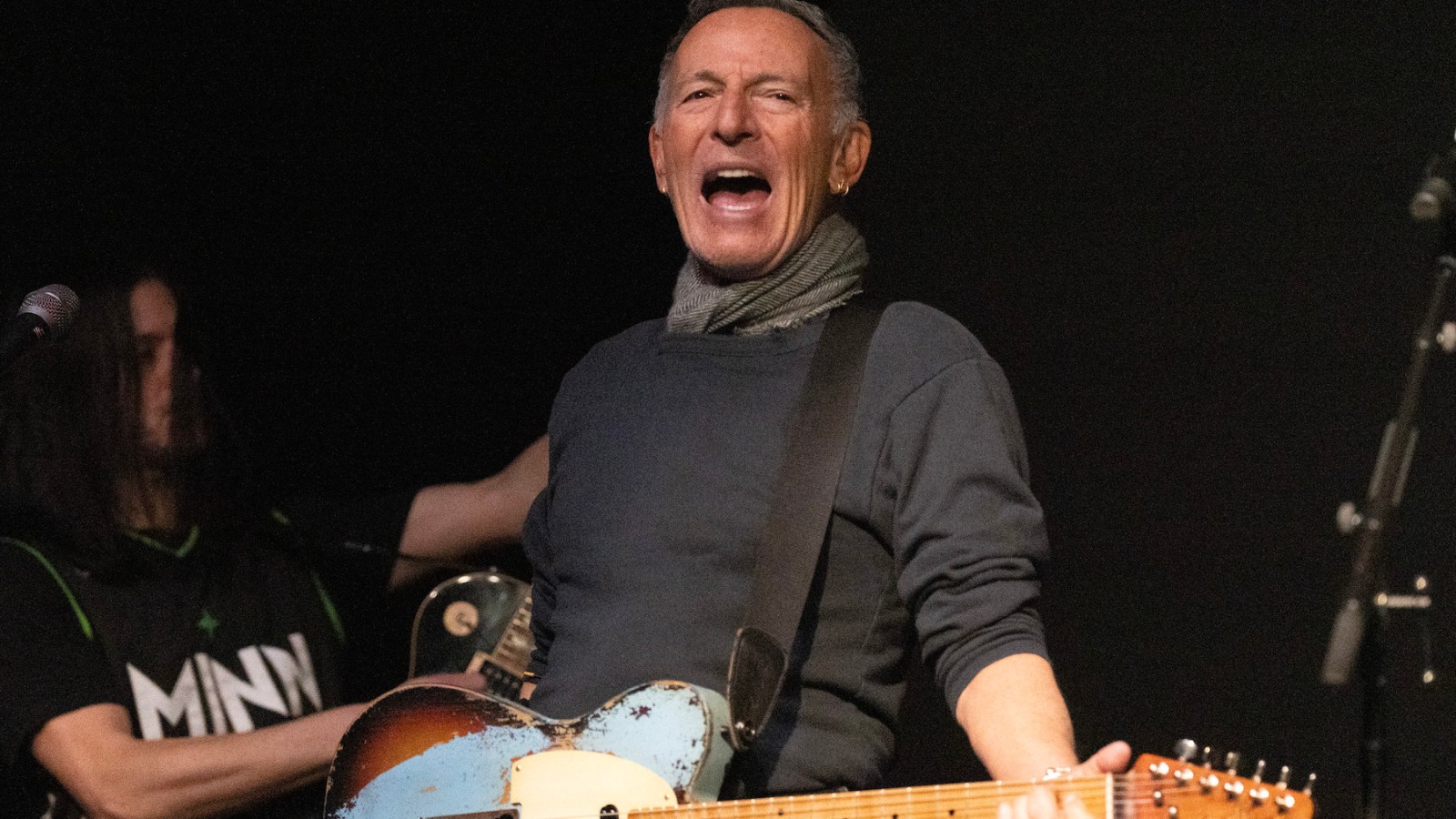
The American Civl Liberties Union has played a pivotal role in the legal pushback to Trump’s Executive Order, and they’ve teamed up with Bruce Springsteen to create a 30-second video that pairs his 1984 hit “Born in the U.S.A.” with images of Americans of all backgrounds whose lives will be dramatically impacted by the decision.
The ACLU are rolling out the video on Morning Joe, but you can check out an exclusive sneak preview below. We also spoke with Anthony D. Romero, the executive director of the American Civil Liberties Union, where he explains how they pulled Springsteen into the cause, why this cause is so important, and where the battle goes from here.
What sparked the idea for this video?
I got the idea for this video during an interview with Katie Couric two days after President Trump’s inauguration. I was answering a question from Katie about one of President Trump’s executive orders on day one, in which he had the audacity to try to end birthright citizenship — as if a president could rewrite the 14th Amendment on his own. This was among his first acts as president, and what it represented was breathtaking.
Birthright citizenship is a sacred ground for those of us in the civil rights community. It’s how our nation addressed America’s original sin of chattel slavery, making citizens of the children of enslaved people. It’s also how a nation of immigrants ensured we would all be equal — out of many one.
As this idea came to me during my interview with Katie Couric, I began to sing the chorus of “Born in the U.S.A.” When I got back to my office after that interview, I began the process of bringing this idea to life.
To be clear, we had already done a lot of thinking around this issue and how we would fight the Trump administration prior to the election. We studied Project 2025 and knew that birthright citizenship would be at the top of the Trump administration’s agenda to redefine who belongs in our country. We prepared for the worst. We honed our legal theories.
Then, a couple of days before the election, I spoke with someone close to the incoming Trump administration and learned that birthright was going to be one of their first moves. I came back to the office and told our lawyers, “We have to get ready. This is really going to happen.” We began to prepare our clients so we would be ready to file our suit if the president dared to undo birthright citizenship.
On the day he was sworn in, Trump signed an executive order targeting birthright citizenship. We filed the first lawsuit just two hours later. On a federal holiday. We were ready because we understood that protecting birthright would be an epic battle.
Beyond filing the first suit, we also knew that we would have to battle for the hearts and minds of the American people. We’d have to speak directly with the public to remind them that birthright citizenship is among the bedrock principles of this country.
We began brainstorming a campaign to remind ordinary folks what it truly means to be American. What people feel in their hearts when they wear their t-shirts with the American flag. When they stand up for the national anthem at baseball and football games. When they gather with their communities on July 4, Memorial Day, Veterans Day. When, like me, they hang flags outside their homes.
We realized that we needed to confront this battle over what it means to be an American head-on. We weren’t going to cede the flag or let our opponents define what it means to be a patriot. In the face of an administration that has repeatedly attempted to sow division by pitting communities against one another, we wanted to be positive. We wanted to be patriotic. We wanted to reach folks who normally don’t hear from or pay attention to the ACLU.
“Born in the U.S.A.” is the perfect song to capture what’s at stake in this Supreme Court case and how birthright citizenship is integral to America. It’s a song that tells the story of a Vietnam veteran returning home to an America he knew was neglecting its people. The song calls on our nation to live up to its ideals. And when you listen to it, it makes you feel proud to be an American. The brassy refrain of “Born in the U.S.A.” makes you want to stand up straight and feel good about the country you live in, the communities you’re part of, and pay honor to the values that truly make America great.
Decades later, the song still reflects the struggle to hold onto the things that make us proud to be Americans today. Even if you put the lyrics aside, the song basically makes you feel good. It makes you feel proud. It makes you feel bold. And that’s what our ad campaign captures. Birthright citizenship is what makes America great, and we ought to be proud to defend it. It’s a reminder that we all have a role to play in fighting for a nation that follows our democratic principles.
Walk me through the process of pitching it to Springsteen’s camp.
Over the years, I had been in touch with Jon Landau, who is the man to The Boss.
In addition to my years as a fan of his music, I had been watching and listening to Bruce Springsteen’s courageous comments about what was happening in the country. Bruce’s on-stage remarks during his concerts — especially in Minneapolis this January — were amazing. Bruce Springsteen was speaking truth to power when the titans of industry were caving and sniveling. Bruce Springsteen was standing up to the president, while universities and law firms were being cudgeled and cowed. I knew Bruce Springsteen was becoming increasingly agitated and that he was ready to fight back just like we were.
After the Couric interview last January, I asked my team to explore how we could use the song to create an ad that would resonate with and galvanize the public to join our efforts to protect birthright citizenship.
We came up with several concepts that I shared with my good friend Richard Lovett at CAA, before any pitch to Jon Landau. Richard immediately saw our vision and was incredibly supportive. With Richard’s support, we contacted Landau, who then threw the switch to Sony Music and Sony Music Publishing to begin the process in earnest.
What was the reaction?
Given his reputation as a formidable linebacker for The Boss, when Jon expressed enthusiasm, I knew we were almost there. If Sony were to get a little queasy about using an iconic song like “Born in the U.S.A.” as the centerpiece of an ad campaign about a politically charged issue, I figured Jon and Bruce would come to our aid. And once Landau showed enthusiasm, Brian Monaco [Sony/ATV Music Publishing executive] became our champion and jumped on the phone with me immediately. The stars aligned, because everyone knew where Bruce Springsteen stood and understood the gravity of the moment.
That turned out to be the easy part. The hard part was getting our case before the Supreme Court. There were additional lawsuits challenging Trump’s executive order filed by other organizations, including governors and state attorneys general. Some of those other lawsuits were moving faster in other courts. By the time that we received the greenlight from Sony and Springsteen’s camp, it was not clear which birthright citizenship case the Supreme Court would decide to consider.
We ended up having to wait far longer than we initially anticipated. In fact, it was not until December 2025 that the Supreme Court announced they would take up our case and only our case. One of the most consequential cases before the Court in a hundred years would be argued by ACLU Legal Director Cecillia Wang. But it wasn’t until this February that we knew when the Court would hear our argument.
The stars had aligned. We had the case. We had the rights to the song. We could seize the moment — but we needed to scramble. A year had passed since we filed our birthright citizenship lawsuit, and now we needed to produce a TV spot that was worthy of this song, this moment, and this important case.
With the time pressure, we turned to our friends at CAA and asked for help getting us access to world-class directors. We wanted to produce a Super Bowl-caliber ad, but we had never done that before. Fortunately, CAA was able to introduce us to several top-notch firms. My ACLU colleagues vetted several firms. I interviewed the two finalists and selected Anderson Wright: an up-and-coming, award-winning director from Stink Films in February. In partnership with the Stink Films team, we sprinted to scout locations across Southern California, for a total of 13 shoots spanning five days. We had a total cast of over 115 individuals who appeared in our ad. The editing, the wardrobe, the sound mixing — of course — with a national anthem like “Born in the U.S.A.” And the rest, as they say, is history…
What does the video aim to achieve?
We wanted viewers to see themselves and their neighbors as part of the fabric of this nation — one that would not be possible without birthright citizenship and the generations of Americans who have built this country up. The ad turns everyday moments into a triumphant celebration of America — people of all creeds, races, and backgrounds learning in classrooms, working on job sites, and celebrating family gatherings. Birthright citizenship is part of all our stories, and we wanted to remind the public that President Trump doesn’t get to define who belongs here.
We want people to feel proud about being born in the U.S.A. We want them to feel that what’s on the line is the character of our nation. We want people who don’t pay attention to politics or the Supreme Court to take interest. And we want supporters of Donald Trump to stop and think about it, and say, “Yeah, this is going too far. We’re all born in the U.S.A. We’re all Americans. We’re all proud of that. And we are proud of our neighbors who were born here
What misunderstandings about birthright citizenship do you hope it corrects?
At a time when the Trump administration is trampling our Constitution, targeting activists, killing good folks like Renee Good and Alex Pretti, and demonizing people who are immigrants, we want this ad that will air nationwide to be a rallying cry. We want our win at the U.S. Supreme Court to be the inflection point. When we win this case and stop President Trump’s executive order, we want that to be the moment when the pendulum stops and swings in the other direction. We want this nationwide campaign to create an environment where everyone stops, looks, and listens to what’s going on. We want birthright citizenship to become a household word, and for folks to feel invested in the outcome of our case. Because it matters. A lot.
Ending birthright citizenship would rip the fabric of this country. It would shred the pillar of the Constitution enshrined in the 14th Amendment. On a practical level, it would upend the lives of hundreds of thousands of people and create chaos for generations of families. We hope that when people see our ad campaign, they are reminded that each and every one of us make this country what it is, and that the video can serve as a rallying call to unite us all.
What makes “Born in the U.S.A.” such a perfect song for the campaign?
“Born in the U.S.A.” is one of the great American anthems. Everyone knows it. Everyone can sing it. It evokes strong feelings. When you listen to the lyrics, it tells the story of what it means to be abandoned by your country — and it’s a cruel story too many immigrants are living right now.
The song was released in 1984 as veterans were coming home from Vietnam, many feeling disillusioned and isolated in their own home. I was in college, in New Jersey no less, when it came out. I had gone to high school in New Jersey, and Bruce Springsteen was our guy. Our hero. Our Boss — quite literally.
I remember playing that song over and over in my college dorm room on my record player. I remember introducing my roommate from Kolkata to the song. He’s now an American citizen. His kids were born in the U.S.A. And if Trump had his way, those kids (now my godchildren) wouldn’t be American citizens. That’s just one example of how this executive order is deeply personal for millions of people — even American citizens like me. While today’s political context is different than the 1980s when it first came out, the resonance of the song’s message has endured.
Bruce Springsteen, himself, has said that “Born in the U.S.A.” is both his most popular and most misunderstood song. You have a dark history juxtaposed with a patriotic melody, and this complexity is exactly what makes it a quintessentially American anthem. “Born in the U.S.A.” perfectly captures the stakes of our birthright citizenship case. The peril and promise of the moment are embodied in this song. It is perfect for this case, for this moment.
When he first wrote it, Springsteen wanted to wake people up. That’s what we want to do today. We are being tested as a nation to protect our neighbors, our families, and our children. There’s no more consequential test for the soul of our country than birthright citizenship. Our video invites audiences to hear the beloved melody of “Born in the U.S.A.” while taking in the visual tapestry of Americans from all backgrounds rejoicing in their lives as Americans.
My hope is that our campaign resonates with people from all walks of life and serves as a rallying cry for all of us to protect birthright citizenship.
From my reading of the Constitution, the 14th Amendment pretty clearly grants citizenship to everyone born in America. How confident are you that a majority of justices will see it this way?
The Constitution is clear on this: The president does not get to decide who is a citizen. That is not how it works. And every single court that has looked at this executive order so far has said the same thing and blocked it. That is not an accident. We have more than a century of Supreme Court precedent backing this up. Changing course now would break with both the Constitution and the way the courts have applied it for generations. It is part of the foundation of this country, and we expect the Justices to recognize that. I am sure we are going to win this case. It’s too important, and I am confident that the Justices are going to see it the way we do.
In the off-chance that the Supreme Court somehow rules against birthright citizenship, what’s the next step in this battle?
We’re confident that we will win this case, but we aren’t letting our guard down. In the unlikely chance that we do not prevail; we have developed plans for further litigation and advocacy. We will cry for one day, and then we will also get to work to restore what we lost. The ACLU isn’t going anywhere. We have been around for 106 years, and if it takes us another 106 years to restore birthright citizenship, if we lose, I know we will never let up. I might be dead, but the fight will continue and stay alive. For as long as it takes. Whatever it takes. We will fight this at every level, every step of the way. That’s what the ACLU does.
I want folks to understand what losing would mean. Hundreds of thousands of babies born on American soil every year, with no citizenship, no legal identity, no real protections. Over time, that would mean creating a permanent underclass that grows with every generation. That outcome doesn’t reflect our American values. It’s not who we are or want to be as a country.