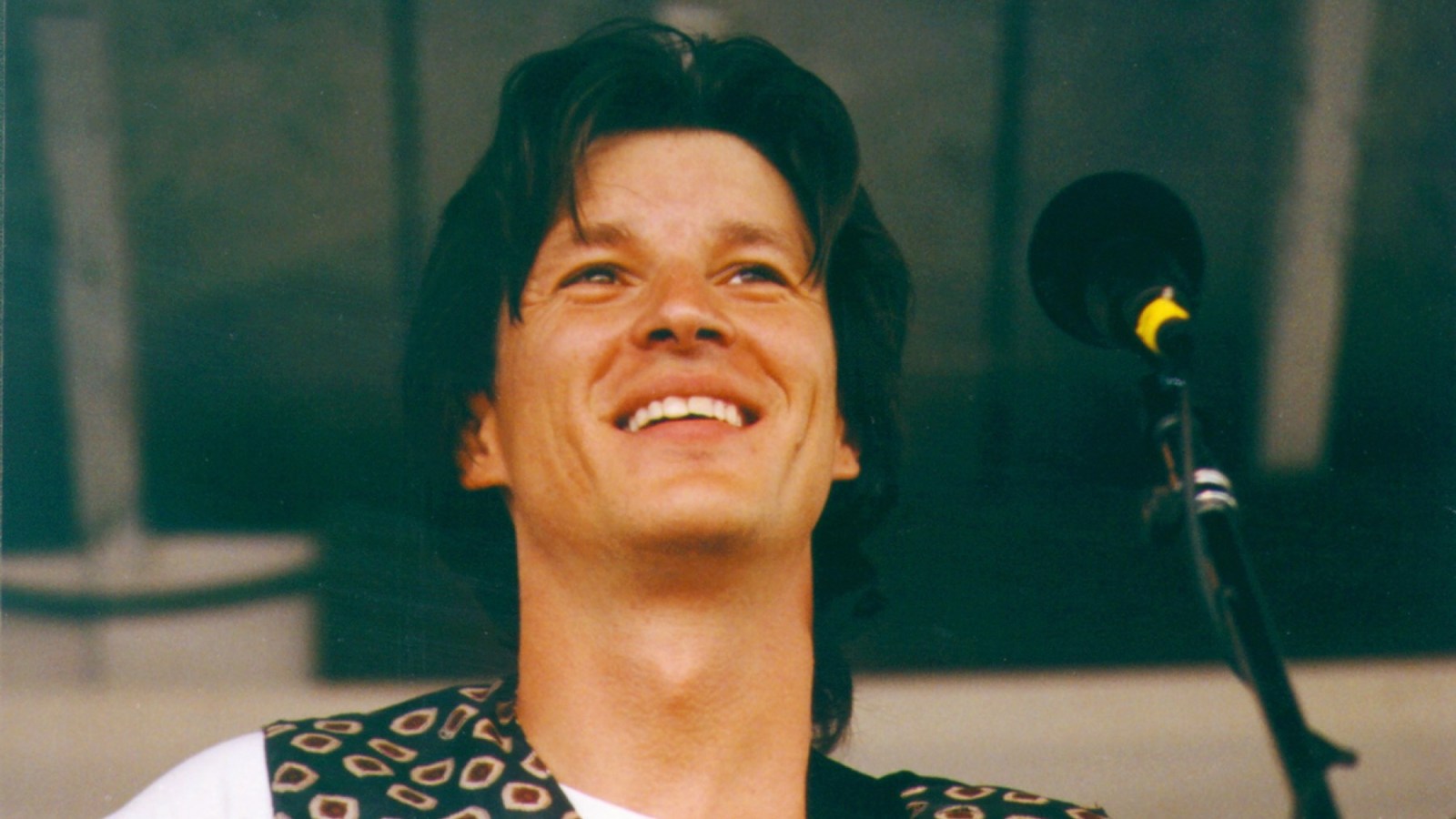

Ronnie Bowman, the bluegrass vocalist, musician, and songwriter of hits by Chris Stapleton and Kenny Chesney, died Sunday. He was 64.
Bowman was involved in a motorcycle accident on Saturday and was hospitalized in Nashville. The International Bluegrass Music Association confirmed his death in a social media post. “It’s hard to fully capture the depth of this loss. Ronnie wasn’t just a remarkable musician and songwriter, he was a remarkable person,” the IBMA said. “He lifted those around him and left them better than he found them. Ronnie was a treasured part of our community, and his absence is deeply felt.”
Bowman’s career was one steeped in accolades. As a bluegrass artist, he was regularly celebrated by the International Bluegrass Music Association, who named him their IBMA Male Vocalist of the Year three times. He also won Songwriter of the Year in 2022 and twice took home IBMA Song of the Year honors. In mainstream country music, Bowman won the ACM Award for Song of the Year in 2015 for co-writing Chris Stapleton’s “Nobody to Blame” with Stapleton and Barry Bales.
A native of North Carolina, Bowman began playing music when he was three years old, singing in church and in a band made up of family members. He gravitated toward bluegrass music as an adult and, in 1990, joined Dan Tyminski in the Lonesome River Band as its bass player and lead vocalist. Together they released four albums, with Bowman issuing solo LPs while in the band. His 1995 effort, Cold Virginia Night, was named the IBMA’s Album of the Year.
In 2000, Bowman had his first major country music song recorded when Lee Ann Womack cut “The Healing Kind” for her album I Hope You Dance. In 2005, he scored his first Number One country single with “It’s Getting Better All the Time,” by Brooks & Dunn, and two years later hit Number One again with Kenny Chesney’s “Never Wanted Nothing More.”
Bowman’s most celebrated modern-day success, however, came in 2015 when he teamed up with Stapleton, a close friend and fellow bluegrass picker, to co-write three songs for Stapleton’s debut album Traveller: “Outlaw State of Mind,” “More of You,” and the ACM Award-winning single “Nobody to Blame.” Onstage at the ACMs in 2016, Bowman delivered a stirring acceptance speech in which he reminisced about growing up in a mobile home with his mother and how, when he was 14, she asked him if he’d write her a song. “I went back there and did that and I’ve been doing that ever since, thanks to my mama,” Bowman said.
Bowman also had his songs cut by Jake Owen, Cody Johnson, and the bluegrass group the Grascals. In 2011, bluegrass great Ralph Stanley recorded Bowman’s “A Mother’s Prayer,” and reunited in 2023 with Stapleton to co-write “It Takes a Woman” for Stapleton’s Higher album.
As a singer, Bowman’s voice was unwavering. He sang in a steady, honest tenor that defined his solo albums. The way he delivered “Love for an Angel” on his 1998 LP The Man I’m Tryin’ to Be effortlessly conveyed heartbreak and yearning all at once. That gift also made him an in-demand background singer. Bowman’s voice can be heard on albums by Loretta Lynn, Alan Jackson, John Fogerty, and Sierra Hull, among others.
Despite all his success as a songwriter, Bowman was committed to the live stage. He was a frequent presence at various bluegrass festivals; in a tribute post, country singer Dierks Bentley recalled playing together at the inaugural DelFest and described Bowman as “the favorite bluegrass and country singer of everyone I know.”
Bowman often sat in with both his heroes and those coming up on the scene too. He made a St. Patrick’s Day appearance at Nashville’s bluegrass bastion, the Station Inn, and last year joined Billy Strings onstage at the Ryman Auditorium for a rendition of “Mother’s Not Dead.”
“Ronnie Bowman was an amazing singer and songwriter. One of the best entertainers in bluegrass and country music,” Strings wrote in tribute to Bowman on social media. “May our dear friend rest in peace.”