
Heavy metal, at least as God and Black Sabbath originally intended it, exists to help listeners confront or at least come to terms with their demons. Songs like “Black Sabbath” and “Sabbath Bloody Sabbath” were mini horror movies, sure, but the narrator was never the monster; it was someone who’d already seen too much, the old man warning foolish teens not to go to the summer camp because there’s a murderous psycho lurking in the woods. Somewhere along the way, though, headbangers started masking that original message behind spandex and Aqua Net, while others claimed to worship the capital-D Devil. Both factions created plenty of great music, but they diluted and diffused metal’s original urge: to live vicariously on the edge of evil without succumbing to the darkness.
Neurosis, who surprised fans last week with their first new album in a decade, have always subscribed to metal’s original vision of purging their demons in search of catharsis. The musicians had to do just that themselves in recent years when they learned that vocalist-guitarist Scott Kelly, a founding member of the group, was abusing his family through coercive control. They expelled him quietly in 2019 and later denounced his disgusting actions when he admitted them publicly in 2022.
Although Neurosis swore at the time that they would continue, they seemed all but done. Drummer Jason Roeder announced his retirement from music in early 2025, and vocalist-guitarist Steve Von Till focused on solo projects like his excellent 2025 album, Alone in a World of Wounds, and humanitarian endeavors like working to curb teen suicide on Native American reservations through teaching kids about heavy metal.
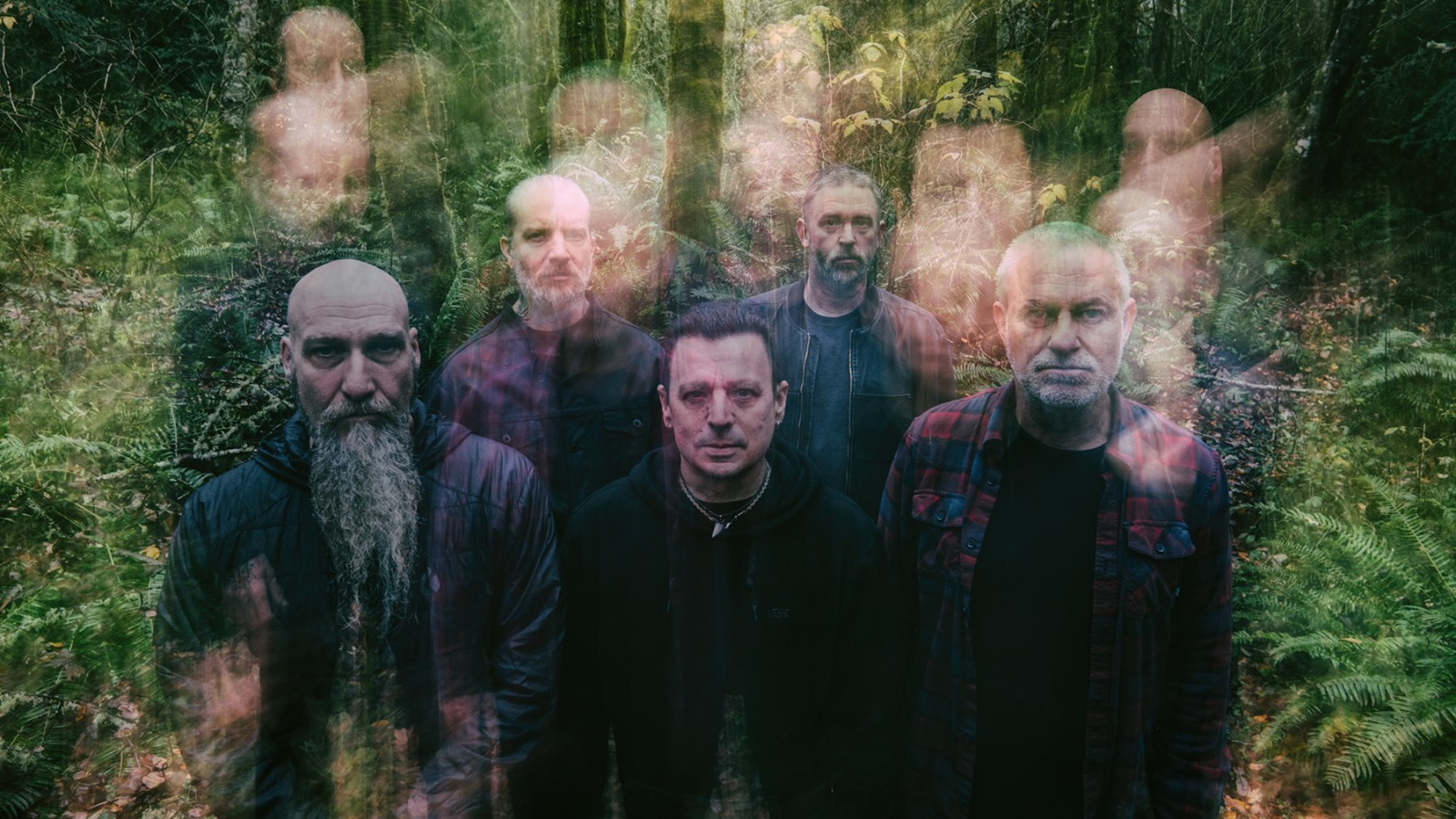
But behind the scenes, the remaining quartet found a perfect replacement piece to their jigsaw puzzle in vocalist-guitarist Aaron Turner, the former frontman of the Neurosis-influenced Isis who now leads the ultra-heavy, post-metal trio Sumac. Roeder returned to the fold, and the refreshed quintet subsequently recorded their most stunning album in years, An Undying Love for a Burning World.
From start to finish, the record is a heavy reaffirmation of Neurosis’ and Ur-metal’s core values. On every song, they warn listeners of modern society’s debasement and degradation and offer a life preserver in the form of their unique, foundation-rumbling thunder. Their music, constructed from guttural growls, lunging rhythms, and stretched-out, minimalistic heavy guitar, has always served as a crucible for their discontent. Listeners who give themselves over to Neurosis’ cacophony come through the other side feeling recharged, like a sweaty workout. This time, though, the cauldron burns hotter.
“We’ve forgotten how to live so we suffer,” Von Till shrieks on the album opener, “We Are Torn Wide Open.” And later, he updates that to “We exist in isolation, so we suffer,” a cogito, ergo sum for the age of people wandering around with phones in front of them, a cri de cœur for a return to humanity during an epidemic of loneliness. The words by themselves are moving, but it’s the way Neurosis makes the message sound, a unique musical fingerprint years in the making, that’s so affecting.
The band, which formed in Oakland, California, more than 40 years ago and played gigs at 924 Gilman Street alongside Green Day, initially sounded more like Black Flag than Black Sabbath. By the early Nineties, though, they found fresh inspiration in the grinding, protracted sludge riffage of Swans and avant-garde provocatrix Diamanda Galás’ Sophoclean rage.
Neurosis perfected their psychodrama on their fifth album, Through Silver in Blood (1996), with slow-motion minimalism (think Philip Glass’ melodies, but drawn out, darker, and distorted) and Pink Floyd atmospherics courtesy of keyboardist Noah Landis. The album’s “Locust Star” undulated with Dave Edwardson’s bass, and the title track shuddered under the weight of their collective fury. They dialed it all back just the right amount on Times of Grace (1999) for a more emotional album and found a perfect foil in ex-Swans singer Jarboe for a 2003 collaborative album. On the LPs that followed, Neurosis explored somewhat quieter, more restrained, and nuanced terrain. Fires Within Fires, their 2016 LP and last with Kelly, sounded nearly comforting at times.
There is no refuge on An Undying Love for a Burning World, but there is salvation. “The dissonance is deafening,” Von Till hectors on “We Are Torn Wide Open,” but listeners who strain their ears will find Neurosis’ signature catharsis in the dissonance. “Mirror Deep” packs a serious wallop with a riff that hits and explodes with every bar. “Our minds are mirror deep,” Von Till sings, conceding, “Time will lay us low,” as Landis creates brittle noise around his screams. There’s an unspoken message in Neurosis’ music that if we all suffer together, we can reach the other side.
The songs’ various narrators all seem stuck physically and emotionally, like Samuel Beckett characters (How It Is, Happy Days) but without the irony. “As beasts we crawl, our souls in tatters,” Turner, whose voice is deeper and more animalistic than Von Till’s, growls on “First Red Rays.” “Low to the dirt we scrape, degraded and hollowed.” The song’s beastlike people do see a glimmer of sunlight, but that’s where the song ends, the first sentences of a happy ending. Their redemption lies in the skittering guitar and a psychedelic bridge. And on “Blind,” Von Till sings, “Find our way through the fields we have sown/Light our way through the graves we have known,” as the guitar and synths swirl into a miasma around him.
The album’s centerpiece, “Seething and Scattered,” finds several voices apostrophizing its central message: “We’re all disconnected from ourselves and each other, from all that is sacred, the source of our fall.” Translation: You’re a mess, get your shit together again.
On each song, Neurosis take their time to wring the full emotion out of every note, focusing on the texture of the sound with rattling rhythms, plinky guitar, and, on “Seething and Scattered,” John Carpenter-like analog synths. Sometimes it’s loud and intimidating, sometimes it’s subtle and almost pretty. “Untethered,” for instance, lives up to its name, only the beat keeps it steady when it starts.
Album closer “Last Light” lasts 17 minutes, and it’s a journey of its own, as Turner bellows, “Bodies knot in darkness, together we cling,” (another Beckett-like image) to no apparent rhythm, eventually breaking down to a Greek chorus meditating on the world’s dissonance, conceding, “The river itself starts to weep.” It concludes with Turner growling that everything gets swept away, “Cold fall ceaseless/In this we are held.”
It’s cold comfort, an icy embrace, but if you made it this far, it’s welcome. It’s as if Neurosis are saying, “If we witness this Weltschmerz together, at least we’re together.” And if you choose to face the world in isolation, don’t say they didn’t warn you.