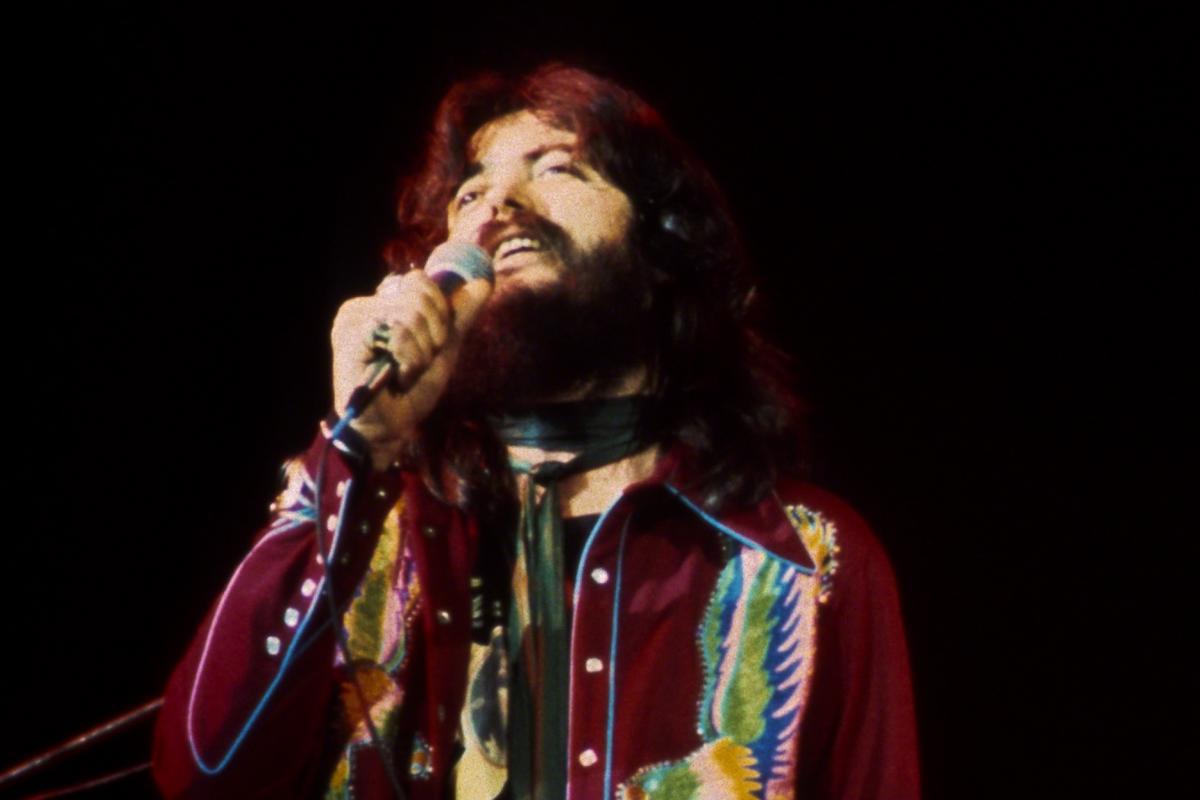

Dash Crofts, the surviving half of Seals and Crofts, has reportedly died. His passing was confirmed by Louie Shelton, who produced the ’70s hitmakers.
“Sad to hear our dear brother and partner in music has passed away today,” Shelton said in a social media post. “Sending love and prayers to all his family and many fans.”
Shelton arrived as producer for the third Seals and Crofts album, 1971’s Year of Sunday, and their career took flight. The title tracks from 1972’s double-platinum Summer Breeze, 1973’s Diamond Girl and 1976’s gold-selling Get Closer each soared into the Top 10.
Seals and Crofts Help Define the Soft Rock Genre
Born in Cisco, Texas, Darrell “Dash” Crofts was a youthful pianist. He played drums with an embryonic band called Dean Beard and the Crew Cats, where he met fellow Texan (and then-saxophonist) Jim Seals. They both were also in the Champs, though after the group hit with “Tequila.”
Seals and Crofts moved to California in the hopes of building a musical future, but then Crofts was drafted and served for a couple of years. By 1969, the duo was ready to try again. They helped develop a new sound that would be described (sometimes derisively) as soft rock.
Listen to Seals and Crofts’ ‘Summer Breeze’
“About the same time as people like Crosby Stills and Nash,” Crofts told the Record Mirror, “we realized that we had to get out of the money-making aspect of loud rock ‘n’ roll into some music which we really believed in.” Critic Robert Christgau described the results as “classic folk-schlock.”
They converted to a new religion along the way, and incorporated some of those themes into their music. “The Baha’i Faith teaches the unity of people of all races, creeds, religions, politics and truths,” Crofts told Stereo Review. “We’re not selling religion through our music, but the concepts of Baha’i do come out in it – like the concept of the oneness of mankind.”
Seals and Crofts perform on the BBC’s ‘Old Grey Whistle Test.’ (YouTube)
Why Did Seals and Crofts Break Up?
They typically shared songwriting credits and vocals. Crofts played guitar and, later, mandolin. He memorably sang the second verse of “Diamond Girl,” while taking over lead vocals for “King of Nothing” and “Goodbye Old Buddies,” among others.
“Hummingbird,” “I’ll Play for You” and “You’re the Love” reached the Top 20, while “We May Never Pass This Way (Again)” just missed at No. 21. Seals and Crofts hit No. 14 on the album charts with 1974’s gold-selling Unborn Child and cracked the Top 40 again with 1975’s I’ll Play for You. Their mid-’70s Greatest Hits album was a twice-platinum smash, too.
READ MORE: Top 10 Seals and Crofts Songs
Seals and Crofts split in the early ’80s, before briefly reuniting in the ’90s and ’00s. “Around 1980, we were still drawing 10,000 to 12,000 people at concerts” Seals later told the Los Angeles Times, “but we could see, with this change coming where everybody wanted dance music, that those days were numbered.”
Dash Crofts eventually returned to his native Texas, where he raised horses late in life. His lone solo album, 1998’s Today, included some updated Seals and Crofts material. Jim Seals, the older brother of Danny “England Dan” Seals, died in 2022.
Listen to Seals and Crofts’ ‘We May Never Pass This Way (Again)’
In Memoriam: 2026 Deaths
A look at those we’ve lost in 2026.