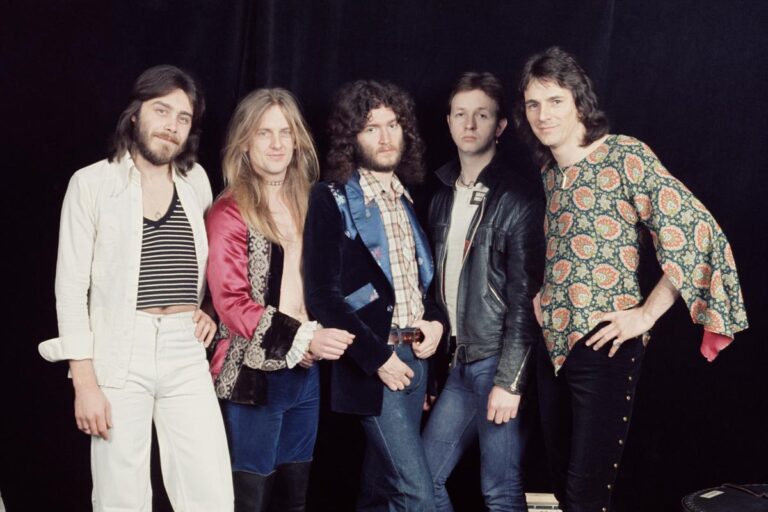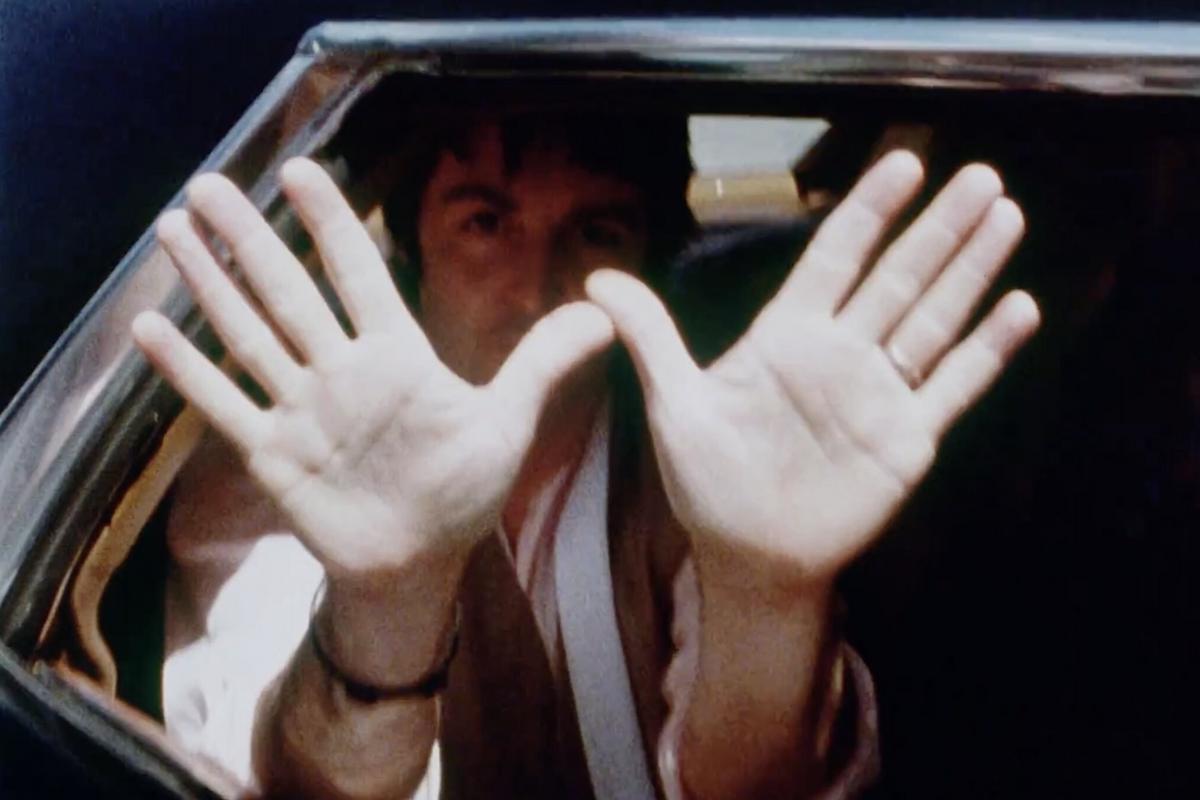

Paul McCartney‘s determinedly democratic Wings at the Speed of Sound arrived on March 26, 1976, as Wings moved forward with the same lineup for the first (and, turns out, only) time.
Guitarist Henry McCullough had joined for a one-album stint after Wings’ debut. (That was just long enough to light a fire under the otherwise saccharine “My Love.”) The albums on either side of 1975’s Venus and Mars and Wings at the Speed of Sound were completed by the core trio of McCartney, Linda McCartney and Denny Laine. Their follow-up, 1979’s Back to the Egg, featured a nervy new lineup but then Wings imploded.
It had been quite a run. Every Wings album was certified gold; the last five were all platinum or multi-platinum. Every one of their singles made the Billboard Top 40, with six reaching No. 1. None was bigger than “Silly Love Songs,” an At the Speed of Sound juggernaut featuring the suddenly stable lineup of the McCartneys, Laine, guitarist Jimmy McCulloch and drummer Joe English.
How Did ‘Wings at the Speed of Sound’ Finish on the Charts?
Wings owned the summer of ’76, sitting atop the charts with “Silly Love Songs” for a band-best five non-consecutive weeks in May, June and July. “Let ‘Em In,” the second single from At the Speed of Sound, followed in early July then peaked at No. 3 in August 1976.
As expected, McCartney fronted the band on both singles. By this point, however, he’d become oddly focused on making Wings seem more like a certain other group he’d been in, with multiple singers and creative figureheads. Despite all of their ’70s-era success, however, Wings was not the Beatles.
READ MORE: Ranking Every Beatles Solo Album
Laine, a Moody Blues alum who sang their first No. 1 hit single, once again took the occasional guest turn as frontman on At the Speed of Sound, singing both “The Note You Never Wrote” and “Time to Hide.” In another first, however, McCartney took things a step further by also handing the mic over to McCulloch, Linda McCartney and English.
That may have well reflected this period’s comfy domesticity, but the results were never going to challenge Band on the Run as the group’s best album. In the end, Wings at the Speed of Sound simply had too much Wings, and not enough Paul McCartney. It was also a rushed project that sounds rushed.
Paul McCartney and Denny Laine during a Wings recording session. (Michael Putland, Getty Images)
McCartney began early album sessions in August 1975, then Wings played a sting of September dates in the U.K. They toured Australia in November, completed this LP in February 1976, and then released At the Speed of Sound just before Wings headed out for a European tour. They were on American stages by May.
Even without these scheduling pressures, McCartney had little chance of making Wings into being an honest-to-goodness band. None of the others were John Lennon, or even George Harrison. The folly of having Joe English sing “Must Do Something About It” was only made clearer by the inclusion of the early take with McCartney’s far-better guide vocal on a subsequent reissue.
READ MORE: Top 10 Beatles Guitar Solos Not By George Harrison
Still, for all its foibles, this was a McCartney studio project. So, Wings at the Speed of Sound soared to the top of the charts over seven non-consecutive weeks while displaying its fair share of small-scale charms. Here’s a ranked song-by-song look back:
No. 11. “Cook of the House”
This is the only Wings song to feature main vocals by the former Linda Eastman, a photographer by trade before meeting Paul McCartney. For a singer, she was an outstanding photographer. But the real tragedy of this ’50s-styled rocker is its blatant misogyny.
Linda McCartney was an incredibly talented artist being asked to do something outside of that talent. Then she ends up singing a song about … making dinner, complete with a frankly annoying itemized list of spices and ingredients. (And dig those real bacon frying sounds!) Linda McCartney certainly played along, and even received co-songwriting credit. But it’s all pretty sad.
No. 10. “Wino Junko”
Similarly, “Wino Junko” feels very wrong, given Wings guitarist (and for this song) singer Jimmy McCulloch’s bad end. The lyric was written by Colin Allen, who’d been working with Jack Bruce of Cream. “Jack – a well-documented heroin user – was also into fine wines, which at the time I thought was a bit of a contradiction,” Allen said in Little Wing: The Jimmy McCulloch Story. A similar contradiction dogged McCulloch.
He soon left Wings to join the reformed Small Faces, then died two years later after suffering a drug-related heart attack. “Wino Junko” was “very much Jimmy. It was the story of his life,” McCartney said in the deluxe-edition liner notes for At the Speed of Sound. “You sort of want to be able to go back in time and say, ‘Look Jim, these are warnings to yourself. You’re writing them and singing them. What’s the logic here?” Indeed.
No. 9. “She’s My Baby”
A sing-songy, too-precious mid-tempo paean to Linda McCartney that finds itself so bereft of inspiration that McCartney, at one point, makes a manifestly obvious point: “She’s a woman!” In the liner notes to 1999’s Working Classical, which included a rather pretty string-quartet arrangement of “She’s My Baby,” McCartney revealed that the song was made up of fragments from his diary. It sounds just like that. Wings, and this is no surprise, never played the song in concert.
No. 8. “Warm and Beautiful”
“Warm and Beautiful” provided a stately ending to a disjointed album. The brass elements, in particular, recalled McCartney’s long and very successful collaborations with producer George Martin. (It echoed his own father’s musical roots, too.) There’s also an underlying sorrow to this love song that only struck McCartney later.
“The main inspiration for the song was Linda,” he said in The Lyrics: 1956 to the Present. “There was no sadness associated with Linda, except when she later became ill. In that way, I think it’s oddly prophetic.” At the same time, “Warm and Beautiful” cried out for a string-laden re-arrangement that it eventually received on Working Classical.
No. 7. “San Ferry Anne”
The jauntily old-fashioned “San Ferry Anne” again showcased McCartney’s skills as a pop-music curator, with a French lilt that recalled his Beatles song “Michelle.” The final track recorded for At the Speed of Sound saw the talented McCulloch switching to bass while McCartney doubled Denny Laine on acoustic guitar. Wings’ touring horn section completed “San Ferry Anne,” with a bright flugelhorn solo by Steve Howard.
McCartney can’t read music, so they simply gathered at his piano and he sounded out what he wanted. The title is a pun on “ca ne fait rien,” a common French phrase that translates as “it doesn’t matter.” They first heard the it when Wings’ equipment was delayed prior to November 1973 sessions in Paris.
No. 6. “Must Do Something About It”
Denny Laine identified with this lonesome McCartney song because band duties had him splitting time between America and the U.K. The first take actually featured McCartney on vocals, before drummer Joe English showed so much enthusiasm for “Must Do Something About It” that he was handed the microphone.
“It turned out less of a McCartney production and more of a Wings effort. It wasn’t intended like that,” McCartney later remembered. “This was one of the songs that I had sung but I just let Joe, our drummer, sing it because he’s got a very nice voice, and he sang it great.” Despite all that, McCartney’s original guide vocal was better. Echoing this song’s theme, English left Wings after At the Speed of Sound because he was homesick for his native U.S.
READ MORE: Top 10 Paul McCartney Songs
No. 5. “Time to Hide”
Laine’s most propulsive contribution to Wings, his first solo Wings songwriting credit and a darkly emotional highlight of Wings Over America. “Time to Hide” was marked by a heavy blues interplay of guitar and a walking bass line from McCartney, which combined to give the song a Beatles-meets-Cream feeling. But Laine’s vocal, as searing as it is insistent, remained the center point. It’s quite possibly his all-time best.
Then there was that cool little quiet moment: “We’d go to the half-tempo thing in the middle, and that was to show off the harmonies,” Laine said in the liner notes to 2014’s deluxe edition of At the Speed of Sound. “Wings was a great harmony band.”
No. 4. “Let ‘Em In”
This unselfconsciously twee song begins with the sound of a doorbell and then introduces a series of visitors. Friends and family are name checked, including McCartney’s aunt Gin and sibling Michael, and Linda McCartney’s brother John. (“Sister Suzie” was also a reference to Linda, who recorded under the pseudonym Suzie and the Red Stripes.) Many years later, McCartney married Nancy Shevell, who likewise has both a sister Susie and a brother Jon.
“Let ‘Em In” could easily have been voiced by McCartney’s former bandmate Ringo Starr, and at one point McCartney considered giving the song away. Good thing he didn’t: This Top 5 smash was later nominated for best arrangement at the 1976 Grammy Awards. Jimmy McCulloch again switched to bass, with all five members of Wings overdubbing snare drums to sound like a marching band.
No. 3. “The Note You Never Wrote”
A first-rate mid-tempo McCartney number with a thoughtful guitar solo from Jimmy McCulloch, “The Note You Never Wrote” may be the best thing you’ve never heard on this very uneven Wings release. The track’s relative obscurity is even stranger considering where it’s sequenced, coming next on the album right after the smash hit single “Let ‘Em In.”
The Denny Laine-sung “Note You Never Wrote” proves to be the much better song. McCartney later admitted to his own revelation about McCulloch’s proggy turn. “A little reminiscent of Dave Gilmour. The arrangement as a whole is kind of dreamy and Floydian,” McCartney said in The Lyrics: 1956 to the Present. “It’s what we call a ‘Floydian slip’.”
No. 2. “Beware My Love”
“Beware My Love” was a muscular, surprisingly complex McCartney-fronted rocker that simply leapt out of the speakers. And yet, once again, it could have been so much more, as McCartney continued to stubbornly inhabit the team player role: He held back a bolder version of “Beware My Love” featuring John Bonham rather than Wings drummer Joe English.
“I really liked the power of John,” McCartney said in the liner notes to the deluxe edition of Wings at the Speed of Sound. “I hooked up with him that one time and said, ‘Fancy recording something? I’ve got this song.’ We just went into the studio and decided to play together. I got on the piano, and he thrashed his drums.” That eruptive recording, for some reason, remained officially unissued until 2014.
No. 1. “Silly Love Songs”
A pop star complaining about critics didn’t sound like a hit. “There were accusations in the mid-1970s – including one from John [Lennon] – that I was just writing ‘silly love songs,'” McCartney said in The Lyrics: 1956 to the Present. Thankfully, “Silly Love Songs” didn’t end up as a bitch session – thanks to a creator who’s in complete command of his muse. There’s artistry everywhere within this compulsively listenable confection, from the gorgeous layered vocals to the dancing interchanges between horns and strings.
McCartney positioned his main instrument high in the mix, creating an endlessly entertaining groove that bears a passing resemblance to Al Green’s “Sha La La.” “That is the bass in your face, and that was really just because we were making a dance record on purpose,” McCartney told Guitar magazine. “But it drove the song along quite nicely. Pushed it hard. We wanted to make something you could dance to, so you had to.” Fans clearly agreed that there was nothing wrong with that, sending “Silly Love Songs” to No. 1 for five weeks.
See Paul McCartney Among Rock’s Weirdest Conspiracy Theories
Which stories are true, and which aren’t? Let’s count them down …
Gallery Credit: Nick DeRiso
Was Paul McCartney’s ‘Broadstreet’ Doomed to Fail?