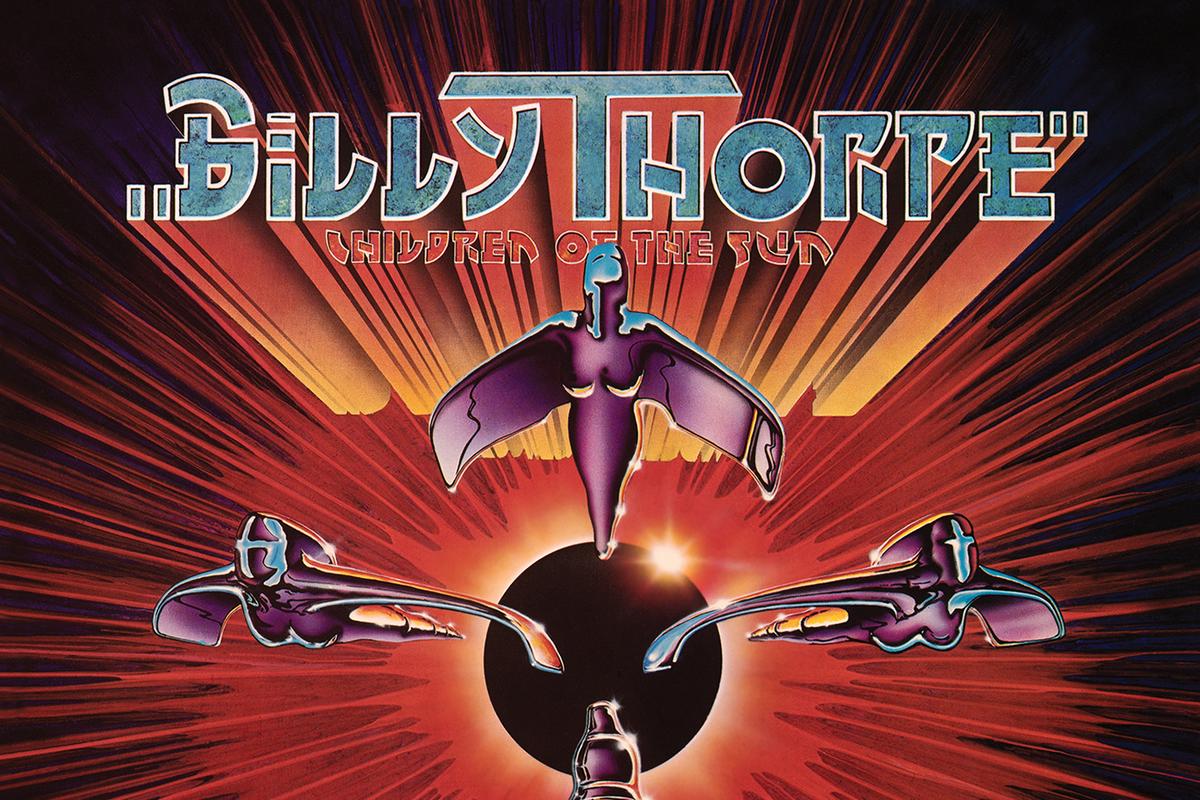

Billy Thorpe’s “Children of the Sun” has been a staple classic rock deep cut on radio for many years. Now, for the first time in more than three decades, there’s a fresh reissue of the album of the same name to enjoy.
Featuring a powerhouse band including session ace Leland Sklar on bass and drummer Alvin Taylor, Children of the Sun originally arrived in 1979, led by the alluring sounds of the futuristic title track. Though it was successful, that success proved to be short-lived, a disappointment for Thorpe and all involved.
Among them was Spencer Proffer, who helped him concoct and realize the project. The producer became more well-known among rock and hard rock fans for his association with Quiet Riot, producing their chart-topping Metal Health album and releasing it on his label, Pasha Records.
READ MORE: How Quiet Riot’s ‘Metal Health’ Brought Heavy Metal to the Mainstream
Proffer later returned to Thorpe’s album, and a new version was released in 1987 titled Children of the Sun … Revisited. The 1987 edition was remixed and altered from the original album, featuring only five tracks from the initial LP, with three additional songs rounding out the revised offering.
The original 1979 album has been largely unavailable for more than three decades. It appeared on CD only once via a scarce 1993 pressing that came out in Thorpe’s native Australia.
How the New Edition of ‘Children of the Sun’ Happened
That situation has been remedied, thanks to Jeremy Holiday of Iconoclassic Records. Like many people in the music business, Holiday remains a fan first and was shocked when he tried to acquire a copy of the 1993 Children of the Sun CD.
“I wanted to add Children of the Sun to my own CD collection. When I searched for it on Discogs, I saw it was only available briefly as a rare and now very expensive Australian pressing,” he tells UCR. “That meant the market where Children of the Sun was most successful — the U.S. — had never seen a CD release of the album. Anyone unwilling to spend over $100 for a used copy of a bare-bones Australian pressing had no opportunity to purchase the album on CD today.”
As fans have come to expect from Iconoclassic’s releases, this new reboot of Children of the Sun has been substantially overhauled, featuring a full remaster (with the support of Proffer and others from the era), expansive liner notes and new interviews by Ralph Chapman (who co-wrote the new Peter Frampton documentary, Frampton), plus a welcome overload of visual ephemera from the period.
Holiday himself learned a lot more about Children of the Sun thanks to the immersive experience of developing the new reissue.
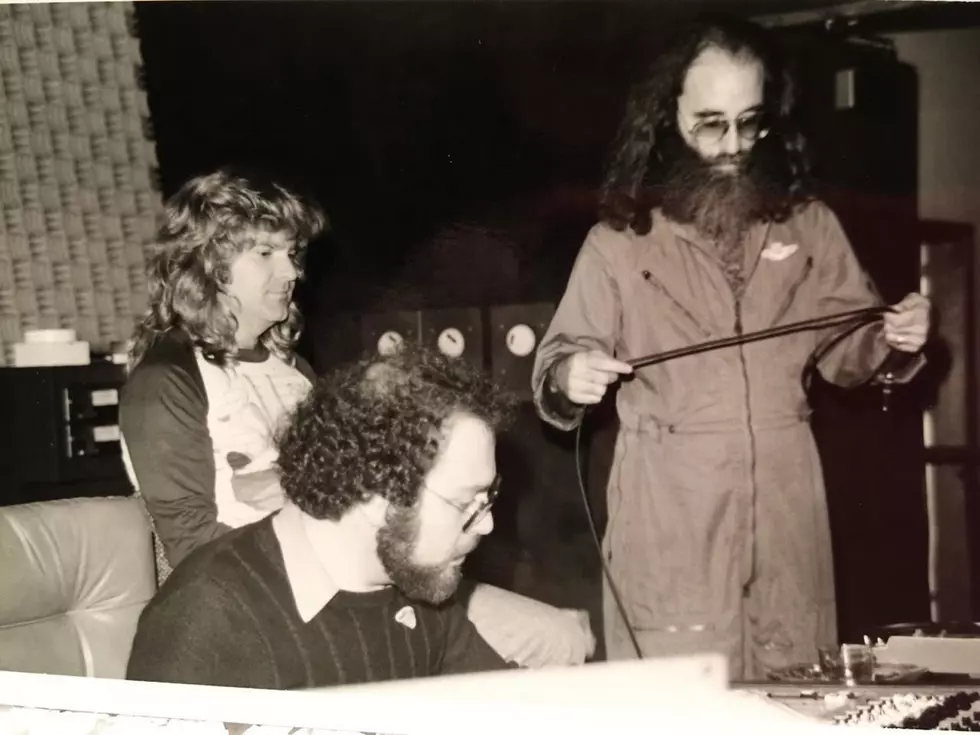
“Working with Spencer Proffer, and particularly through Ralph’s extensive interviews with the creators for the liner notes, taught me that Children of the Sun was the very first album recorded at the Pasha Music House studio,” he shares. “I am a big fan of Spencer’s productions and the sounds he and his engineers got from that studio in the ’80s, so it was very cool to learn that Children of the Sun was the genesis.
“I also learned just how much fun everyone had recording the album, and how dear it remains to Spencer, Larry Brown and drummer Alvin Taylor,” he adds. “It’s a great shame that Billy Thorpe [who died in 2007] is not here to enjoy this moment. Another interesting fact is that the album was recorded over a long period but mixed very quickly. That amazes me considering how spatial the original mix is, and how well it uses the stereo spectrum. Children of the Sun is definitely a headphones album.”
Locating the Tapes For ‘Children of the Sun’
Many reissue projects become an adventure, and the fresh edition of Children of the Sun was no exception.
“It had an interesting release history. It first came out on the Capricorn label, which went bankrupt shortly after the album’s release,” Holiday explains. “Polydor then picked up the record. These were license deals, though. Universal’s business affairs lead confirmed that the rights had long ago reverted to Spencer’s company, which had funded the original recordings under an independent production deal and leased them out to Capricorn and Polydor.
“We also contacted Sony’s business affairs because the related Children of the Sun … Revisited album was released on Spencer’s Pasha record label, and some of that catalog now falls under Sony — most notably, Quiet Riot,” he continues. “Sony affirmed that they have no present-day claim on the recordings either and that the rights had reverted. As often happens when rights pass between multiple companies across decades, certain master tapes did not return to Spencer.”
It took a village to bring the reissue to life. “Universal’s archivist was very helpful in locating original 1/4″ album production masters that Masterdisk prepared and delivered to Polydor back in 1979. The tapes included original handwritten notes explaining the EQ settings,” Holiday says. “Working from transfers of these master tapes, Wouter Bessels was able to remaster the album. Spencer and Larry both provided Wouter with feedback, leading to the first authorized CD reissue of the original Children of the Sun, as overseen by the gentlemen who were present from the first session to the last.”
Hear the Original Version of Billy Thorpe’s ‘Children of the Sun’
Proffer Remains Proud of ‘Children of the Sun’
More than 45 years after its release, Children of the Sun remains a stunning listen and an interesting musical time capsule that began with Thorpe and Proffer meeting at a party and having a conversation.
“I was a big fanatic of outer space exploration, as was Billy at the time,” Proffer told UCR in 2022. “We talked about Close Encounters of the Third Kind [and how] aliens made contact with Earth. Well, what happened afterwards? We don’t know.”
READ MORE: ‘Close Encounters’ Helps Cement Steven Spielberg’s Legacy
The pair got bored with the festivities but were intrigued by the direction of the talks they were having. They decamped to Proffer’s house, where together with “a little bit of good smoke,” they’d hatch the beginnings of what became the idea for the Australian artist’s space rock opera concept, which began with “Children of the Sun.”
“We picked up a couple of guitars and we created a fictional story of a friendly race from another planet, watching the Earthlings self-destruct,” Proffer continued. “It was kind of a cousin of the next scene of Close Encounters, but not Close Encounters. We gave them a name, the Children of the Sun.”
The narrative was fantastical but topical. “They were this friendly race from another galaxy watching the self-destruction of Earthlings. Because we were fighting Afghanistan at the time,” he shared. “And it’s like America and the Afghanistan [citizens] teamed up to fight the Russians. So there’s a little social, political thing on that. At five o’clock in the morning, we finished the seven-minute song.”
READ MORE: Rock’s 20 Wildest Concept Albums
‘Billy Was a Brilliant Talent’
Proffer put up his own money to finance the project, spending close to a year working on the eventual Children of the Sun album with Thorpe. Though the commercial results were solid initially, the producer chalks up the subsequent events as bad timing and the consequence of a record label (Capricorn in this case) falling apart while a song is receiving positive reception at radio.
“Billy was a brilliant talent. The fact that he didn’t become the superstar that he used to be in Australia didn’t mean he was any less of a talent,” Proffer said. “It just means timing, support, Capricorn Records filing Chapter 11 when the song was number one at rock radio. We couldn’t help that. It didn’t mean the song wasn’t good and it didn’t mean the record wasn’t good. It just meant we lost the moment.
“But it didn’t mean I lost any belief in working with Billy, I thought he was great,” he emphasized. “I didn’t make one-tenth of the money I could have made working with bigger artists after Quiet Riot and after Billy. But I didn’t ever do it for the money. I did it to make great records.”
The new 2026 remastered version of Children of the Sun is available now on Iconoclassic Records.
40 of Rock’s Most Important Rock Opera Albums
It’s more than just the Who’s Tommy.
Gallery Credit: Matt Wardlaw