
These days, it can feel like music exists only online or at arenas with a $500 entry fee. But there are still plenty of small, independent clubs building IRL scenes and fostering community.
At Permanent Records Roadhouse in Los Angeles, a record store and a 100-cap venue are connected by a large outdoor patio. During the day, patrons sip beer outside while chatting with friends or searching through crates of music. At night, the venue hosts an early show and a late show, packing in six bands or more. The location is a little out of the way, but they rarely have trouble keeping the schedule full. “We provide a place for people who are motivated to play, without having to have a massive following already,” says owner Lance Barresi.
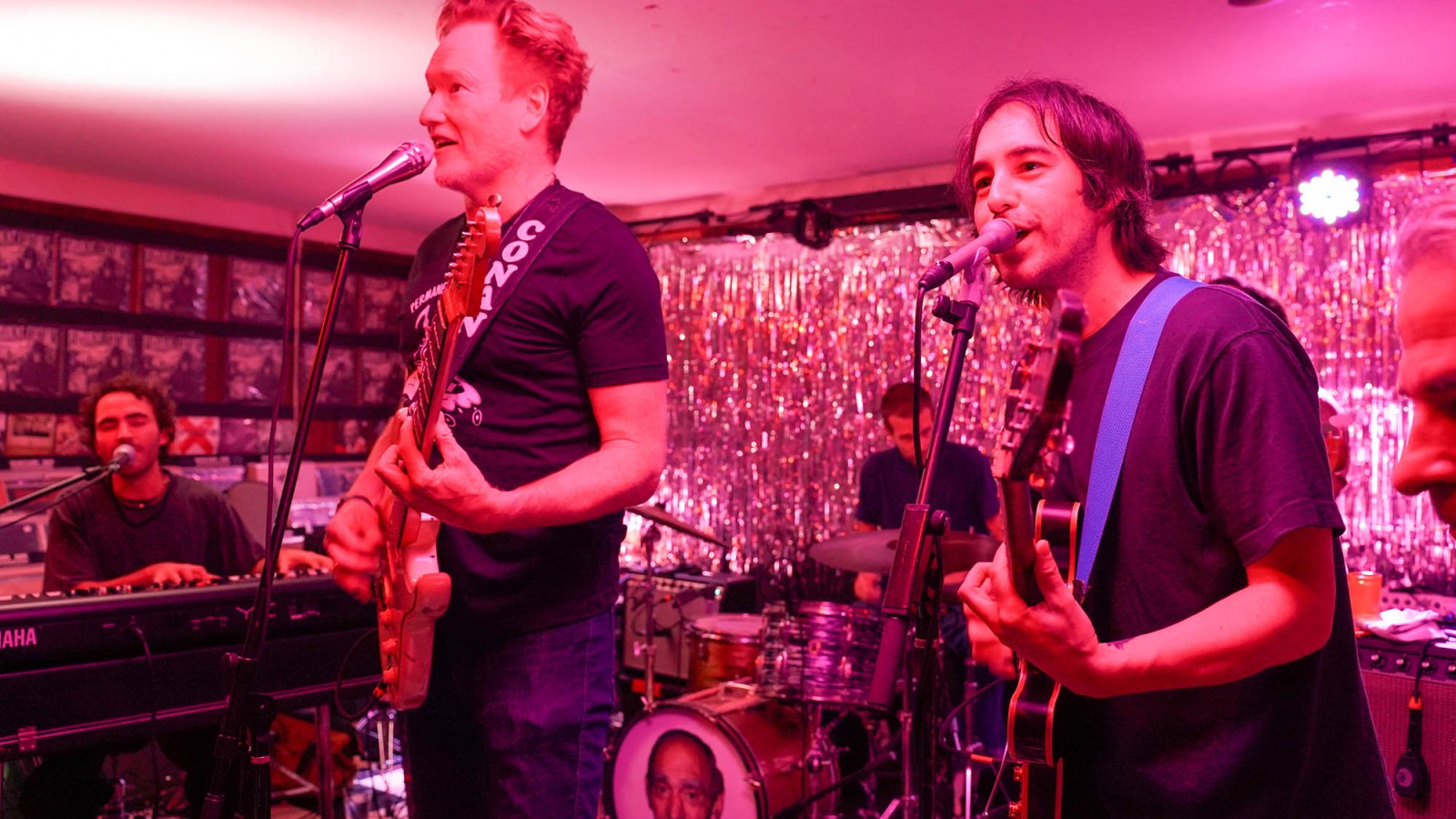
Before opening the Roadhouse in 2019, Barresi was no stranger to the music scene. He’d played in bands growing up in Missouri, and spent almost 20 years as the owner of record stores in Chicago and L.A. Those connections have helped bring a fair number of bigger names to the Roadhouse: In just one week in August, Osees’ John Dwyer premiered a new psych-noise project, post-hardcore outfit Sparta came through on their summer tour, and Conan O’Brien premiered his new band, the Vigodas. But the venue’s bread and butter are smaller local acts that are actively building a following. “Without spaces like this, there is no breeding ground, no community space for local musicians to try new things,” Barresi says.
A couple miles away, Zebulon draws slightly larger crowds — their venue can hold up to 300 — but their mission is similar. This venue has been open in a warehouse district in L.A. since 2017, when they relocated here after a decade in Williamsburg, Brooklyn. Back in New York, their shows had been free, drawing in fans and musicians for an eclectic array of performances — come for the punk show, stay for the jazz. “The fact that it was free [made] the people interact together,” explains co-owner Jef Soubiran, who grew up in the south of France. Artists playing larger clubs nearby would stop in after their gigs. “They were coming for a drink, coming [with their] instrument, and it became some amazing jam at the end of the night.” In L.A., they started occasionally charging a cover — usually $20 to $30 — and got a space big enough to separate the venue from a café in the front, so people can come and hang out even if they aren’t going to the show. “We like the idea of people meet in a café and talk about what’s going on, or just, after the show, be able to hang out and talk,” Soubiran says. “It’s very community.”
There’s still plenty of that community back east, too. Baby’s All Right has been a fixture of Brooklyn nightlife since it opened in Williamsburg in 2013, serving as a launching pad for NYC bands like Sunflower Bean, international acts like King Gizzard and the Lizard Wizard, and future superstars like Billie Eilish (who played there on her first ever tour in 2017). Co-founder Billy Jones saw Baby’s as a place where “you can do magic,” explains Eli Anya, the club’s director of programming. And while Jones tragically died of brain cancer last year at 45, shortly after opening another venue, Club 101, in the East Village, his vision for a room that hosts unforgettable experiences lives on in both places. These days, Anya books two shows a night at Baby’s, which holds about 330 people. “You might have a local hip-hop show in the early slot, and then a touring rock band late, and you see a big amalgamation of different genres and different styles coming together in one place,” Anya says. “Which feels very New York.” Like Zebulon, they have a bar space in the front that allows people to hang out before or after shows. “We welcome the space for people to congregate, and build a community within the local scene,” he says.
Nine stops east on the L train, in Ridgewood, Queens, TV Eye has become one of the coolest clubs in the city since opening its doors on New Year’s Eve 2020, hosting everyone from local punk bands to bigger acts like the UK hardcore heroes Subhumans and the cosmic jazz explorers of the Sun Ra Arkestra. When Geese’s Cameron Winter played a charity show under a fake name this January, TV Eye was the place to see it. Co-owner Jonathan Toubin says the club represents “an attempt to do exclusively underground music.” Living in Austin in the 1990s, Toubin could go to a rock club any night of the week. “Sometimes you’d see your friends at the bar. Sometimes you’d see a new band. But the whole idea of going to a show was very community-oriented,” he says. “I had a lot of nostalgia for it.”
Aside from owning a club, Toubin is a prolific DJ, and takes his Soul Clap dance party on the road for several months of the year. When we talk, he’s somewhere in Nevada, on tour with his wife, Amy Franz, and their chihuahua, Bette Davis. About 15 years ago, when first thought about taking Soul Clap out of New York, he felt a bit stuck. The party features a panel of judges who rate the dancers, and back home, it was easy enough to find willing participants — “someone from Beacon’s Closet, a guy that worked at the Verb Coffee, some guy from TV on the Radio,” he jokes. But as he started visiting clubs across the country, he found that in almost every city, he could find a place where the scene was still thriving. “I can now go to another town, and my friends there, or people the venue picks, they can judge it and make it like their own community event,” he says.
He starts listing off some small clubs he loves — SPACE Gallery in Portland, Maine; No Fun in Troy, New York; the Hideout in Chicago; the 13th Floor in Austin; Foothills Tavern in Las Vegas; Union Pool and the recently reopened St. Vitus in Brooklyn. Toubin notes that it’s not just the way these venues put on shows, but the way they provide room for real human interaction that makes them so important. At TV Eye, aside from the 100-person performance space, there are two more rooms open to the public — no ticket necessary — as well as a patio, which often hosts DJs, and a backstage bar. “When we built [TV Eye], I was hoping that by having common areas where people hang out, and making that more of a focus, that before and after the show, and between the bands, people would talk and maybe start a new band,” he says. “Or make a new friend.”
This story is part of our Reasons to Love Rock series, with all the sounds, trends, scenes, and artists that have us excited about rock music in 2026.