
Writing a jealousy-driven song rife with implied violence against women isn’t usually a great idea, and yet that is the point where the Beatles‘ 1965 album Rubber Soul concludes.
There is no denying that the writing in “Run for Your Life” has aged poorly, if it could have ever been considered agreeable in the first place. Threatening your partner with their very life should they ever decide to leave the relationship isn’t a good look now or then, though it’s worth remembering that domestic violence in the ’60s wasn’t viewed through the same lens it is today. (The Beatles are, of course, not the only classic rock band to have landed in this situation over the years.) It’s an unfortunately problematic end to an otherwise expressive and artistically challenging album.
Why John Lennon Grew to Dislike ‘Run for Your Life’
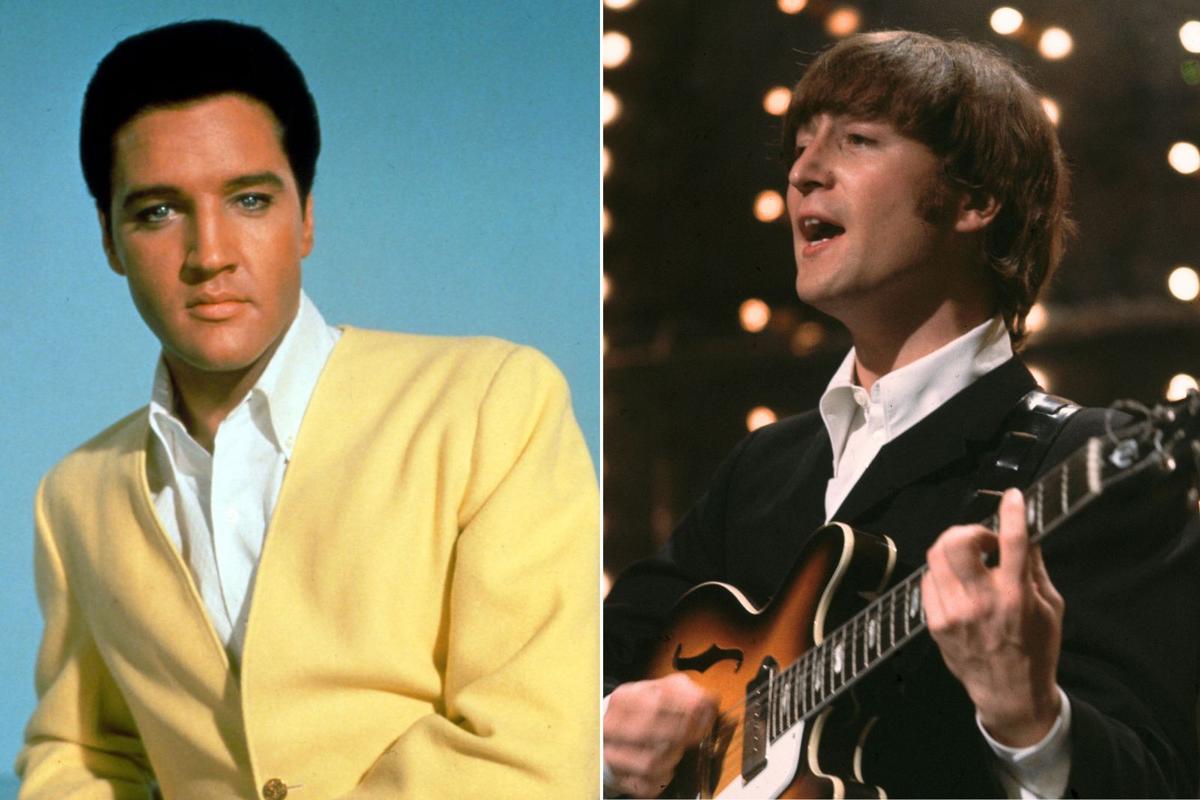
Perhaps that’s part of the reason why John Lennon, the song’s primary writer, eventually admitted his dislike for the track. Actually, one of its most regrettable lyrics didn’t even come from Lennon himself — it came from a 1955 Elvis Presley song, written by Arthur Gunter.
“I never liked ‘Run For Your Life,’ because it was a song I just knocked off,” Lennon explained to Rolling Stone in 1970. “It was inspired from – this is a very vague connection – from ‘Baby, Let’s Play House.’ There was a line on it – I used to like specific lines from songs – ‘I’d rather see you dead, little girl, than to be with another man‘ – so I wrote it around that but I didn’t think it was that important.”
Listen to Elvis Presley’s ‘Baby, Let’s Play House’
A decade later in an interview that took place shortly before his death, Lennon went so far as to describe “Run for Your Life” as a “favorite of George‘s,” though for what reasons he didn’t elaborate. Even then, Lennon called it a “throwaway” song.
In that same interview – conducted jointly with Yoko Ono —Lennon spoke relatively openly about his history of violence against partners.
“I was a hitter,” he said. “I couldn’t express myself and I hit. I fought men and I hit women. That is why I am always on about peace, you see. It is the most violent people who go for love and peace. Everything’s the opposite. But I sincerely believe in love and peace. I am a violent man who has learned not to be violent and regrets his violence. I will have to be a lot older before I can face in public how I treated women as a youngster.”
Paul McCartney’s Opinion
Lennon may not have given much weight to “Run for Your Life” either at the time of its release or in the years after that, but Paul McCartney sensed there was something deeper going on.
READ MORE: 20 Beatles Songs That John Lennon Hated
He also simply couldn’t relate to the sort of jealousy that “Run for Your Life” suggested.
“John was always on the run, running for his life,” McCartney said for Many Years From Now. “He was married; whereas none of my songs would have ‘catch you with another man.’ It was never a concern of mine, at all, because I had a girlfriend and I would go with other girls; it was a perfectly open relationship so I wasn’t as worried about that as John was. A bit of a macho song.”
Listen to the Beatles’ ‘Run for Your Life’
How the Beatles’ ‘Rubber Soul’ Influenced These 15 Artists
The band’s sixth studio album was unlike anything else on the market when it was released on Dec. 3, 1965.
Gallery Credit: Allison Rapp