
After previously picking our Big 4 one-hit wonders for the ’70s and ’80s, we’re turning our attention to the 1990s.
This was an era that delivered the alternative revolution, spearheaded by grunge. But most of the artists who harnessed the “Seattle sound” fell into one of two categories: multiple hit success stories (Nirvana, Pearl Jam, Soundgarden, etc) or no-hit wonders. As such, the ’90s biggest one-hit wonders arrived with the new wave of acts that came after grunge in the mid-to-late part of the decade.
This post-grunge era saw an assortment of styles, including Britpop, the return of ska and a rise in singer-songwriters. “Pepper” by Butthole Surfers, “The Impression That I Get” by Mighty Mighty Bosstones and Semisonic’s “Closing Time” are just some of the notable tracks that didn’t quite make our list.
So who are the Big 4 of ’90s One-Hit Wonders? Read below to find out.
The Verve, ‘Bitter Sweet Symphony’
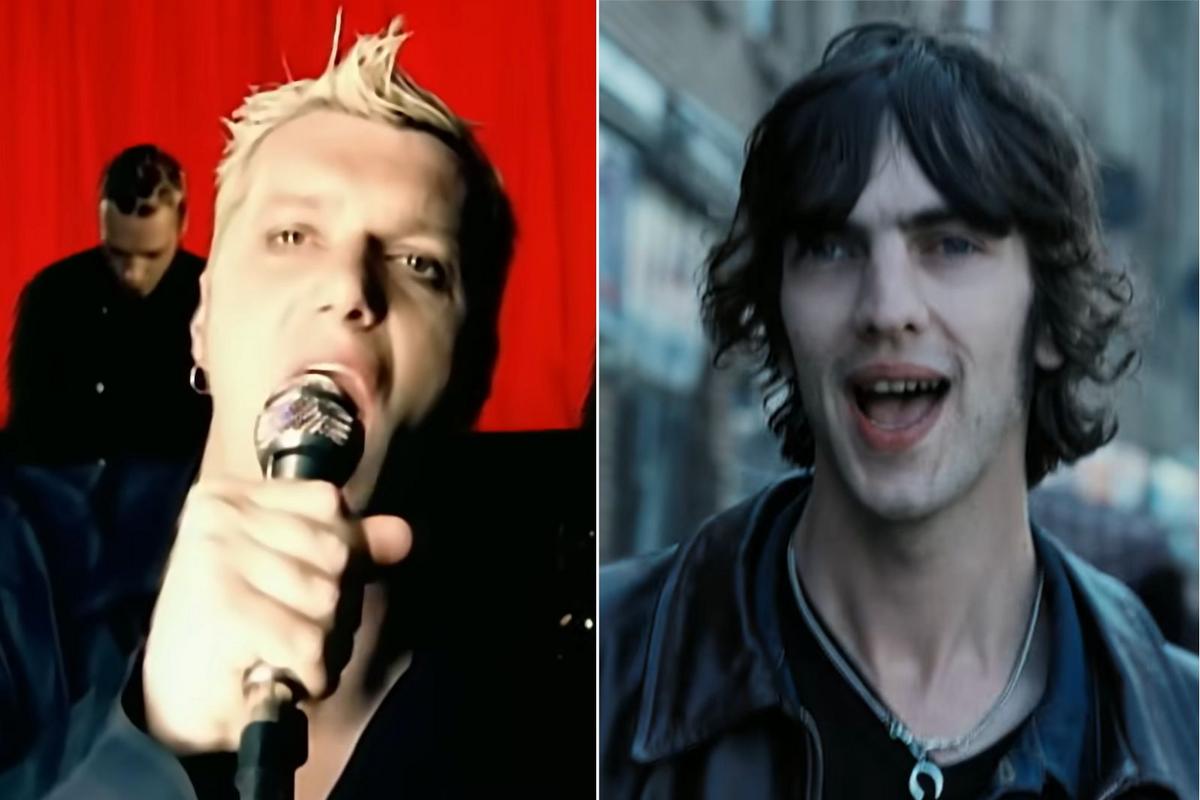
English rock group the Verve scored a massive worldwide hit in 1997 with “Bitter Sweet Symphony” – not that they had anything to show for it. The song infamously sampled an instrumental version of the Rolling Stones song “The Last Time.” The Verve got permission from Decca records to use the sample, but not the owner of the song’s publishing rights – former Rolling Stones’ manager, Allen Klein. Here’s where the legal battles begin.
Klein demanded that he receive 100% of the publishing rights – meaning anytime “Bitter Sweet Symphony was used in a TV show, film or commercial, he’d pocket the profits. With no other alternative, the Verve agreed. Frontman Richard Ashcroft received only a $1,000 payment despite having written the song’s famous lyrics.
Speaking of lyrics, Ashcroft crafted “Bitter Sweet Symphony around themes of disillusionment, greed and the pitfalls of fame.
“It’s just that sense of how it’s very difficult to be an artistic person in a business like this,” he explained to Songfacts in 2018. “People have been sold a lottery dream in life that money solves everyone’s problems, and then suddenly you’re looking at people and you’re thinking: “I know they need X but if I give X then that relationship that should have died years ago is going to carry on and spoil.” It opens up a myriad of things that you would never normally be thinking about, responsibilities on a new level.”
“Bitter Sweet Symphony” reached the Top 10 in 11 different countries and peaked at No. 12 on the Billboard Hot 100. While the Verve enjoyed further success in the U.K., they never found commercial success again in America.
For years, Ashcroft insisted the dispute over “Bitter Sweet Symphony”’s publishing cost him millions of dollars. In 2019, the song rights were fully returned to him.
Chumbawumba, ‘Tubthumping’
Most listeners have no idea that Chumbawumba – the British rock group behind “Tubthumping” – was actually a staunchly political band (“tubthumper” is a slang word for politician). While most of their other songs challenged the government, this 1997 smash hit was purely a party song.
With lyrics about drinking a laundry list of booze, the track became a pub anthem that the world embraced. “Tubthumping” reached the Top 10 in 18 different countries, as fans around the globe sang along to the famous chorus: “I get knocked down / But I get up again / You’re never gonna keep me down.”
For the next few years, “Tubthumping” was everywhere, but what’s even more impressive is the song’s staying power. It’s been in a long list of TV shows, including Dawson’s Creek, Malcolm in the Middle, How I Met Your Mother, Scream Queens and Family Guy. It was even performed by Matt Damon (playing Supreme Court Justice Brett Kavanaugh) in a 2026 Saturday Night Live sketch.
“I still really like Tubthumping,” guitarist Boff Whalley admitted to The Guardian. “I don’t feel embarrassed by it at all. I know some bands who hate their songs being popular, but I just think, ‘Get off your high horse!’ The whole point of art is to have an audience.”
New Radicals, ‘You Get What You Give’
New Radials are a fascinating case study of ‘90s one-hit-wonderdom. The band was actually the project of one man, singer-songwriter Gregg Alexander, who, by the mid-’90s, had already been signed and dropped from several major labels. The rocker was disheartened by the music industry’s obsession with fads, so much so that he wrote a whole song about staying true to yourself. Naturally, it became an unexpected hit.
Recorded with a makeshift band that he dubbed the New Radicals, “You Get What You Give” reached No. 1 on the Alternative chart and landed in the Billboard Top 40. “I enjoy watching it climb up the chart,” the singer remarked to Billboard magazine in 1998. “I’m ready to be carted around like a piece of meat. You have to cut a deal with the machine and be thrown to the wolves.”
That deal wouldn’t last long. Tired of music industry politics and disillusioned with his sudden fame, Alexander abruptly disbanded New Radicals in 1999.
The legacy of “You Get What You Give” has long exceeded the band that created it. The song has been featured in such films as Click and Surf’s Up, as well as the TV shows Daria, Community and Pam & Tommy. In 2021, Alexander reunited New Radicals and performed at the presidential inauguration of Joe Biden. Then, in 2026, the group released its first new music in 28 years – so there’s still a chance they’ll get to hit number 2.
Marcy Playground, ‘Sex and Candy’
It surely was a dream for New York’s Marcy Playground when the duo shot to fame thanks to their 1997 single “Sex and Candy.” The song’s originas could be traced back close to a decade, as singer John Wozniak recalled to Songfacts.
“I was dating a girl and she was going to Bryn Mawr College and it’s where my dad teaches. And I was probably 17 or something like that and she was like 18,” he explained. “But we were in her dorm room, and her roommate came in and she saw us there, and she was like, ‘Oh, it smells like sex and candy in here.’ And I always remembered that. And that was back in the late ’80s.”
“And then when I was writing the song and I was coming up with all these weird disco-era references that I was making up, ‘platform double suede’ and all that business,” he continued. “I was like, ‘hey, let’s just throw in that phrase that’s been sticking in my head for the last five years or whatever.’ So I wrote that song in ’92, ’93, somewhere around there. And it didn’t really come out until ’97. That song had been at least in my consciousness since the late ’80s.”
With a captivating lilt and intoxicating lyrics, “Sex and Candy” became a global success. The song set a then-record by spending 15 weeks at No. 1 on the alternative chart and peaked at No. 8 on the Billboard Hot 100. Even back in 1998, Wozniak was keenly aware of his band’s precipitous position.
“I don’t want to be thought of as the new Milli Vanilli,” he admitted at the time, alluding to one of the ‘90s ost infamous one-hit wonders. “It’s not about hits, it’s about traveling and playing your songs and living your life. Hits last a few months, but life is forever.”
Indeed, Marcy Playground never scored another hit, but it has remained a steadily touring band since their commercial heights.
Top 100 ’90s Rock Albums
Any discussion of the Top 100 ’90s Rock Albums will have to include some grunge, and this one is no different.
Gallery Credit: UCR Staff