
The Beatles may have conquered the world in less than a decade, but that didn’t mean all four of them always saw eye to eye.
With four very different personalities and creative tendencies, it’s understandable that some songs would displease some members — we’ve examined such cases for John Lennon and Paul McCartney.
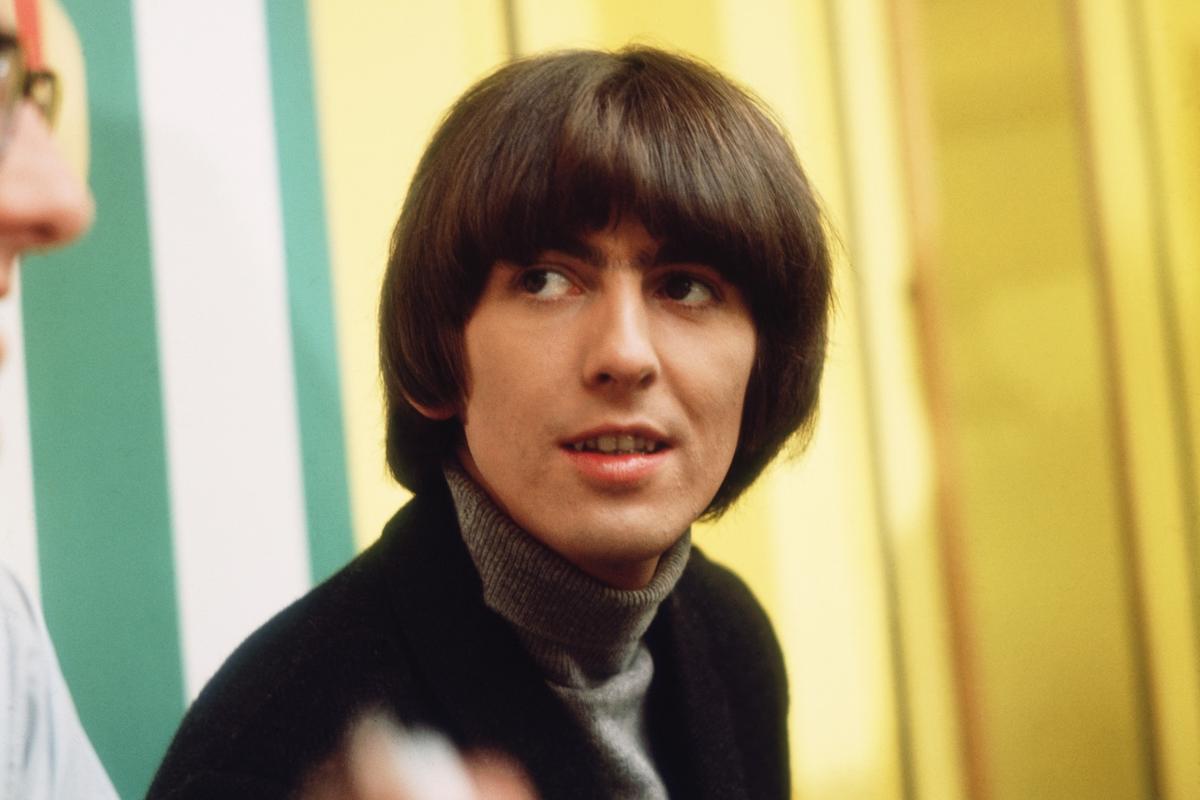
The list below focuses the same attention on George Harrison, who was only credited with writing around 20 or so Beatles songs, but certainly had opinions on many more than that.
1. “Maxwell’s Silver Hammer”
From: Abbey Road (1969)
We’ll start with what was possibly one of Harrison’s strongest opinions: McCartney’s songwriting in the latter portion of the Beatles’ time together could be…eclectic. “Maxwell’s Silver Hammer” from 1969’s Abbey Road was one example of this.
“Sometimes Paul would make us do these really fruity songs,” Harrison told Crawdaddy in 1977. “I mean, my god, ‘Maxwell’s Silver Hammer’ was so fruity. After a while we did a good job on it, but when Paul got an idea or an arrangement in his head…”
2. “Ob-La-Di, Ob-La-Da”
From: The White Album (1968)
It would be fair to say that there was tension in the air when the Beatles were working on the White Album. “Ob-La-Di, Ob-La-Da” is another McCartney song that the others felt, after over 40 hours of working on it, was not worth it. Both Harrison and Lennon were vocal about not liking the track and only agreed to release it as a single in smaller markets.
Perhaps more telling is the mildly taunting lyric Harrison included in his song “Savoy Truffle,” which also appeared on the White Album: “We all know ob-la-di-la-da, but can you show me where you are?“
READ MORE: All 141 George Harrison Solo Songs Ranked Worst to Best
3. “Do You Want to Know a Secret”
From: Please Please Me (1963)
It isn’t so much that Harrison didn’t like the song “Do You Want to Know a Secret” as he considered himself unprepared for it, and therefore disappointed in the final result.
“‘Do You Want to Know a Secret’’ was ‘my song’ on the album,” he later said for Anthology. “I didn’t like my vocal on it. I didn’t know how to sing; nobody told me how to.”
4. “Don’t Bother Me”
From: With the Beatles (1963)
Harrison was an undeniably great songwriter, but he did have to start somewhere.
“‘Don’t Bother Me’ I wrote in a hotel in Bournemouth, where we were playing a summer season in 1963, as an exercise to see if I could write a song. I was sick in bed,” he said for Anthology. “I don’t think it’s a particularly good song; it mightn’t be a song at all. But at least it showed me that all I needed to do was keep on writing and maybe eventually I would write something good.”
5. “Yellow Submarine”
From: Revolver (1966)
To be fair, it wasn’t just the song “Yellow Submarine” that Harrison took issue with — it was sort of the whole album. (Yes, “Yellow Submarine” appeared on Revolver in 1966, but it really made a name for itself in 1969 when it accompanied the film of the same name.) As he put it to Crawdaddy in 1977: “I liked when we got into Rubber Soul, Revolver. Each album had something good about it and progressed. There were albums which weren’t any good as far as I was concerned, like Yellow Submarine.”
Another word Harrison used for this song: “schmaltz.”
The Best Song From Every George Harrison Album
His post-Beatles career began with a bang, then cooled. But there were moments to remember in every era.
Gallery Credit: Nick DeRiso