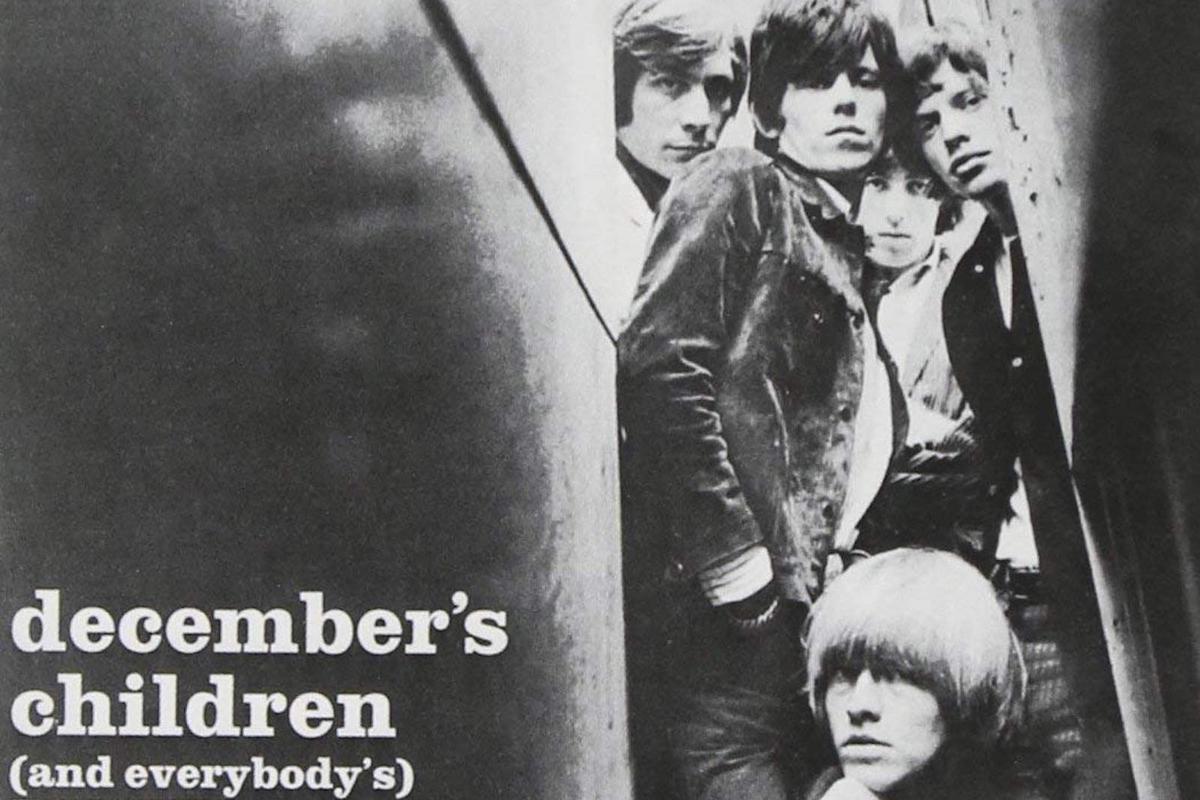

From the start, nobody ever really considered the Rolling Stones‘ December’s Children (And Everybody’s) an official addition to the band’s growing catalog.
Especially not the group’s members, who saw the 12-song album – which was released on Dec. 4, 1965 – for what it was: product to satiate the Stones’ U.S. fan base during a hectic time for British Invasion bands.
And, like their previous four albums released in the States, December’s Children was made up of a hodgepodge of sources: U.K. LPs, EP-only tracks, singles and a stray new song or two (a couple even date back to 1963 and the band’s first sessions).
READ MORE: Top 20 Albums of 1965
It doesn’t hold together as well as the band’s other U.S. records from 1965 – The Rolling Stones Now! and Out of Our Heads – or the next one they’d release, 1966’s Aftermath. But it did the trick and served its purpose (and gave U.S. fans a few of the group’s best, earliest songs on an album for the first time).
How Was the Rolling Stones’ ‘December’s Children (And Everybody’s)’ Compiled?
Four of the record’s songs come from the U.K. version of Out of Our Heads, including “I’m Free” and a cover of Chuck Berry‘s “Talkin’ About You.” Two others come from the U.K. EP Got Live If You Want It! (which is completely different from the same-titled U.S. album released in late 1966).
Listen to the Rolling Stones’ ‘Get Off of My Cloud’
The A- and B-sides of the “Get Off of My Cloud” single were also included, as was the single version of “As Tears Go By.” Plus, there were covers of Muddy Waters and Arthur Alexander songs, and a handful of new originals by Mick Jagger and Keith Richards.
What’s on the Rolling Stones’ ‘December’s Children (And Everybody’s)’?
But even if December’s Children (And Everybody’s) doesn’t hold up as an album, it is a pretty good representation of the Rolling Stones at this crucial juncture of their career. With the Beatles‘ output about to slow down, and the Stones’ own stock rising among rock ‘n’ roll fans, it was a fitting collection for the time, released just weeks before Christmas.
Propelled by “Get Off of My Cloud,” the Stones’ second consecutive No. 1 following “(I Can’t Get No) Satisfaction,” December’s Children (And Everybody’s) made it to No. 4, on par with the group’s other showings on the album chart at the time (Out of Our Heads was their first No. 1, but they wouldn’t return to the top spot again for another six years, when Sticky Fingers began a long streak of chart-topping LPs).
Listen to the Rolling Stones’ ‘As Tears Go By’
Even though most of the songs – or at least the ones you’d want to hear – have found their way on other collections over the years, December’s Children (And Everybody’s) still hits notes of nostalgia for U.S. fans.
What Is the Rolling Stones’ ‘December’s Children (And Everybody’s)’ Important?
For years, this was a crucial missing link for those trying to piece together the Rolling Stones’ international discography, especially during a time when it wasn’t easy to do so. The music from this period is a significant part of the band’s history, occupying a space between their blues-based origins and the next phase of their evolution during a time of transition.
Rolling Stones Live Albums Ranked
Many of the band’s concert records can seem like quick cash grabs or stop-gaps between studio LPs, but there are gems to uncover.
Gallery Credit: Michael Gallucci