
Foreigner’s incredible career has lasted nearly 50 years, but the run could have been much shorter had things gone differently.
In a recent appearance on the Life of the Record podcast, original singer Lou Gramm revealed the band nearly ended after their third studio album, Head Games.
In the late ‘70s, Foreigner was on an impressive early-career streak. Their 1977 self-titled debut album and 1978’s Double Vision had both been multi-platinum successes, spawning hits like “Feels Like the First Time,” “Cold as Ice” and “Hot Blooded.” For their third LP, the band enlisted Roy Thomas Baker, best known for his work with Queen. Expectations were high, but something didn’t click.
Lou Gramm Says ‘Head Games’ ‘Sounded Unfinished’
“Roy wasn’t contributing those important ideas, same kind of ideas that he gave Queen,” Gramm explained on the podcast. “I felt Roy, at his best, would have really made the most out of the room we left him to produce and try his oddball ideas and stuff, and do the things that he had done to The Cars and other albums like that. We left him room to do that. And when he didn’t really come up with those ideas, the album sounded unfinished.”
READ MORE: Top 10 Foreigner Songs
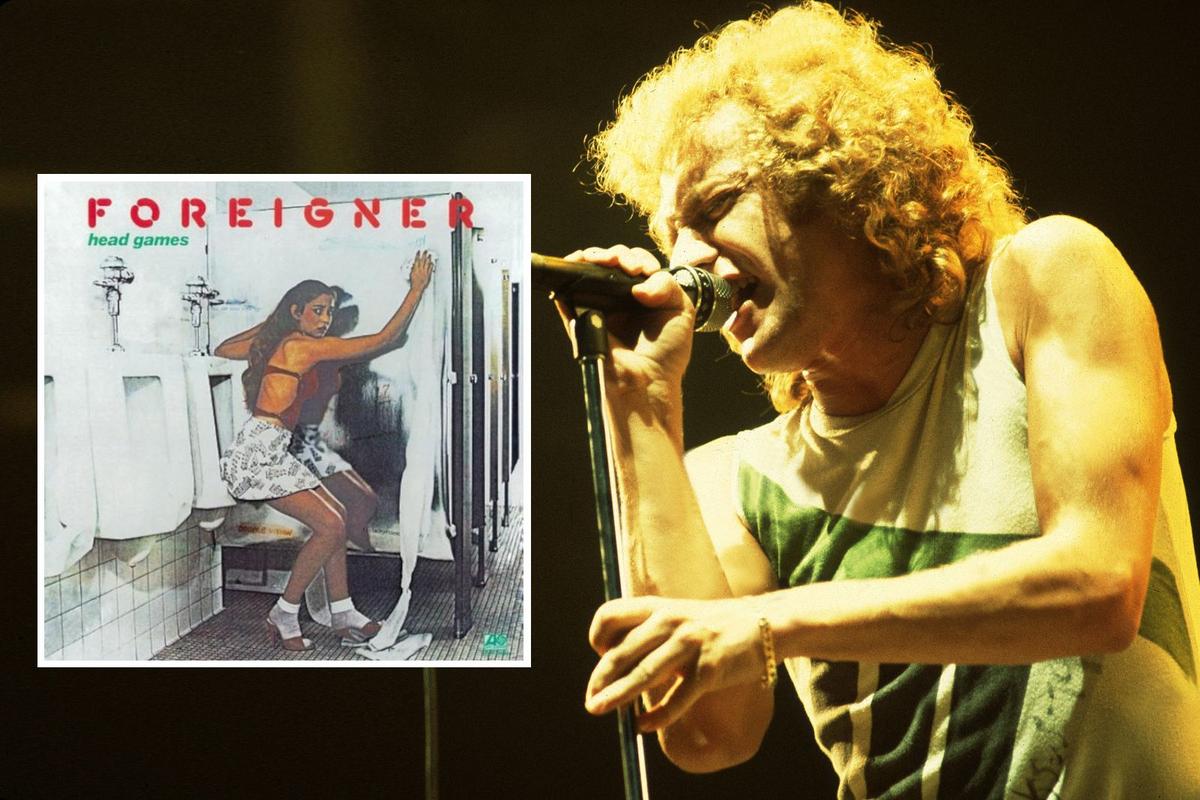
Released in September 1979, Head Games failed to deliver the radio friendly hits that its predecessors had. Making matters worse, controversy swirled around the album cover artwork, which depicted a teenaged girl erasing her phone number from a men’s bathroom stall.
Though Gramm argued the image was meant to be “tongue-in-cheek and fun,” it received backlash.
‘Head Games’’s Cover Art Controversy
“In my own Rochester, New York newspaper, they showed pictures of people somewhere in the Midwest throwing all their Foreigner albums and T-shirts and everything into a big bonfire,” Gramm recalled.
Sales of Head Games were still strong, but internal disappointment in the material, coupled with the cover art controversy, left Gramm and Mick Jones wondering if Foreigner’s time was up.
“Mick and I started having talks on a regular basis about if we couldn’t come up with a really great album for our next album, that we should probably hang it up,” Gramm admitted. “As we look back on the Head Games album, it was a lot of the same bass riffs and things that were on Double Vision in the first album. And so Mick and I were thinking, if we don’t write a new album that’s going to knock people’s socks off, and we don’t get the type of playing that is innovative and different to suit these different types of songs, we’re still dead in the water.”
Lineup Change and New Producer Reinvigorates Foreigner
Before recording their next album, Gramm and Jones made the “very difficult” decision to fire guitarist Ian McDonald and keyboardist Al Greenwood.
“If you’re a band, you can’t expect to ride the same horse through every album,” Gramm explained of the decision. “If the style of the song is a little different, you should play a little different. You know? I’m not saying change your style completely, but use your creativeness and your professional innovation to make yourself sound a little different from album to album.”
READ MORE: When Foreigner Reached for Perfection on ‘4’
For their fourth LP, the remaining members of Foreigner were determined to “carve out a new characterization of the band and a new image, too.” They enlisted producer Mutt Lange and sessions musicians including Junior Walker and Thomas Dolby to augment their sound, adding a more pop-friendly sheen to their rock sound. The moves paid off, as 1981’s 4 became a massive commercial success, propelling Foreigner into the upper echelon of rock acts.
Foreigner Albums Ranked
It’s hard to imagine rock radio without the string of hit singles Foreigner peeled off in the ’70s and ’80s.
Gallery Credit: Jeff Giles