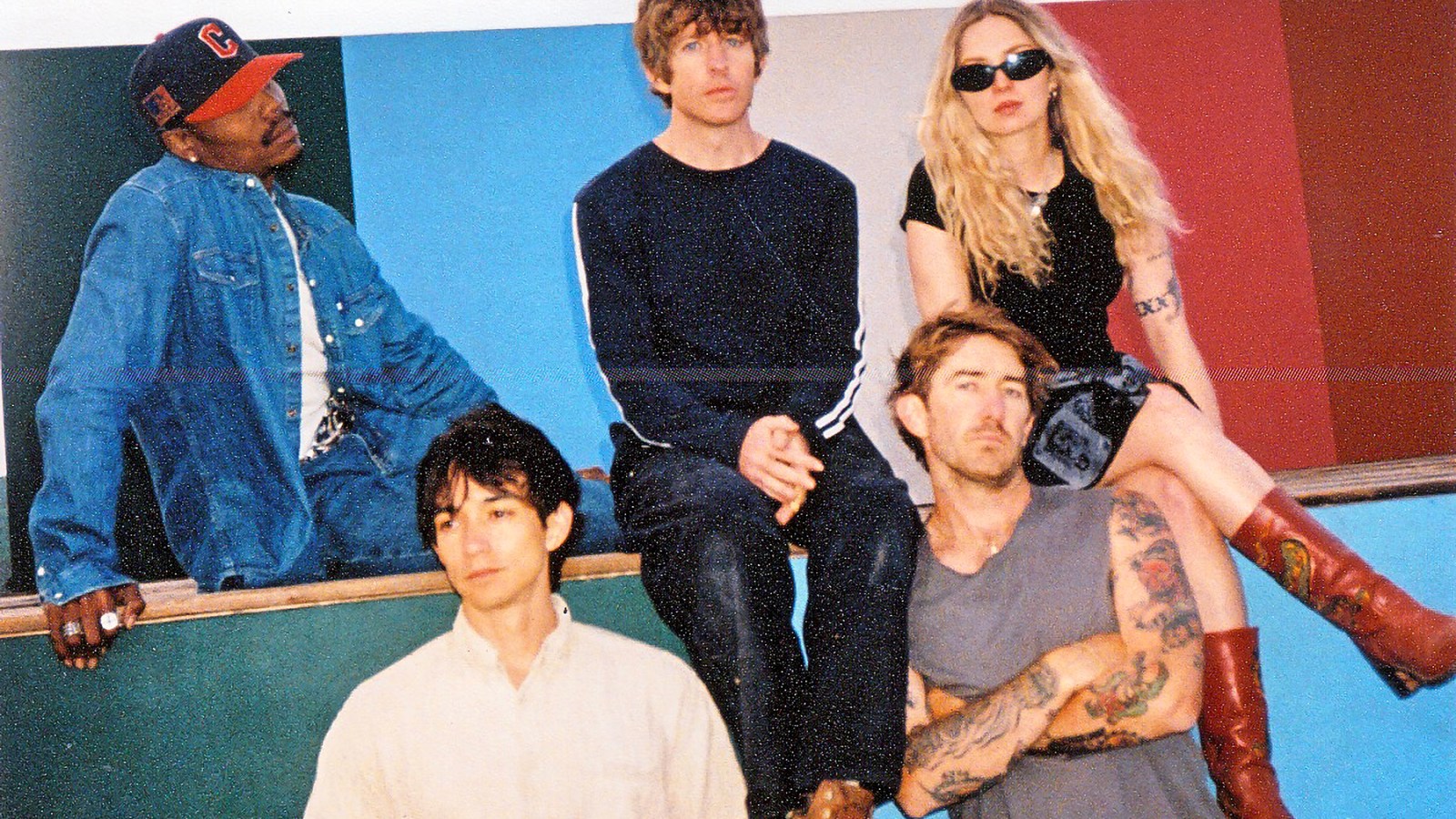

For Turnstile singer Brendan Yates, much of this past year has felt like a dream — a description he peppers throughout his conversation with Rolling Stone in the wake of his group’s latest Grammy nods. The Baltimore hardcore band made history last month when their fourth album, Never Enough, scored nominations in the Rock, Metal, and Alternative categories, marking the first time one act has been nominated in all three of those categories in one year. And that’s just the frosting on an incredible 12 months.
Whether they were making a movie, playing in their hometown, or hitting the top 10 on the Billboard album charts, it’s been Turnstile’s year — way beyond the moment when Charli XCX was slinging the phrase “Turnstile Summer.” The way Yates sees it, the Grammy nominations reflect the wide-ranging influences that went into that triumph. “Ever since our band existed, the DNA that has made this band is spread across so many different kinds of music,” Yates tells me. “Coming from our perspective, this is a representation of the music that inspires us and has shaped us.”
Rolling Stone spoke with Yates about awards, genre, and the band’s next dream.
We talked about this with Glow On, when you were nominated in Rock and Metal, but what is genre these days?
It can be very subjective. Genre definitely can be a good guide for finding sounds that you like in certain worlds. Hardcore is maybe more of a culture and a community. At a hardcore show, you can have bands that all sound very different, but there’s a shared essence.
We grew up going to punk and hardcore shows. And we grew up listening to rock. We grew up listening to metal, to alternative, to R&B, to rap, to electronic music. We listened to all kinds of things. We’ve never denied ourselves the musical influences that have been a part of our lives growing up, what our parents were playing when we were kids. Everyone is kind of just a sponge of what they are drawn to. I think it’s important to not put a box around what you naturally are drawn to.
What were you drawn to between these two records? How did your sound evolve?
When you’re writing, you have songs that kind of linger. You have mantras in your head that you kind of sing over and over, that you think one day might become a song. When forming this album, I found myself just in my room with a synth and a guitar and a piano. The synth made its way into a lot of different textures on the album just based on spending time in a room.
Some songs stay in that world, and some go to other places. But just starting from a very simple place can shape where a record goes.
What were some of the mantras you had stuck in your head?
The song “Never Enough” has existed in my head for a long time. The words and the melody can exist for a while in your head before they actually are fully fleshed out. It was [about] a lot of different life experiences — about the feeling of love always falling short, or feeling like it’s falling short of having a lasting impact. This feeling of constantly chasing and constantly reaching. That can be a pattern, that, if you’re stuck in it, it’s really hard to escape. Sometimes you can feel that way yourself, or you can feel yourself really reaching for someone else and just not feeling like that they’re able to hear.
We knew right away, when that song found its form, that that was leading the way with what this record needed to be. It spoke to a lot of the last few years of our lives, since the last album.
It seems like there’s a lot of vulnerability to these songs that might not be evident on first listen — or in the pit. They have this beating core.
I always try to reflect exactly what I’m feeling, at any point in [my] life, which I think is what’s so beautiful about music. I talk about this with friends sometimes — when you write a song, it can kind of timestamp moments in your life. But, also, five years later, that song can simultaneously mean something so brand-new to you, and it can kind of grow with you.
It’s beautiful in a way that music can grow with you, and can mean different things to you at different points in your life. And that’s something I always try to pay attention to. Because playing songs live, that puts a lot of importance onto the live exchange. It’s just another way, another avenue, for those songs to take a different life.
That Baltimore hometown show you did was beautiful.
I think we’re all still trying to process how special that day was. Not only being able to play a show in our hometown, raising money for health care, for the homeless, but also to have all of our friends and family there. People that we’ve literally grown with since we were kids, some people we see all the time, some people that we haven’t seen in 10 years. It felt like a dream, honestly. It was one of the most important shows we’ve played as a band.
What goes into a Turnstile record these days? You made a whole film for the record, so it feels almost like immersive art.
Yeah, it was something I’ve always wanted to do, as far as having a full album film, but it always felt very out of reach. Obviously, it’s an insane thing to do. But when writing the songs, once you start to kind of shape songs, you start to kind of get visuals — you start to feel colors and then, it kind of goes to settings. By the time we finished the album, there was kind of an outline for how a film could bring the songs a new life that goes beyond just the songs themselves.
I love the scene where everyone is moshing to “Birds” in that beautiful field.
That was really special, because it wasn’t officially a show, but it was our first experience of sharing music with the people and dipping our toes in the world of that exchange. It felt like a dream.
Would you ever want to score a film?
I would love to. I’ve never done it, but I’ve always dreamed about it. I hope one day there’s an opportunity.