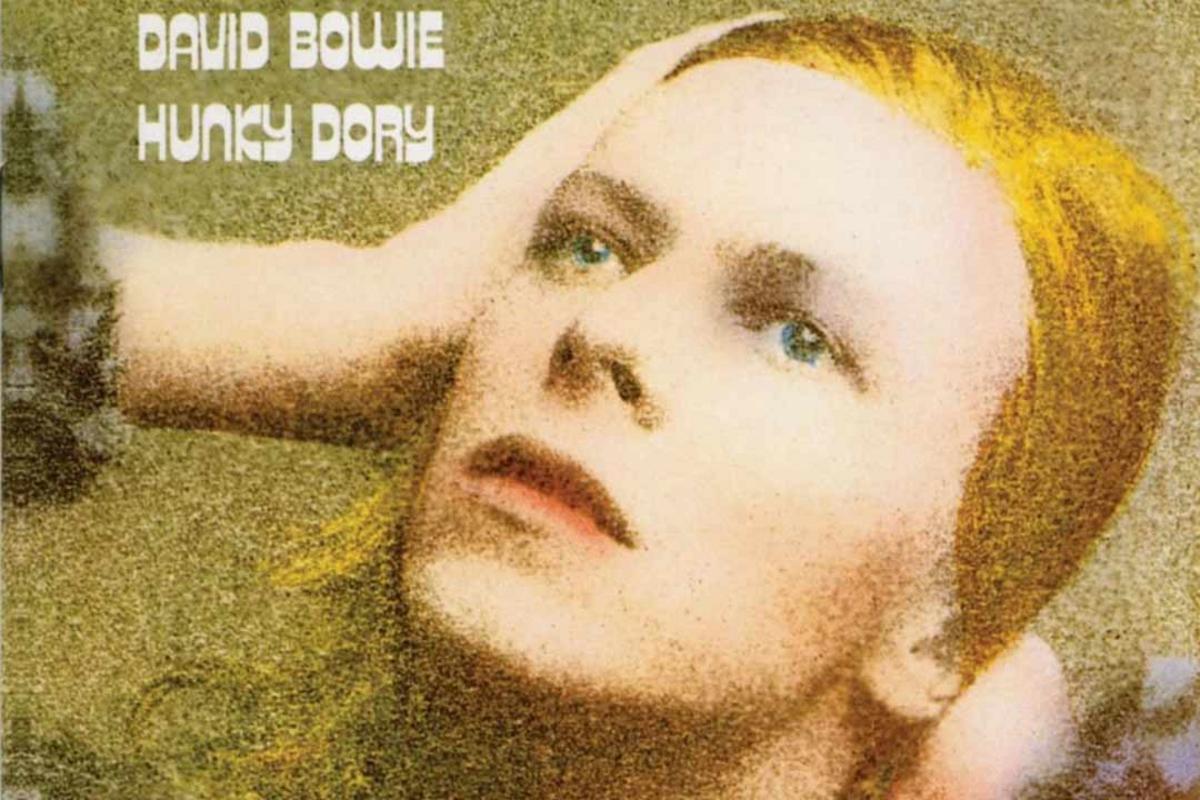

David Bowie was already four years and four albums into his career when he issued Hunky Dory, the first record to help secure his legend.
He had been inching closer to this moment with each release, but with Hunky Dory – which came out on Dec. 17, 1971 – everything that followed pretty much started here.
His previous album, The Man Who Sold the World from 1970, began the myth-building. But the real work started a year later, and that transformation was the result of a series of firsts for Bowie: The first album for his new label, RCA; the first Bowie album produced by Ken Scott; the first album to include the band that became the Spiders From Mars; and the first album to include a mix of pop, glam, art and folk wrapped in an ambisexual pose that would come to define the artist.
READ MORE: David Bowie’s ‘The Next Day’: Album Review
In a way, Hunky Dory was a step back from the harder rock edges Bowie introduced to his music on The Man Who Sold the World. But unlike 1969’s self-titled LP (later retitled Space Oddity) and, to an extent, his 1967 music-hall-obsessed debut, Hunky Dory centered itself on a malleable persona that was neither gay nor straight, male nor female, rock ‘n’ roll nor something else entirely.
David Bowie, in his Ziggy Stardust guise, falls to Earth. (Debi Doss, Getty Images)
Bowie was between labels when he began work on the album in the summer of 1971. Still, he and his band laid down more than a dozen songs over three months, 11 of which — all penned by Bowie except one track that was added at the last minute — made it onto the record released during the final weeks of the year.
What Songs Are on David Bowie’s ‘Hunky Dory’?
The opening track, “Changes,” pretty much set the tone for the album, as well as for the rest of Bowie’s long career. “I turned myself to face me,” he sings. “But I’ve never caught a glimpse / Of how the others must see the faker / I’m much too fast to take that test.”
Listen to David Bowie’s ‘Changes’
The album’s best tracks – “Changes,” “Oh! You Pretty Things,” “Life on Mars?,” “Quicksand” and “Queen Bitch” – scratched the surface of things to come. With these songs, Bowie painted a portrait of an artist who couldn’t be labeled because he himself had little idea of who or what he was at the time.
It was something he wrestled with throughout his career, whether chasing Ziggy Stardust across the galaxy or sealing his fate on his final album, Blackstar.
Did ‘Hunky Dory’ Make David Bowie a Star?
Hunky Dory didn’t make Bowie a star, but it got him noticed. The breakthrough success of The Rise and Fall of Ziggy Stardust and the Spiders From Mars the following year resulted in the album finding a bigger audience. After Ziggy, and a reissue of the 1969 song “Space Oddity,” “Life on Mars?” was given a shot as a single, and climbed to No. 3 in Bowie’s native U.K.
Watch David Bowie’s ‘Life on Mars?’ Video
Decades after its release, Hunky Dory sounds like the album where David Bowie began to become David Bowie. He’d pick up and shape the lyrical and musical themes he formed here on almost two dozen more records over the years.
The origins of Ziggy Stardust, and therefore his entire career, can be found in the album’s most realized songs. It’s here that all of those future guises began to find their voices.
From ‘Hunky Dory’ to ‘Blackstar’: The Best Song From Every David Bowie Album
He tried on many personas over his long career, and tested out various styles. Which tracks are the most essential?
Gallery Credit: Michael Gallucci