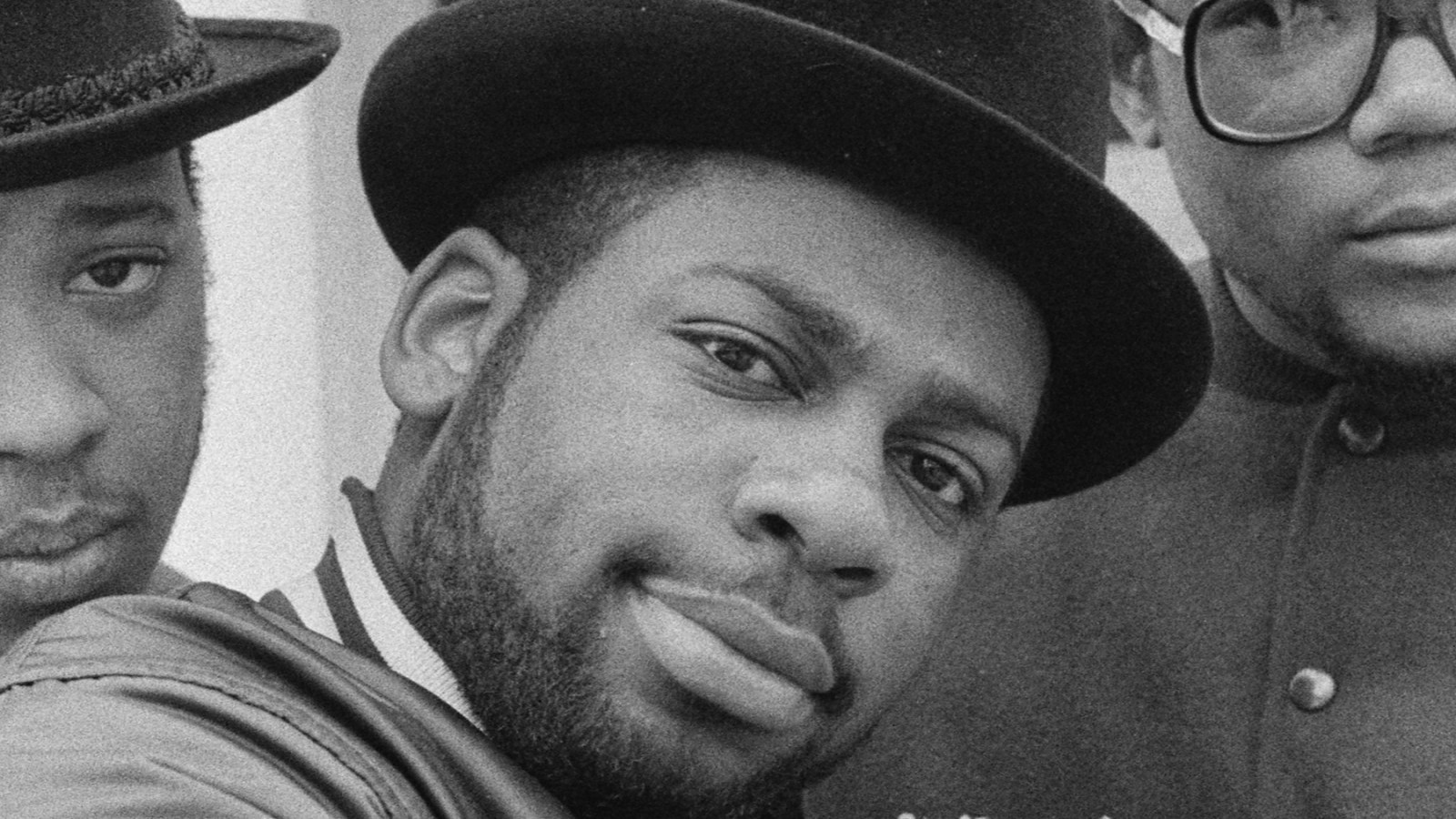

A judge overturned the conviction of Karl Jordan, Jr., one of the two men found guilty last year for the 2002 murder of Jam Master Jay, on Friday. U.S. District Judge LaShann DeArcy Hall decided to acquit Jordan, according to The Associated Press, after ruling that the U.S. attorneys prosecuting the case didn’t provide enough evidence of a motive for Jordan to kill the Run-DMC DJ, whose real name was Jason Mizell.
Judge DeArcy Hall, who had presided over the trial, denied the other man convicted in Mizell’s death, the DJ’s childhood friend Ronald Washington, requests for acquittal and a new trial. The New York Times reports that she believed the government proved its case with regard to Washington.
Although a witness, Uriel “Tony” Rincon, told the jury he saw Jordan fire the fatal shot that killed Mizell, Judge DeArcy Hall decided that prosecutors ultimately failed to connect the shooting to its overarching narrative, alleging Mizell’s murder was an act of revenge after he cut Washington out of a drug deal.
Jordan, who is currently in custody at Brooklyn’s Metropolitan Detention Center, had not yet been sentenced. He had been facing a minimum of 20 years behind bars. It was unclear at publication time when he would be released.
Jordan had also been charged with conspiracy to distribute cocaine at the time of the verdict. The DOJ had yet to set a trial date at that time.
“On behalf of Mr. Jordan and his family, today’s decision brings a measure of solace as they approach the holiday season,” one of Jordan’s lawyers, John Diaz, tells Rolling Stone.
A rep for the Department of Justice tells Rolling Stone, “The decision is being reviewed,” with no further comment.
Reps for Run and DMC did not immediately respond to Rolling Stone’s requests for comment. A rep for Mizell’s sons, Jesse and TJ, who spoke with Rolling Stone last year, also did not respond to a request for comment.
After weeks of testimony, a jury at a Brooklyn federal courthouse in February 2024 found Jordan and Washington both guilty of murdering Mizell. In 2020, the DOJ charged the two men with murder “while engaged in a narcotics trafficking conspiracy and firearm-related murder.”
U.S. attorneys alleged that after Mizell’s star had faded, following the breakup of Run-DMC, he began supplementing his income by selling cocaine. When a drug distributor told Mizell that a deal would be off if Washington was involved, the lawyers said, Mizell subsequently cut out Washington. They claimed that Washington then roped in Jordan, Mizell’s godson, and another man, Jay Bryant (added to the indictment in 2023), into a murder plot.
The prosecutors’ version of events described Washington and Jordan entering a Queens recording studio with Bryant’s help at around 7:30 p.m. on Oct. 30, 2002. Washington allegedly stood guard while Jordan approached Mizell. Prosecutors said that during a hug, Jordan shot Mizell twice in the head.
Rincon, who was shot in the leg during the incident, and an employee of Mizell’s JMJ Records, Lydia High, were the only eyewitnesses. Both gave vivid and emotional testimony at the trial.
“I saw my sister [High] lying on the left side of the door, crying and screaming,” another witness, Randy Allen, testified. “I saw Tony hopping on one leg, and I looked down at Jay, and he’s lying there. He was shot. There was blood coming from his head.… [Lydia] was just crying hysterically.”
After the conviction, Run and DMC shared a statement to Rolling Stone saying they hoped the jury’s decision would give closure to Mizell’s family. “Jay will always hold a special place in the hearts of all his friends, and all the people he inspired, mentored and gave an opportunity,” they said. “He was the heart and soul of RUN DMC, and we will forever miss him.”
“For me, personally, I would hope that Jam Master Jay can serve as a story of inspiration, but also as a cautionary tale,” Mizell’s son, Jesse, told Rolling Stone last year. “No matter how much success you see, you’re still a product of your environment. There are thought processes that never leave you when you’re stuck in that environment. And we weren’t really raised in that environment. My dad stayed in the neighborhood that he grew up in, and that can kind of lead you to doing some things that you were doing years earlier. Definitely give back to your community, but you got to move on as well.”