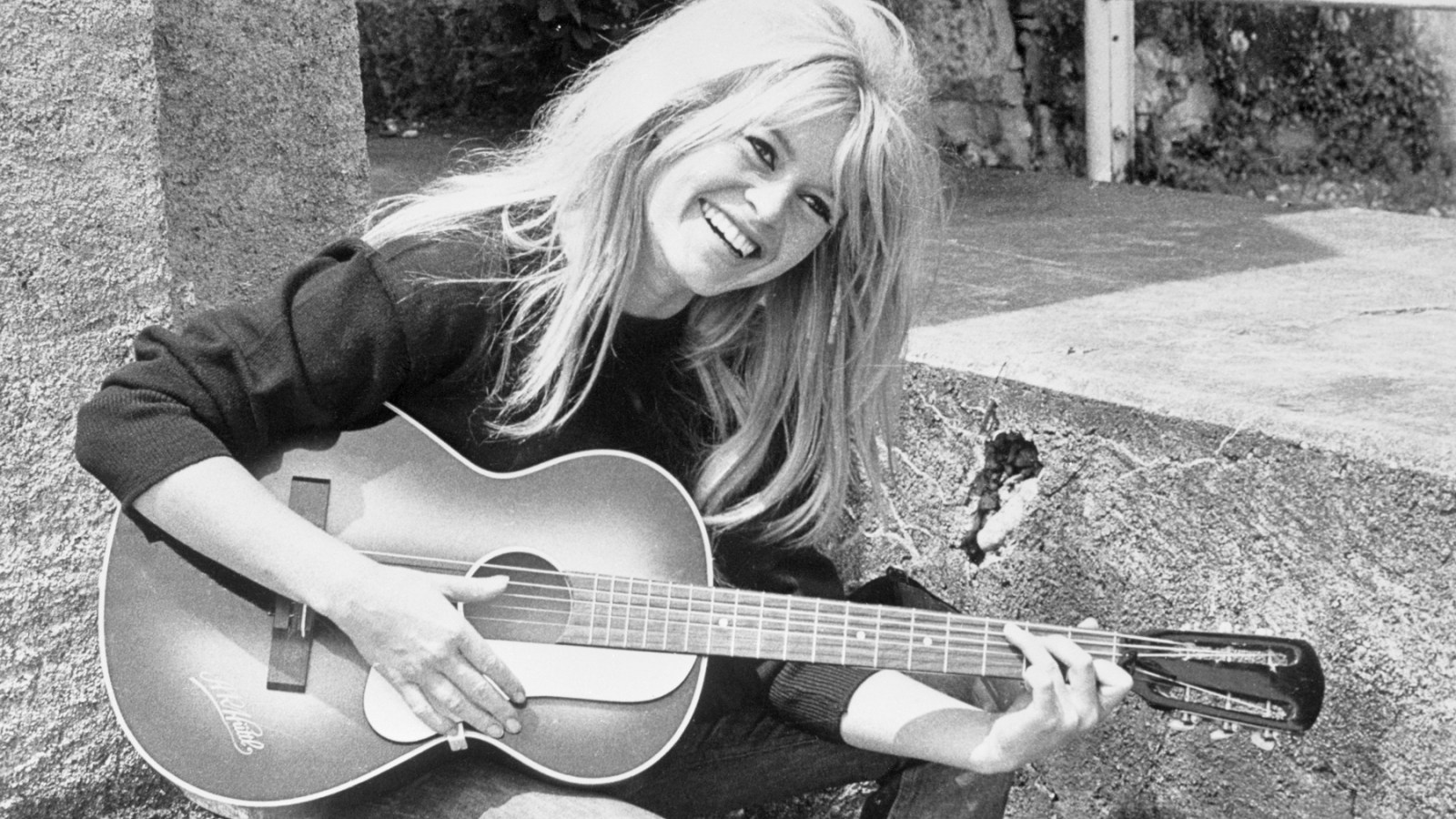

At her height in the Sixties, she was a singer who held the world’s attention like no other
Music might not be the first thing that comes to mind when you think of Brigitte Bardot, or even the second or third. But the late French actress, sex symbol, and controversial political commentator was also a fantastic pop singer in the 1960s, and that’s an element of her complex legacy that’s worth remembering. In her close collaborations with writer and producer Serge Gainsbourg and beyond, Bardot brought the same incandescent charisma that captivated countless moviegoers into the recording studio. Her vocal presence was a key part of her larger-than-life persona — one of many ways she held the world’s attention better than almost anyone in her heyday — and it’s among the reasons she’s continued to be name-checked through the decades by musicians from Bob Dylan to Chappell Roan. Here are 10 of Bardot’s greatest songs.
-
‘Sidonie’

Image Credit: Jean Claude Pierdet/INA/Getty Images Already world famous for several years by 1962, Brigitte Bardot used her film stardom to launch a music career in her late twenties with “Sidonie,” a song from the Louis Malle-directed romance in which she starred that year, Vie Privée (A Very Private Affair in English). A folk number about a woman with many lovers that was perfect for Bardot’s sex symbol status, the song introduced her as both a strummy guitar player and a chanteuse with a voice as light as air, perfect for France’s burgeoning Sixties pop scene.
-
‘La Madrague’


Image Credit: Alisdair MacDonald /Daily Mirror/Mirrorpix/Getty Images A meditation on summertime sadness decades before Lana Del Rey was born, “La Madrague” finds Bardot mourning how the wind dishevels her hair on the beach and even sunburns as the backing music ebbs and flows around her. “My sorrow will be like no one, I will keep it like a friend,” she sings in French as she bemoans returning to the city. The 1963 single, which came off her debut LP Brigitte Bardot Sings, proved a big hit in France.
-
‘Moi Je Jouie’

Image Credit: Jean Adda/INA/Getty Images A couple of years after the yé-yé explosion, Bardot put her own bubbly spin on the folky French micro-genre in 1964 with “Moi Je Jouie,” a playful song about dancing cheek-to-cheek and falling in love. In one lyric she sings “You are my toy” (auguring Madonna’s whole Eighties image), and then “Tu crieras bientot ‘Au secours’” (“You’ll be crying out for help”) a little later. But you can hear the smile in her voice since, for Bardot, it was always just a game.
-
‘Harley Davidson’

Image Credit: Jean Adda/INAGetty Images Bardot first recorded a Serge Gainsbourg composition, “L’Appareil à Sous,” on 1967’s Brigitte Bardot Sings, and it seemed like a perfect pairing. As his star rose with hits for France Gall, like “Poupée de Cire, Poupée de Son” (which won Eurovision in 1965) and the scandalous “Les Sucettes” (1967), he found a perfect foil in Bardot, a woman who would embrace the louche double-entendres of a song like “Harley Davidson.” A Sixties rock & roll number about all the things that made Sixties rock & roll great — motorcycles, good sex, and living fast and dying young — “Harley Davidson” gained extra notoriety from a 1968 clip of the actress, dressed in leather, straddling a bike as she sang about the machine sending tremors up her back and how “It doesn’t matter to me to die with the wind in my hair.”
-
‘Contact’

Image Credit: Stroud/Express/Getty Images A swirl of psychedelic pop that sounds like new wave before new wave existed, the B side to “Harley Davidson” finds Bardot in full sci-fi mode as she sings about a meteorite that pierced her heart with a “contact” hook that’s impossible to forget. Of course, because it’s a Gainsbourg composition, it’s rife with innuendo as she asks you to take off her spacesuit and remove the stardust from her body, ultimately seeking to rejoin her love with the galaxy. A music video that featured her in a silvery costume hints at the kind of contact she was singing about.
-
‘Je T’aime… Moi Non Plus’

Image Credit: REPORTERS ASSOCIES/Gamma-Rapho/Getty Images Bardot, who entered into an affair with Gainsbourg in the late Sixties, asked him to write “the most beautiful love song he could imagine,” according to Sylvie Simmons’ Gainsbourg biography. He obliged with “Je T’aime… Moi Non Plus.” On the song, she sings, “I love you, I love you” and begs him to come between her thighs, sounding positively orgasmic as, all the while, he sounds more like he couldn’t care less. (Reports from the session say there was only some “heavy petting.”) When Bardot’s husband, Gunter Sachs, caught wind of it, she begged Gainsbourg not to release it. He obliged, only to cut the song again in 1968 with his next flame, Jane Birkin, who sang Bardot’s part in a higher octave; it became his biggest success and one of Birkin’s signature songs. Bardot, who regretted missing out on a big hit, finally released her original version with Gainsbourg’s permission in 1986.
-
‘Bonnie and Clyde’
Image Credit: Jean Adda/INA/Getty Images The other “most beautiful love song” Gainsbourg wrote for Bardot was “Bonnie and Clyde,” a retelling of the criminals’ love story a year after the Warren Beatty and Faye Dunaway movie revived interest in the couple. (Bardot wore her hair like Dunaway’s, not Bonnie Parker’s, in the cover art.) The music evokes the feeling of a noir western as Gainsbourg whispers the lyrics, and Bardot coos the responses and harmonizes the chorus. She stumbles languidly on her syllables while singing her verse, and it only adds to the sexual tension. There’s also a sense of verité to it, since Gainsbourg’s lyrics drew inspiration from Parker’s own poem “The Trail’s End.”
-
‘Comic Strip’

Image Credit: Jack Burlot/Apis/Sygma/Sygma /Getty Images Bardot had to draw from her acting talent for “Comic Strip,” a song that finds her filling in Gainsbourg’s vocal with onomatopoeias straight from the funny pages: Shebam! Pow! Plop! Wiiiiiizz! There’s even an English version the two recorded that’s even funnier. The pair would attempt the same effect on 1968’s “Ford Mustang,” a better song overall that could have probably featured Bardot even more than it did.
-
‘Tu Es Venu Mon Amour’

Image Credit: Sygma via Getty Images Years after her fling with Gainsbourg fizzled, and half a decade after she released what would be her last LP, Bardot still flirted with double-entendre by herself on this 1972 torch song, whose title translates to “You Came, My Love.” Her vocal glides and pivots over morose, dreamlike arpeggios, conjuring the same sense of ennui as on “La Madrague” as she pines for the snow to melt and hopes that “demain la fleur s’ouvrira” (“tomorrow, the flower opens”). Other notable Bardot singles from the Seventies include “Nue au Soleil” (“Naked Under the Sun”) and a cover of Stevie Wonder’s “You Are the Sunshine of My Life” that she recorded as a duet with Sacha Distel.
-
‘Toutes Les Bêtes Sont à Aimer’

Image Credit: STILLS/Gamma-Rapho/Getty Images Bardot’s final single, in 1982, paid tribute to her love of animals. After retiring from film around 1973, the actress and singer dedicated most of her time to fighting for animal rights (and, eventually, airing more objectionable far-right beliefs). With lyrics written by songwriter Jean-Max Rivière, Bardot sings, “Whether domesticated or wild, all animals are to be loved.” She donated her royalties from the release to an animal rights group and Greenpeace.