
In December 1995, Black Sabbath played what would be their final show without Ozzy Osbourne.
By this point, Sabbath had weathered multiple highs and lows, along with an assortment of lineup changes. Notably, the group had gone through several lead singers, beginning with original frontman, Osbourne. Ronnie James Dio helped revitalize the band at the dawn of the ‘80s, while a pair of Deep Purple veterans — Ian Gillan and Glenn Hughes — each had stints fronting the group as well.
Tony Martin then joined Sabbath in 1987, and he was back with the metal giants for their 1995 album Forbidden. Only Tony Iommi remained from Black Sabbath’s classic lineup, with Geezer Butler and Bill Ward having each departed (again).
How Things Went Wrong on Black Sabbath’s ‘Forbidden’
Forbidden was released in June of ‘95 and immediately met with harsh reviews. Martin would later describe the album as “shit,” partly due to its rushed recording, and partly due to the record label’s insistence to include rap influences on the LP (Ice-T made an appearance).
Complicating things further was a severe lack of communication among the bandmates.
“I had my own personal manager. Tony had a manager. Geezer Butler had a manager. It was a bit like Spinal Tap — everybody’s got their own manager,” Martin recalled to Sleaze Roxx. “You’d speak to your manager, then he’d phone up somebody else’s manager to go down on them and then he’d come back up to me. So it was a bit mad you know being in the band and a lot of the time, it was reading between the lines to try and get an idea of what was happening because direct questions didn’t really work.”
READ MORE: Black Sabbath Albums Ranked Worst to Best
“I used to say to myself I don’t understand, that the bloke stood like you know 10 feet away from me and they won’t speak, ‘So, oh just, uh, speak to my manager about it.’ ‘Ah okay.’ So there you go up to your manager across there managing down and back up again. It’s just a nightmare.”
These communication issues plagued the Forbidden tour, but they were just the tip of the iceberg in terms of problems.
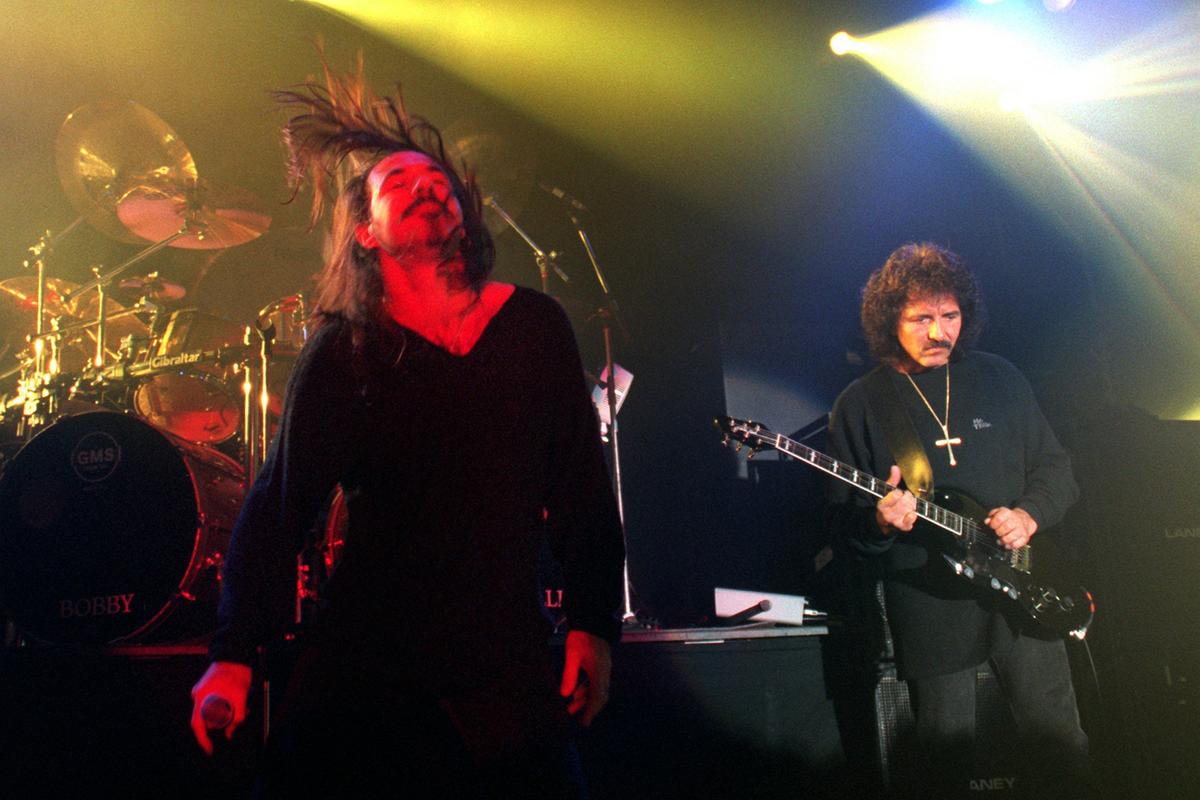
Tony Iommi during Black Sabbath’s 1995 Forbidden tour. John Lynn Kirk, Getty Images
Black Sabbath Struggled to Sell Tickets on Their Forbidden Tour
By 1995, grunge and the alternative movement had taken over rock. Black Sabbath, while still legendary, was certainly not seen as cool. The band struggled to draw a crowd, even with Motorhead in tow for the North American leg. Sabbath had to downsize venues and even cancel shows in several markets due to low ticket sales. In a retrospective, fan site black-sabbath.com noted only about 500 people showed up to watch Sabbath during their July 11 concert in Philadelphia.
Reviews of the shows weren’t much better. Black Sabbath’s performances were described as “hammy” and “dull” — a far cry from their heights as a metal powerhouse.
READ MORE: Top 10 Black Sabbath Songs
The Forbidden tour went to Europe in August, an extended run that stretched into November. Stops in Japan and Australia took Sabbath deep into December. On Dec. 14, 1995, Black Sabbath played what would be the final show of their Forbidden tour in Bangkok, Thailand. Though later dates had been scheduled, they were scrapped so the musicians could return home weeks early.
How Black Sabbath Picked Up the Pieces Following the Forbidden Tour
Feeling that the group was at a low point, Black Sabbath went on hiatus following the Forbidden tour. In 1997, a highly-anticipated reunion of the band’s classic lineup brought Sabbath back into the spotlight. Sporadic reunions would continue over the years, and later Butler, Ward and Iommi formed Heaven & Hell alongside Dio.
Across it all, there was never another Black Sabbath show without Osbourne behind the mic following the Forbidden tour. The classic lineup enjoyed a triumphant farewell at the Back to the Beginning concert in 2025. Weeks later, Osbourne died at the age of 76.
Black Sabbath Live Albums Ranked Worst to Best
Together, they paint a portrait of a band that lived hard, worked hard and played hard.
Gallery Credit: Bryan Rolli