
The 1970s delivered many legendary artists that helped shape the sound and looks of classic rock.
While plenty of these acts have been recognized by the Rock & Roll Hall of Fame, others inexplicably remain out — among them, some of the most dramatic snubs in the Hall’s history.
After previously exploring five famous ‘60s bands that have been snubbed by the Rock & Roll Hall of Fame, we delve into the 1970s below. Our collection includes iconic acts who’ve enjoyed major chart successes, built fan bases across the globe and built legacies that have forever influenced the musicians who’ve followed them. Yet, for reasons we still can’t comprehend, recognition from the Hall of Fame evades them.
Paul Natkin, Getty Images
Styx
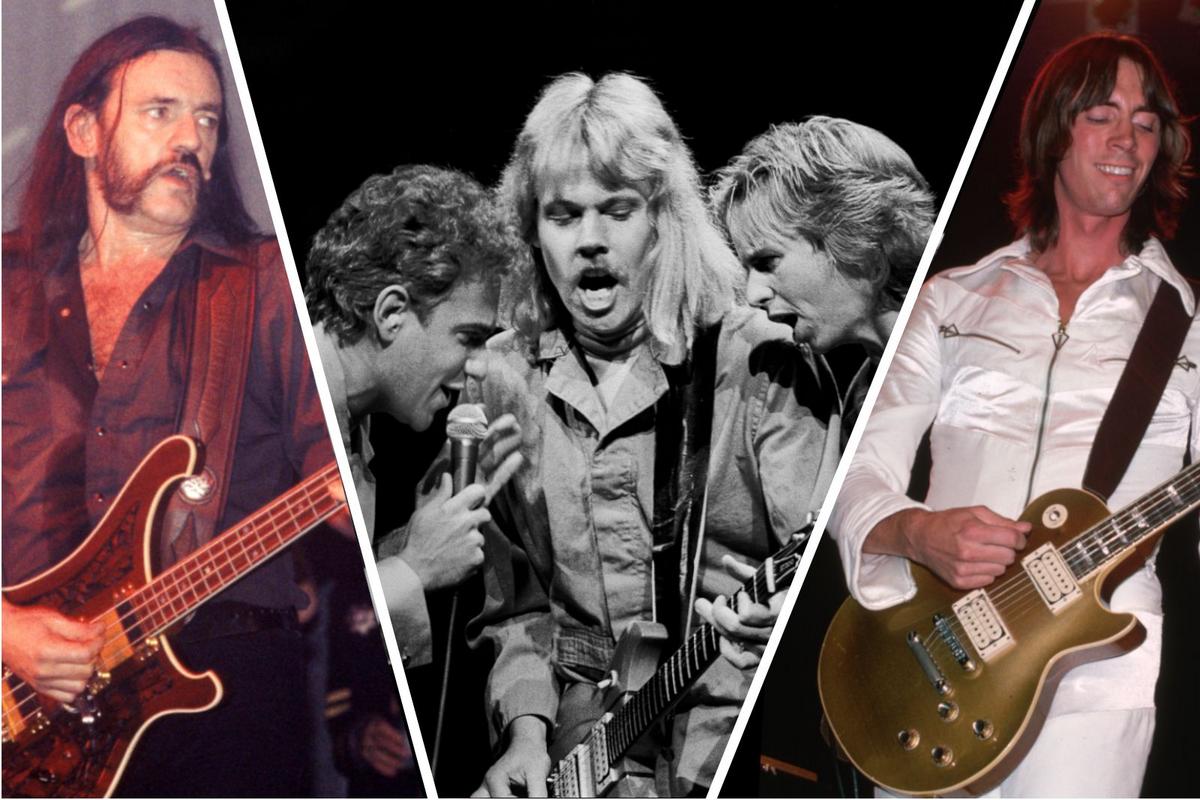
Styx’s rock resume has been recounted many times, but it deserves examination once again. The band has sold over 54 million albums worldwide. That total includes a run of five consecutive multi-platinum-selling studio albums beginning with 1977’s The Grand Illusion and ending with 1983’s Kilroy Was Here. Their material features an array of timeless hits, including “Lady,” “Come Sail Away,” “Babe,” “Too Much Time on My Hands,” “Show Me the Way” and “Mr. Roboto.” They’ve also remained a tirelessly touring band, averaging over 90 shows per year since the dawn of the millennium. All that, and the Rock & Roll Hall of Fame has somehow managed to ignore Styx’s many accomplishments. The band has been eligible for induction since 1998, yet hasn’t so much as received a nomination. It remains one of the institution’s most egregious omissions.
Brigitte Engl, Getty Imges
Motorhead
You’d think a legacy as one of heavy metal’s defining acts — coupled with the support of such heavyweights as James Hetfield, Dave Grohl and Ozzy Osbourne — would be enough to give Motorhead easy entry into the Rock & Roll Hall of Fame. Think again. Despite being eligible since 2002, the group has never earned enshrinement, and only been nominated once. This isn’t an instance where a band was influential, but only marginally commercially successful. Motorhead sold more than 40 million albums worldwide and scored mainstream hits like “Ace of Spades.” Instead, this seems to be another piece of evidence supporting the Hall’s alleged bias against metal acts. Finally inducting Motorhead would silence some of the critics, while also giving the band their long overdue honor.
READ MORE: Metal Snubs: The Rock and Roll Hall of Fame’s 9 Worst Snubs
Watal Asanuma/Shinko Music, Getty Images
Boston
The knock against Boston seems to be a lack of longevity — namely, that the band was only really at its peak for a short period of time. Still, that brief time atop the rock world was so impressive, it should trump any further discourse on the matter. Boston’s 1976 self-titled album was the best-selling debut album in history until Guns N’ Roses’ Appetite for Destruction came along. It’s a timeless, influential LP that altered the sonic landscape of rock. They followed it up with two more multi-platinum albums, 1978’s Don’t Look Back and 1986’s Third Stage. Along the way, Boston’s groundbreaking blend of hard and progressive rock, along with classic melodies and studio wizardry, paved the way for a new generation of artists. Look, Jimi Hendrix released three studio albums. Same for Nirvana. Sex Pistols? Just one. It’s an apples to oranges debate, but those acts all got in easily. If the only thing holding Boston out is a relatively small catalog (which, it should be noted, actually includes a total of six studio LPs), then it’s time for the Hall to just get over it.
Universal History Archive, Getty Images
Emerson, Lake and Palmer
Much has been made of the Rock & Roll Hall of Fame’s alleged bias towards metal acts (as mentioned in our earlier note on Motorhead), but it’s possible the Hall has an even bigger issue with progressive rock. Though legendary groups like Yes, Rush and Genesis have earned induction, many other prog rock bands remain ignored. Arguably the biggest is Emerson, Lake & Palmer, the supergroup that dominated much of the ‘70s. With the keyboard wizardry of Keith Emerson, Greg Lake’s powerful vocals and the thunderous sound of drummer Carl Palmer, ELP was a force of nature. During their prime period from 1970-’78, the band delivered eight studio albums, each of which earned gold certification in the U.S. With musical dexterity, the trio weaved elements of classical, jazz and rock into a bombastically epic sound. Critics called it pompous and pretentious, but fans ate it up. It’s a crime that ELP hasn’t so much as appeared on a Hall of Fame ballot.
P. Felix, Daily Express, Hulton Archives, Getty Images
New York Dolls
Of the five artists listed here, New York Dolls appear to have the most momentum towards a Rock & Roll Hall of Fame induction. The group has been nominated three times previously, most recently in 2022. Clearly, somebody in the Hall of Fame’s nominating committee is fighting for them. As a groundbreaking artist for both punk and glam rock, the New York Dolls’ influence can be felt throughout generations of artists. Though they only released two studio albums — New York Dolls (1973) and Too Much Too Soon (1974) — before initially disbanding in 1976, the Dolls’ legacy cannot be understated. A triumphant reunion in the early 2000s, followed by three more albums, only solidified the New York Dolls’ place in rock history. Sadly, at this point, the group’s iconic members like Sylvain Sylvain and David Johansen have all died. Still, a Hall induction would allow for one last celebration of the Dolls’ work.
Rock Hall’s Worst Band Member Snubs
When the group gets inducted into the Rock & Roll Hall of Fame without you.
Gallery Credit: Jim Allen