
Looking back, 1986 doesn’t seem to be a pivotal year in music history. Throughout the year, new artists emerged, veterans were still a presence on the charts, and the top records of the year featured a blend of the familiar and a few surprises.
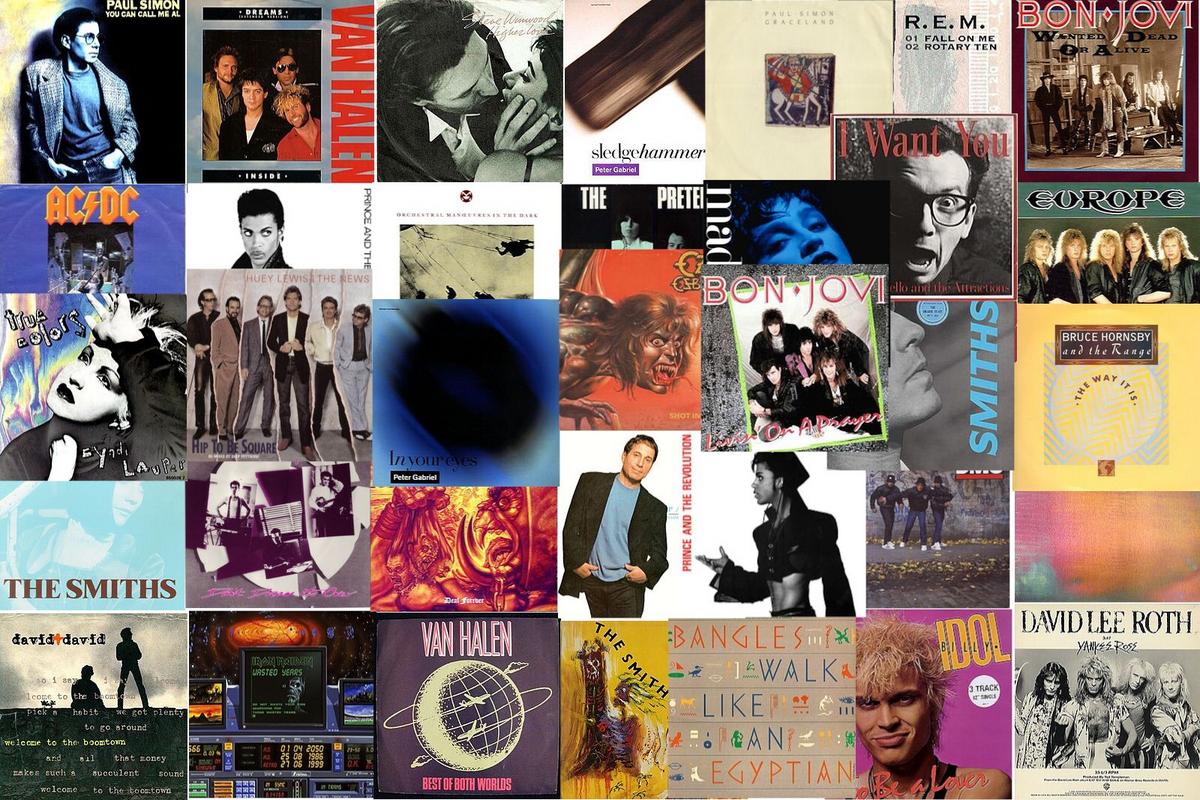
But as the list below of the Top 40 Songs of 1986 selected by the UCR staff shows, there was more than meets the eye. There was a shift toward change as popular music expanded its boundaries, and even artists from the ’60s and ’70s began looking ahead.
These songs — a mix of singles and album tracks — reflect the turning tide: Rock, metal, alternative, pop, new wave and dance music all vie for a position in the best songs of 1986. There may not appear to be too much difference from the preceding years of the 1980s, but don’t be fooled. Something’s happening here.
40. Slayer, “Angel of Death” (From Reign in Blood)
The opening track on Slayer‘s breakthrough third album has become both a blessing and a curse for the band. Reign in Blood‘s intro instantly identified itself as a groundbreaking song in the history of thrash metal, but “Angel of Death”‘s controversial subject matter — Josef Mengele’s experiments at a Nazi concentration camp — has led to accusations of a somewhat sympathetic portrayal of the doctor’s horrific practices.
39. Ozzy Osbourne, “Shot in the Dark” (From The Ultimate Sin)
Despite its closing track position on Ozzy Osbourne‘s 1986 LP, The Ultimate Sin, and the first solo single by the singer to make the Billboard Hot 100, “Shot in the Dark” has been virtually ignored as a significant part of Osbourne’s discography, absent from most compilation records and dismissed (as was the album) by the former Black Sabbath frontman. Writing credit has been tangled, too, no doubt leading to some of the neglect.
38. The Smiths, “Panic” (From single)
With Craig Gannon positioned as the Smiths‘ rhythm guitar player and just a month since the release of their third album, the U.K. No. 2 The Queen Is Dead, “Panic” hit the charts in the summer of 1986. With its children’s chorus (“Hang the DJ!“) and glam-pop bedrock, the song became the Smiths’ biggest chart hit in two years. Later accusations of racism (tied to the “hang the DJ” line) couldn’t diminish “Panic”‘s place in history.
37. Orchestral Manoeuvres in the Dark, “If You Leave” (From Pretty in Pink Soundtrack)
Recorded specifically for the 1986 John Hughes Brat Pack film Pretty in Pink, Orchestral Manoeuvres in the Dark’s “If You Leave” plays during the key final scene. The movie’s box office success guaranteed a hit soundtrack album. Included among tracks by New Order, the Smiths and the Psychedelic Furs (who rerecorded the title song for the project), OMD’s only U.S. Top 10 is radiant, catchy synth-pop.
36. Van Halen, “Dreams” (From 5150)
Van Halen‘s second era was in full swing — a No. 1 album, their first, and a Top 3 song — when “Dreams” was released as 5150‘s second single. Singer Sammy Hagar has stated that it’s one of his favorite songs; the band continued performing it even after he left. With a focus on an arrangement that emphasized the main synthesizer riff, “Dreams” followed the pop route the group pivoted toward on 1984. It was a No. 22 hit.
35. David & David, “Welcome to the Boomtown” (From Boomtown)
David Baerwald and David Ricketts’ solo careers intersected with those of Sheryl Crow, Joni Mitchell and Robbie Robertson. Their one album together, Boomtown, centered on broken hopes and spirits in their Los Angeles hometown; the LP’s opening track and lead single, “Welcome to the Boomtown,” lays out the plans. Both the album and the song reached the Top 40, validating the studio vets’ expert writing and playing.
34. Huey Lewis and the News, “Hip to Be Square” (From Fore!)
A No. 3 hit when it was released in 1986 (the year parent album Fore! hit No. 1) and revived during a key scene in the 2000 film American Psycho, Huey Lewis and the News’ “Hip to Be Square” was the subject of an extensive dissertation on its themes in the movie adaptation and in Bret Easton Ellis’ book. It’s a darkly funny moment in the history of a bouncy pop song Lewis wrote as a satire of “bourgeois bohemians.”
33. Cinderella, “Nobody’s Fool” (From Night Songs)
By the mid-1980s, with a strong MTV push behind them, hard rock power ballads had become the norm for groups seeking to break from their main audience of fist-raising males. Pennsylvania quartet Cinderella was one such band reaping the rewards for heading down the path. “Shake Me,” the typical-sounding first single from their debut album, Night Songs, failed to ignite; follow-up power ballad, “Nobody’s Fool,” hit No. 13.
32. Bon Jovi, “Wanted Dead or Alive” (From Slippery When Wet)
Hackneyed Old West imagery aside (“I’m a cowboy, on a steel horse I ride“), Bon Jovi‘s “Wanted Dead or Alive” arrived at the peak of the New Jersey band’s commercial heights. Slippery When Wet was a No. 1 album with two singles (“You Give Love a Bad Name” and “Livin’ on a Prayer”) already topping the chart. “Wanted Dead or Alive,” inspired by Bob Seger‘s road anthem “Turn the Page,” extended their Top 10 run.
31. Elvis Costello and the Attractions, “I Want You” (From Blood & Chocolate)
At nearly seven minutes, “I Want You” is Elvis Costello‘s longest song, a slow-building exercise in romantic torment. As Costello and the Attractions pile on discordant instruments over a slow, methodical hum of a melody, words of longing are undercut by a psychopath’s view of love gone wrong. It’s no accident that “I Want You,” lyrically and musically, bears some resemblance to the similarly named Beatles song.
30. Billy Idol, “To Be a Lover” (From Whiplash Smile)
Adapted from a 1968 Stax Records song by William Bell, via Lee “Scratch” Perry and George Faith’s 1977 reggae cover, “To Be a Lover” was reworked to incorporate Billy Idol‘s post-new wave slink, while also revealing a vocally flexible side to the former punk singer. Part rockabilly rumble, part soulful croon, Idol’s “To Be a Lover” didn’t sound much like Bell’s original take. The then-hot Idol pushed his version into the Top 10.
READ MORE: Top 40 Songs of 1985
29. Europe, “The Final Countdown” (From The Final Countdown)
Europe‘s “The Final Countdown,” with its extravagant opening keyboard riff, was deliberately conceived as a concert starter before being selected as the first song on the Swedish band’s breakthrough third LP. It has since taken on a second life, often as an overdrawn punch line in films, TV shows and ads. The album and single were Top 10 hits (as was another song from the LP, “Carrie”), but follow-ups have stalled.
28. The Smithereens, “Blood and Roses” (From Especially for You)
Everything about New Jersey’s the Smithereens was a throwback: their look, their sound, their influences and even their song references. Their debut album, Especially for You, included nods to Swinging London model Jean Shrimpton, 1960s French director Roger Vadim and bossa nova king Antonio Carlos Jobim. “Blood and Roses,” the group’s first single, was inspired by the suicide of a classmate of singer Pat DiNizio.
27. Motorhead, “Deaf Forever” (From Orgasmatron)
A new four-man lineup joined Lemmy Kilmister for Motorhead‘s seventh album, Orgasmatron, lending the record a sturdier foundation on which to ply its solid metal crunch. The LP’s lead track and signature song, “Deaf Forever,” reads like a statement of purpose for Kilmister and band, even though lyrically it’s more about the senselessness of war than it is regarding the group’s volume-pushing excesses.
26. Slayer, “Raining Blood” (From Reign in Blood)
More than a third of Slayer’s “Raining Blood” run time is the sound of falling rain. The remaining moments in the closing track on their metal totem, Reign in Blood, are rarely that placid, though. Told from the perspective of a man cast from heaven now seeking revenge, the song solidified the California quartet’s standing among thrash fans. Their third album instantly catapulted them to the top of the then-slim but growing tier.
25. Megadeth, “Peace Sells” (From Peace Sells…but Who’s Buying?)
Workshopped onstage and later the theme music for MTV’s news program, Megadeth‘s “Peace Sells” immediately grabbed a position in metal music’s pantheon. The centerpiece and de facto title song on the band’s second album, Peace Sells…but Who’s Buying?, features a distinctive opening bass line (played by David Ellefson) that leads the stereotype-shattering song, initially inspired by a Patti Smith interview.
24. Prince and the Revolution, “Mountains” (From Parade)
Featured in Prince‘s second movie, Under the Cherry Moon, as the end credits roll, and as the Side 2 opener on his 1986 album Parade, “Mountains” was one of two songs from the LP to be cowritten with Revolution members Lisa Coleman and Wendy Melvoin. The jerky synth-pop funk nature of the song lent itself to an extended remix, where the four-minute LP version is more than doubled to an extraordinary 10 minutes.
23. Bangles, “Walk Like an Egyptian” (From Different Light)
Three singles into their breakout second album, Different Light, Bangles scored their first No. 1 with “Walk Like an Egyptian.” Like the first two singles pulled from the LP — “Manic Monday, written by Prince, and Jules Shear’s “If She Knew What She Wants” — “Walk Like an Egyptian” was by an outside songwriter, Liam Sternberg, who later contributed the theme song to TV’s 21 Jump Street. Bangles’ energy drives this one.
22. Pretenders, “Don’t Get Me Wrong” (From Get Close)
Two years removed from the cathartic and soul-cleansing Learning to Crawl, Chrissie Hynde found solace in the everyday adult themes of the Pretenders‘ fourth album, Get Close. Its first single, the jangly, poppy “Don’t Get Me Wrong,” wasn’t as tightly wound as most songs from Crawl, and recalled some of the more commercial moments found on the band’s debut. At this point, Hynde was the only original member remaining.
21. AC/DC, “Who Made Who” (From Who Made Who)
AC/DC‘s 1986 album Who Made Who is several things: a soundtrack to the 1986 Stephen King film Maximum Overdrive, a compilation of the band’s songs dating back to 1976 and a depot for three new tracks. The best of them, the title tune, is a typical mid-’80s hard-rock nugget by the Australian power-chord titans. “Who Made Who” didn’t stick around long in AC/DC’s set lists, appearing only a few times since its introduction.
20. The Smiths, “There Is a Light That Never Goes Out” (From The Queen Is Dead)
“There Is a Light That Never Goes Out” may be the most emblematic of all Smiths songs: chiming guitar, verse-chorus structure in sublime service of the record and a lyric that’s as funny as it is startling: “If a double-decker bus crashes into us / To die by your side is such a heavenly way to die.” It was originally an album track on The Queen Is Dead, but was released as a single five years after the influential group broke up.
READ MORE: Top 50 Songs of 1984
19. Paul Simon, “Diamonds on the Soles of Her Shoes” (From Graceland)
Originally not intended for Graceland, “Diamonds on the Soles of Her Shoes” was added to the Grammy-winning LP after Paul Simon‘s label delayed the album’s release by a month. With South African vocal group Ladysmith Black Mambazo in New York with Simon for an appearance on Saturday Night Live, they headed into a studio to record the song, which Simon had written during his career-altering trip to South Africa.
18. Madonna, “Open Your Heart” (From True Blue)
Madonna‘s fifth No. 1 single since late 1984 was originally written for Cyndi Lauper by songwriters Gardner Cole and Peter Rafelson. Reworked from a harder rock song into Madonna’s dance-pop style and, with some new lyrics from the singer and a title change, “Open Your Heart” helped keep her third album, the pliant True Blue, at the top part of the charts for several more weeks. It’s also a popular choice in her concert sets.
17. Iron Maiden, “Wasted Years” (From Somewhere in Time)
Guitarist Adrian Smith wrote “Wasted Years” about Iron Maiden‘s previous tour run, when the group spent so much time on the road and away from home that hopelessness and alienation replaced any joy of road life. The song was released as the first single from the band’s sixth album, Somewhere in Time, and peaked at No. 18 on the U.K. chart. “Wasted Years” remained in sporadic live set lists over the years.
16. Paul Simon, “Graceland” (From Graceland)
Paul Simon was coming off his first post-Simon & Garfunkel commercial flop when he was given a tape of South African music that led to a recording trip to Johannesburg with longtime engineer Roy Halee. The results of that trip led to his seventh solo album. Graceland did more than renew Simon; it spurred a movement in world music. The LP’s title track links Elvis Presley‘s Memphis home to Simon’s dissolved marriage.
15. Run-D.M.C., “Walk This Way” (From Raising Hell)
Rock and rap had already fleetingly coexisted when Run-D.M.C. reset the bar in the summer of 1986 with their cover of Aerosmith‘s 1975 classic rock favorite “Walk This Way.” The groundbreaking single also effectively launched the Boston band’s comeback the next year after guitarist Joe Perry and singer Steven Tyler appeared in the song and video. It’s a watershed moment in ’80s music. Next up: Beastie Boys blurred more lines.
14. Cyndi Lauper, “True Colors” (From True Colors)
Much was riding on Cyndi Lauper‘s follow-up to 1983’s hit debut, She’s So Unusual. Its first single, and title song, steered away from her reputation as the MTV generation’s favorite fun girl: “True Colors” was a stark but encouraging ballad about being true to oneself. The song shot to No. 1, further raising Lauper’s profile, and was subsequently embraced by the LGBTQ community as an emblem of identity and strength.
13. Van Halen, “Best of Both Worlds” (From 5150)
Unlike the initial three singles from Van Halen’s first album with Sammy Hagar, “Best of Both Worlds” sets aside the keyboards and synthesizers that dominated much of 5150. The song, which failed to chart, showcases Eddie Van Halen‘s guitar wizardry and Hagar’s vocal shredding. “Best of Both Worlds” was a hopeful look at the union between the veteran rock band and journeyman singer, which ended a decade later.
12. Bon Jovi, “Livin’ on a Prayer” (From Slippery When Wet)
Cowritten by pop hitmaker Desmond Child with Bon Jovi members Jon Bon Jovi and Richie Sambora, “Livin’ on a Prayer” took the band to new levels of popularity thanks to its massive radio hook (correction: multiple massive radio hooks) and expertly timed key change. A little Bruce Springsteen, some ’70s talk box and a sprinkle of glam-metal flair went into Bon Jovi’s best song, a fan-embracing sing-along, and well-deserved No. 1.
11. Bruce Hornsby & the Range, “The Way It Is” (From The Way It Is)
As Virginia-born singer, songwriter and pianist Bruce Hornsby himself has noted, “The Way It Is” was hardly a strategy for commercial success: a song about racism featuring two improvisational piano solos. It reached No. 1 and sent his band’s debut album, also titled The Way It Is, into the Top 3. The song made such an impact that Martin Luther King Jr.’s widow asked to use it for the King Center for Nonviolent Social Change.
10. Paul Simon, “You Can Call Me Al” (From Graceland)
Its rubbery rhythm and fluid musicality belie the existential underpinnings of “You Can Call Me Al,” which is rooted in a case of real-life mistaken identity and Paul Simon’s life-changing trip to South Africa in 1985. The song preceded Graceland‘s release by a month and stalled outside the Top 40 in its initial showing. After the album’s 1987 Grammy sweep, “You Can Call Me Al” became Simon’s last Top 40 Billboard hit.
9. R.E.M., “Fall on Me” (From Lifes Rich Pageant)
After Fables of the Reconstruction‘s Southern Gothic experimentalism, R.E.M. returned to the 12-string-inspired folk college rock of their earlier album for Lifes Rich Pageant. Like many of the band’s early songs, the lead single is open to interpretation: “Fall on Me” is seemingly an acid rain warning, but singer Michael Stipe has referred to it as a “song about oppression.” Either way, it’s one of R.E.M.’s best pop-leaning tracks.
8. Crowded House, “Don’t Dream It’s Over” (From Crowded House)
Amazingly, “Don’t Dream It’s Over” was released as the fourth single from Crowded House‘s self-titled debut album. Its success helped propel the album and the band to worldwide fame, reaching the Top 10 in several countries, including a No. 2 showing in the U.S. Neil Finn was coming off seven years with New Zealand hitmakers Split Enz when he forged a similar path with Crowded House. This ballad is their career jewel.
READ MORE: Top 50 Albums of 1984
7. Steve Winwood, “Higher Love” (From Back in the High Life)
Following his early 1980s comeback, which included a pair of synth-pop albums, Steve Winwood returned to the R&B-accented music of his ’60s and ’70s records with his fourth solo LP. Back in the High Life was a Top 3 hit and included four Top 20 singles. The first, “Higher Love,” won a Grammy for Record of the Year and reached No. 1; Nile Rodgers’ guiding guitar and Chaka Khan’s ebullient backing vocals drive it forward.
6. David Lee Roth, “Yankee Rose” (From Eat ‘Em and Smile)
David Lee Roth‘s exit from Van Halen in 1985 yielded his solo debut, Eat ‘Em and Smile, a year later. “Yankee Rose,” the album’s lead single, directly took on his old band’s first album with their new singer, prominently featuring plenty of guitar pyrotechnics provided by former Frank Zappa sideman Steve Vai. There are references to the Statue of Liberty and other American icons in the song, but the flash is pure Roth.
5. Peter Gabriel, “Sledgehammer” (From So)
Peter Gabriel was almost finished with his fifth album when he came up with “Sledgehammer” as a last-minute addition to So. Smart call: The song gave Gabriel his first No. 1 single and drove the album to No. 2, his highest U.S. ranking at the time. An innovative video and a commercial dance-pop sound also helped give “Sledgehammer” — a not-so-subtle sex call — a boost. Gabriel went supernova afterward.
4. Metallica, “Master of Puppets” (From Master of Puppets)
The title track of Metallica‘s masterpiece, Master of Puppets, stems from a dialogue about drug use and its controlling nature on victims. But with its epic length, long instrumental passages and dark tone, it’s easy to focus solely on the hard-hitting music. As a milestone song in the nascent thrash metal scene, “Master of Puppets” leaped boundaries for the band and genre — a much-heralded live favorite for decades.
3. New Order, “Bizarre Love Triangle” (From Brotherhood)
New Order had already made the leap from post-punk trailblazers to dance-club mavericks when they released the synth-pop classic “Bizarre Love Triangle” in 1986, but the song pushed them to new heights. With the Fairlight CMI synthesizer landing a prominent role in the song, there was no question where New Order’s future lay. While not the most groundbreaking work in a career filled with them, it is their most kinetic.
2. Prince and the Revolution, “Kiss” (From Parade)
Upping the funk quotient after the psychedelic splashdown of 1985’s Around the World in a Day, Prince’s “Kiss” stemmed from the multi-hyphenate artist’s first directorial feature, Under the Cherry Moon, and was showcased on the companion soundtrack album, Parade. The film was no Purple Rain, critically or commercially, but the record, especially “Kiss,” was a hit. “Kiss” became Prince’s first No. 1 since “Let’s Go Crazy.”
1. Peter Gabriel, “In Your Eyes” (From So)
By 1986, ex-Genesis singer Peter Gabriel had released four art-tended solo albums, all titled Peter Gabriel, and was ready for a change. Collaborating with producer Daniel Lanois, who had helped U2 uncover new layers in their music, and continuing to explore the effects of the mid-’80s Fairlight CMI synthesizer on modern music, Gabriel went for a grander, more accessible sound on his fifth LP, So. The gambit paid off, resulting in Gabriel’s first Top 10 album in the States (No. 2) and a chart-topping single in “Sledgehammer.” So‘s second single, “In Your Eyes,” climbed into the Top 30 and grew into one of his most popular songs, thanks to its slightly ambiguous theme of universal love. Senegalese singer Youssou N’Dour’s vocal assists arrived in a year when world music was seeing a mainstream upswing in records by artists such as Gabriel and Paul Simon. In 1989, “In Your Eyes” found a second life after it was used in a key scene in the film Say Anything… Gabriel was never more adaptable than he is here in one of the decade’s most enduring love songs.
From Prince and R.E.M. to New Order and Slayer: The Top 40 Albums of 1985
Classic rock veterans and fresh faces came together in a year of change.
Gallery Credit: Michael Gallucci