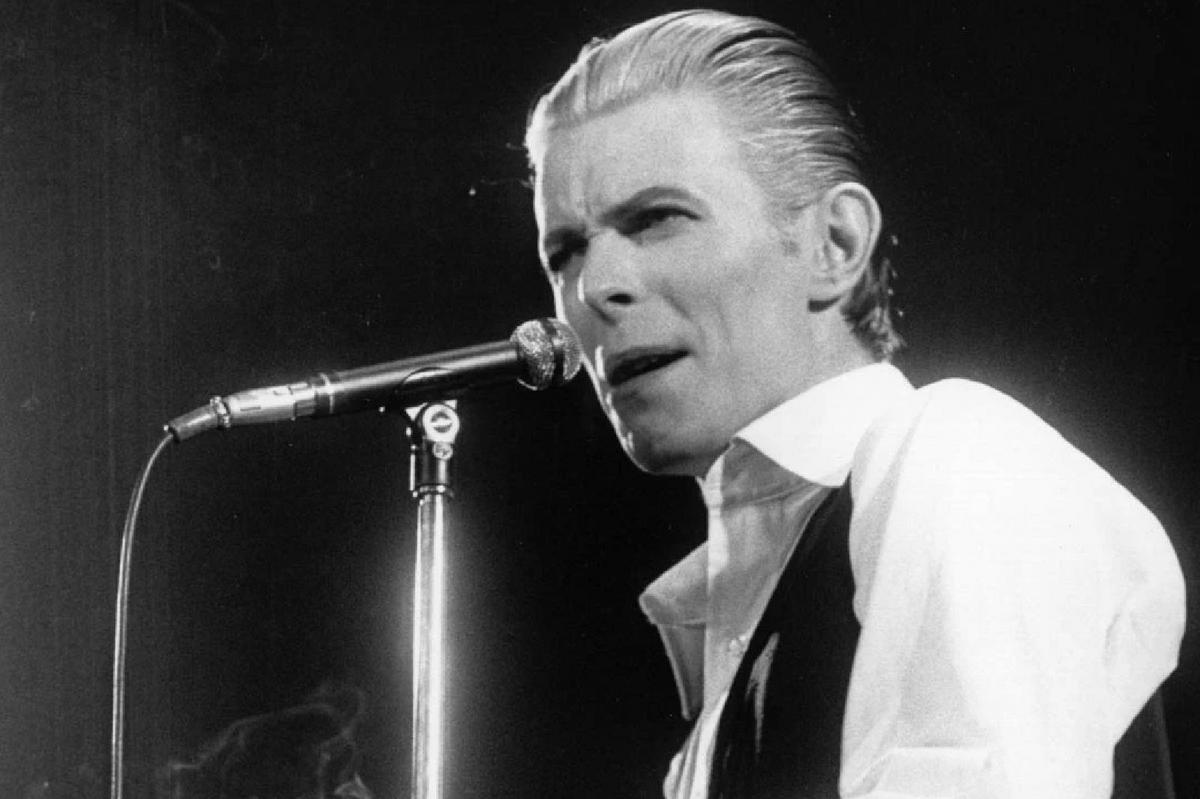

David Bowie was coming off his first No. 1 single in the U.S. and was snagged in a hellish coke habit when he started recording Station to Station in 1975. Both influenced the creation of one of his best-ever albums.
He had also recently wrapped filming on his first starring movie role, in Nicolas Roeg’s existential sci-fi head-scratcher The Man Who Fell to Earth (which would open in the summer of 1976). It, too, had a profound influence on what would become the first of many artsy detours Bowie took during his career, setting the template for a new era right around the corner: the celebrated Berlin Trilogy.
But first, he needed to shake off the dust from his previous album, Young Americans, a tribute to the Philly soul music that was dominating urban and even select sections of Top 40 radio at the time. Station to Station was the bridge between that LP, which gave Bowie his first No. 1 with “Fame” in 1975, and Low, the first of three records he made with Brian Eno while cleaning up in Berlin.
READ MORE: The Best Song From Every David Bowie Album
Recorded in Los Angeles, the album was a reaction against the city and, in a way, the U.S. itself. Young Americans was Bowie’s most American-sounding album, an exploration of R&B largely absent from his earlier records. Station to Station was a marked return to European sounds and the exploration of some new ones from the continent – primarily the krautrock electronica of German bands like Kraftwerk and Neu!
What Songs Are on David Bowie’s ‘Station to Station’?
The 10-minute opening title track is the most obvious example of this new influence, but other songs — like “TVC 15” and the closing cover of Ned Washington and Dimitri Tiomkin’s “Wild Is the Wind” — display it, too. Bowie himself played the Moog and Mellotron, while studio pros like guitarist Carlos Alomar and E Street Band piano player Roy Bittan handled the more traditional rock instruments. Once again, Bowie was a step ahead of everyone else.
bowie station to station
But he still was caught in the soulful sway of his previous experiment, and half of Station to Station‘s six cuts take on art-funk shades. “Golden Years,” the album’s biggest single, is the closest the album gets to Young Americans‘ soul kiss, but “Word on a Wing” and “Stay” — both clocking in at more than six minutes — also get in on the action.
Listen to David Bowie’s ‘TVC15’
It’s a significant album in Bowie’s catalog, the moment where his most unabashed commercial move gave way to his most don’t-give-a-damn experimental period. All these years later, it stands as a milestone record — when Bowie transitioned from Rock Star to Artist. But first, he needed to rid himself of the cocaine addiction that was at its apex during the album’s creation.
What Is the Legacy of David Bowie’s ‘Station to Station’?
Berlin cleaned him up. It wiped away the drugs and the ego, and the Bowie that emerged from Low, Heroes and Lodger had little in common with the preening superstar moves on The Rise and Fall of Ziggy Stardust and the Spiders From Mars and Aladdin Sane. Station to Station falls somewhere between all that, with a new persona — the Thin White Duke — taking on some new and old sounds.
Listen to David Bowie’s ‘Golden Years’
The record reached No. 3 in the U.S., a better showing than Young Americans‘ No. 9 spot, and Bowie’s highest-charting LP until The Next Day made it to No. 2 in 2013 and then Blackstar‘s No. 1 debut in 2016.
Not long after Station to Station was released on Jan. 23, 1976, Bowie went on the road in support of it. Later in the year, he was in Berlin cleaning up and finding new inspirations; 12 months after Station‘s release, a resurrected Bowie emerged on Low. And he wasn’t through yet. Not even close.
Top 40 Albums of 1976
As the decade turned a midpoint corner, some of the biggest artists of the ’70s reached their stride.
Gallery Credit: Michael Gallucci