
Toward the end of last year, Jehnny Beth reached out to her former bandmates in Savages with an idea.
“Jehnny came to us, like, ‘Hey girls, what about doing something?’” recalls guitarist Gemma Thompson.
Beth, who fronted the U.K. post-punk band before its 2017 dissolution, was proposing a look through the archives to mark the 10th anniversary of Savages’ second and final album. This came as a bit of a surprise to the other members. It had been a long time since the four of them had all spoken together, and even longer since they’d done anything as a band.
“It feels like a lifetime ago, for me, anyway,” Thompson says.
“Although when we talk together, it kind of feels like yesterday,” adds bassist Ayşe Hassan.
When they looked in the vault, they found two tracks from Savages’ prime, which they released last week as a treat for fans on the anniversary of 2016’s Adore Life. One, a moody rocker called “Prayer,” is an outtake from that album; the other, a stately, mournful cover of Black Sabbath’s “Paranoid,” dates back to 2012, before their full-length debut. “It was this peak moment of us playing together,” Thompson says. “Beautiful to look back on after all these years.”
Thompson and Hassan, who have logged onto Zoom from New Zealand and southeast England, respectively, say this is the first interview they’ve done about Savages since the band’s last show at a French rock festival nearly nine years ago. Notably, Beth is not on the call, nor is drummer Fay Milton.
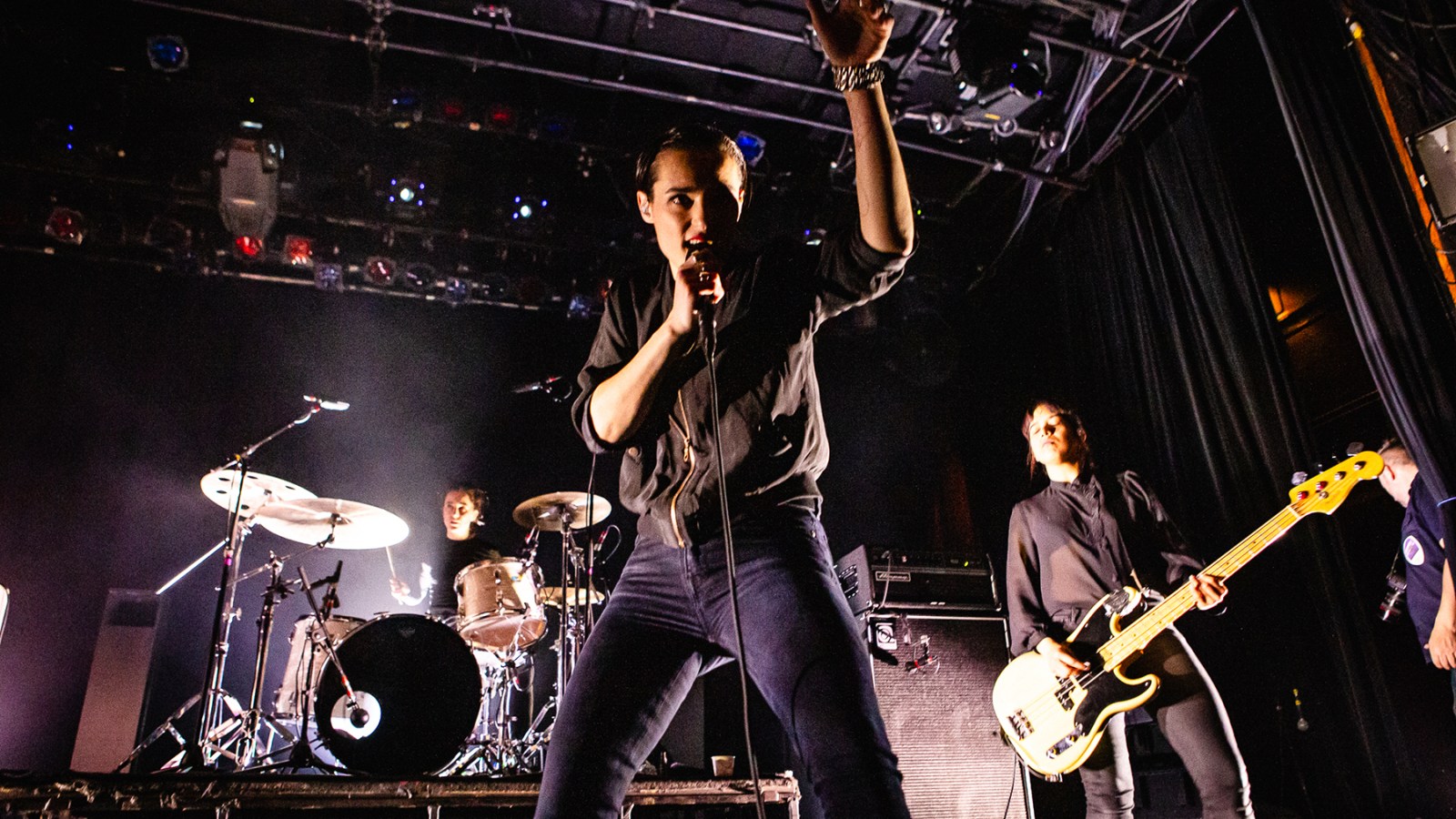
Savages burned bright from the moment they formed in London in 2011. Their 2013 debut, Silence Yourself, was one of the most vital releases of its era, renewing the promise of U.K. post-punk and setting a new standard for the decade to come. Two years later, as their thoughts turned to a follow-up, they knew they wanted to channel the live-wire, lightning-strike energy of their concerts. So they moved to New York, where they spent the winter of 2015 playing a string of nine small club shows that fans still talk about today.
The band set up camp in an industrial neighborhood in Brooklyn, in “a really cool apartment opposite a cement factory on the L train,” and reveled in the freedom they felt for three weeks that January. “I remember carting equipment through four-foot snowdrifts on the sidewalk,” Thompson says. “New York was shut down one day because of a snowstorm. It was freezing. We went out one night and there were no cars on the street. We literally just ran down the street having a snowball fight.”
Savages in 2016 (from left): Thompson, Milton, Beth, and Hassan.
Griffin Lotz
The idea was to help jumpstart their creativity as they faced the difficult task of following up one of the best-reviewed debuts of the early 2010s. Silence Yourself had come together organically, a product of the band’s early headlong rush. Thompson smiles as she recalls the very first show Savages ever played, an opening gig in Brighton, England, in January 2012: “I remember sitting in Ayşe’s car on the way to the show. We’d finished our jobs early, and we were trying to remind each other how the hell we were going to finish this one song in the car. It was almost written without thinking, in a way. Let the music do its thing and follow it.”
Now, as they began writing songs for Adore Life, they faced new pressures. “I remember really struggling with that,” Thompson says. “I remember being told, ‘You need to write another guitar riff like ‘She Will.’ But my favorite parts of the process were always the weird, abstract, endless parts, which didn’t make for good, short radio-play songs.”
The club shows were a way to work out that tension onstage in front of 250 or so rabid fans each night. “I have really fun memories of Baby’s All Right,” Hassan adds, naming one venue they played during the residency. “Just being on that edge, excited but fearful of what might happen live when we were trying to finish the songs. There was an element of risk, which I think all of us found quite thrilling.”
After the New York shows, the band returned home to record Adore Life at RAK Studios in north London. They’d cut their debut all together in a room, trying to get as close as possible to their live sound; this time, they spent three or four weeks nailing the instrumental tracks, while Beth recorded her vocals separately in Paris later.
The album arrived on Jan. 22, 2016, to strong reviews, and the band got back on the road within days, playing larger clubs and festivals in Europe and the U.S. “The last year of touring as Savages was pretty intense,” Thompson says. “I remember the shows, the actual performances, being really, really good. Every show was great, even though things were a bit of a struggle in reality.”
“Yeah,” Hassan agrees. “It’s a fine balance, because with all of us, it’s always been intense. And that’s what fueled part of what we delivered live — that energy in us and that dynamic. But then, with the touring that we did in the last year, it did go up a notch of intensity. And maybe we had just done so much that we were exhausted.”
With Savages’ kinetic live sets, that exhaustion was often literal. “You almost had to be fit like a sportsman to do what we were doing,” Thompson says. As demanding as that was, though, it was worth it. “I loved every moment of being onstage with you three,” she tells Hassan.
After their final show in July 2017, Savages announced that they were going on an indefinite hiatus. “I wanted to keep the momentum going,” Thompson says. “I was very much like, ‘Let’s take a step away, and let’s start planning for the next album.’ But some of us wanted to go off and do other projects, so we had to roll with that.”
It’s clear, nearly a decade later, that the end of the band is still a somewhat sore subject. “Honestly, it took me a while to get over the fact that Savages was no longer, because it was such an intense part of my life,” Thompson continues. “So when it ended, it was a huge drop. It was like stepping off a cliff.”
She sounds wistful when she talks about where Savages could have gone next in the studio. “I always imagined there would be a third album,” Thompson says. “I imagined it being possibly heavier. I’ve always been a huge fan of Fugazi, those bass and guitar dynamics. So I had these ideas of how it would sound, but that’s fine. That’s cool. In another lifetime.”

Griffin Lotz
Hassan offers a philosophical note on the end of Savages. “As a band, we’ve always been quite honest about being in the moment,” she says. “When we were playing live, we did go hard and heavy, because we knew that at some point the focus of one or two of the four [people] in the band would shift, because that’s natural, maybe. I would’ve loved to make a third record as well, but that wasn’t right for everyone. And we had no choice but to accept that.”
She adds: “We embraced the impermanence of the situation by giving it all when it mattered. We knew that nothing lasts forever. So I really am proud that we gave it everything in the moments that we played together.”
All four of them have found other creative outlets in the years since they parted ways. Beth released her solo debut, To Love Is to Live, in 2020, followed by a second solo LP last summer. Thompson has explored visual art since moving to New Zealand, as well as starting an improvisational guitar-drums duo called Tondo. Hassan is currently preparing to release an industrial-pop record called Chasing Desire under the name Esya, and she has played bass with artists including electronic musician Daniel Avery. Milton co-founded the environmental advocacy group Music Declares Emergency and recently released a solo album under the name Goddess.
And Savages? That band is “totally in the past tense,” Thompson says.
“Currently there’s no plans to make music or tour together,” Hassan adds. “We have talked about it, but as you can imagine, it’s not something we would, as a band, take lightly. It’s a big commitment. If everyone’s not 100 percent into it, then it wouldn’t work.”
If Beth hadn’t contacted them last year, they probably wouldn’t have done anything this January to commemorate the 10 years that have gone by since Adore Life. “I was going to let it pass me by,” Thompson admits.
So they’ve been happily surprised to see the fan reaction to the two unreleased songs they shared. “It’s been incredible seeing messages from people who came to see our shows,” Thompson says. “People saying how it reminded them of a certain time, or people saying, ‘Come back and play.’ I didn’t expect that much.”
“It was really nice to feel connected again,” Hassan says. “It brought back a lot of those good feelings that we felt when we were an active band.”