
Few figures in hip-hop are as comfortable with verbal confrontation as 50 Cent. Long known for saying what others may think — but withhold out of fear of retribution or disrupting the established order—he’s built a career on truth-telling and defiance. His decision to executive-produce and fund Sean Combs: The Reckoning, the Netflix docuseries that laid bare abuse allegations against longtime rival Diddy, was only the most recent example.
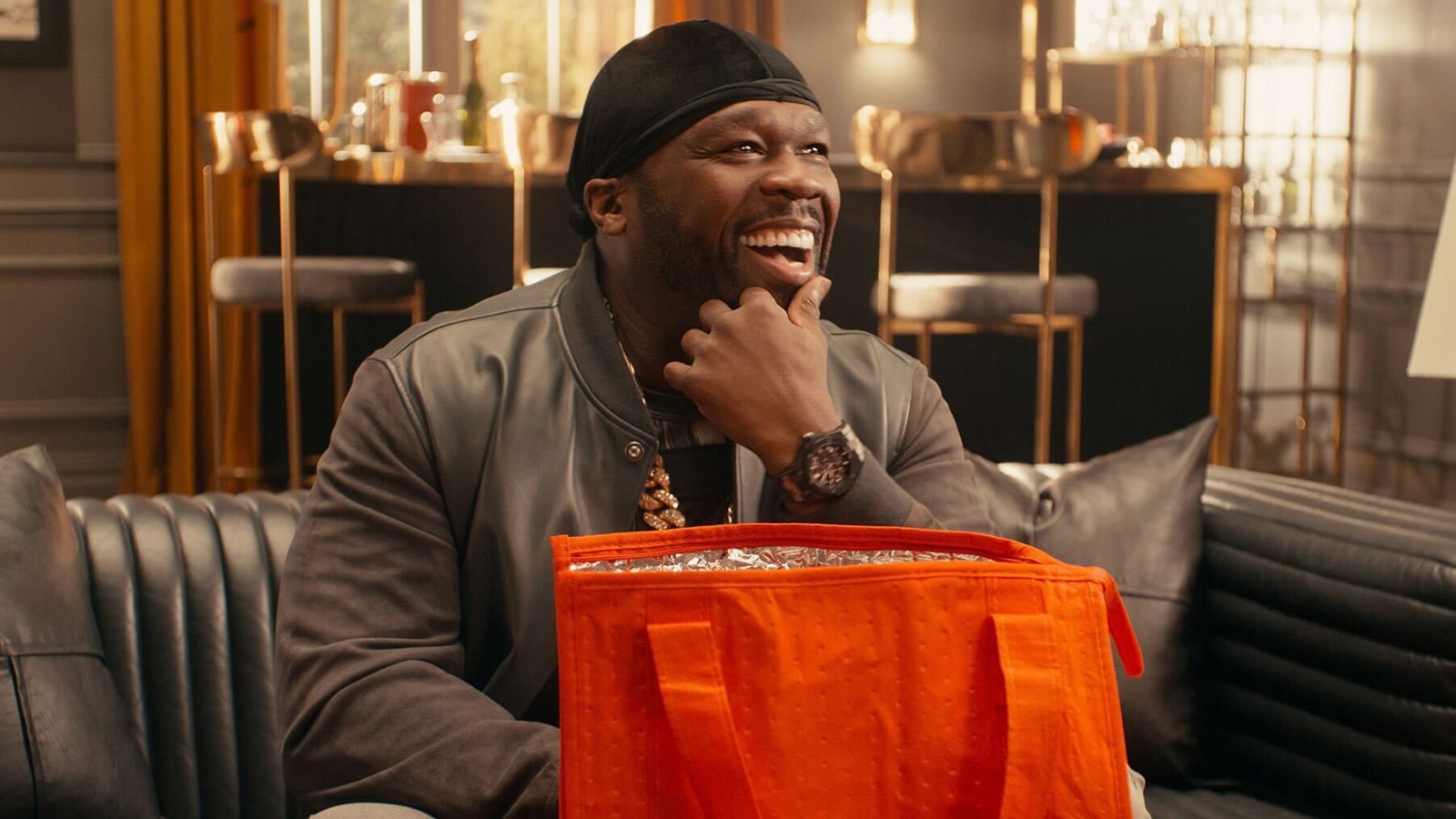
Whether online or off, 50 Cent has made a habit of waging wars — often ending disputes before they really begin. So when DoorDash recruited him for a new Super Bowl ad, they leaned into his reputation as a master provocateur. “It’s a day fueled by emotion, competition, and trash talk,” Gina Igwe, VP and Head of Consumer Marketing at DoorDash, said in a press release. “Now we’re talking a big game with the help of cultural icon and beef expert, 50 Cent.”
50 Cent joined Rolling Stone via Zoom to talk about the ad, his film and TV work, his musical future, and more.
What excites you most about this year’s big game and your partnership with DoorDash?
The Super Bowl is always the biggest live event. People who don’t watch football watch it when you get to the Super Bowl. It’s exciting. Even the halftime, I’m interested in seeing how that goes with Bad Bunny and them and seeing how that plays out. And then working with DoorDash around it is super cool ’cause they understand culture a little bit. They understand how people are functioning, seeing things online and what’s happening. A lot of people don’t understand how to sustain the interest of the people around that they’re just watching. It’s entertainment, bro.
Why has being outspoken and being unafraid of getting under people’s skin always been a part of your brand?
Well, hip-hop — the competitive nature of it, because you’d have to battle, regardless. At some point, there’s some sort of battle that makes you and pushes you to the next level musically, ’cause you’ve got to create the best thing that you can create, as fast as you can respond. You see it with with Drake and Kendrick. That’s probably one of the best examples of it in current time, because we didn’t think somebody was going to get hurt. See, it was a battle until they started using the same terminologies that we use in the environments when it’s beef or someone’s going to actually get hurt. Particularly that one, I didn’t feel like anybody was in danger at all, it was just being creative and going back and forth. So it was interesting to watch, you know.
When has being outspoken backfired for you in any way?
I’ve [been] competitive with artists that weren’t on the same level. I’ve said things back to people because of things that they said first, and accepted their challenge when they were nowhere near as successful, so it’s only to their benefit. They get a chance to get that much attention or energy around it. Some guys, they say something to you, they’re really challenging you to move up in notoriety, and I guess it all works in their favor at that point when they’re doing that.
Power has been like a major success for you. Power Book: Force just went off and you’ve got Raising Kanan coming. A decade ago, you had the mixtape The Kanan Tape and it was inspired by the series. So can we ever expect you to jump back in with another tape?
I almost put a whole tape out because of the rap podcast thing. [Jim Jones criticized 50’s involvement in the Combs documentary on the Let’s Rap About It podcast.] I never said anything about anyone if they didn’t do something or we didn’t have an actual issue. They responded to something that I said about them not paying their bills, which was true. They responded to that by rapping. And I’m like, ‘Okay, just because they’re rappers.’
New York City is turning into a podcast. The whole fucking New York hip-hop is turning into a podcast. So there ain’t going to be nobody for them to interview because they’re all podcasters. They’ve got to go to everyone else’s podcast to interview each other because that much of it is turning into that. So now, do I respect them as journalists or do I respect them as artists? When they’re speaking, they’re offering an opinion that you wouldn’t hear. I may look at it and feel some kind of way, but I don’t say anything about it because it’s an artist and I’m an artist. I don’t feel like I would have to speak on that. How many times did I see that when I’m watching things in culture?
So when those signals get crossed, it always creates a different energy. Even if I responded to those records, I think it would only be to their benefit because the artists, if you look at what they’ve done in their career and if you look at 50 Cent’s stats, there’s no way we’re supposed to be competing with each other. for anything. If you’re in the business of selling music because you call yourself [being] in the music business, then the idea is to create things that sell. Make music that sells, right? If that’s not the idea, I don’t know. You can be better than me at every other idea. Because that was my only interest, making the right music and having it embraced and sold.
I have music that I didn’t release, pieces that I put to the side because I didn’t think it was the right thing for that period, but something I created, you know what I’m saying? There’s always stuff that you look at it and they go, ‘Yo!’ When I play it for people in the house, like personally around in the studio, they’ll go, ‘Yo, why you didn’t put that out?’ I was like, “No, for that time period, it didn’t work.” Like, the tempo. I almost didn’t put “Many Men” on Get Rich or Die Tryin’ because it was slow. Production wise, we were in boom-bap at that point. So everything was faster and up tempo and had harder hitting drums. Tony Yayo is why that record made it. He’s like, “Nah!”
What will it take you to put that music out or to get back in the booth? A lot of people do want to hear you.
Look, I’m going to make music. I’m excited that this is the feeling. The general consensus is they want to hear something new from me, right? You can have the best verse, but I don’t think you should have the best verse at 50 years old. I think hip-hop is connected to youth culture and I think simplicity is the part of why it’s the best music… ‘Yo, I cannot fuck with these dog hoes/ That’s the bitch come with her buddy.’ For Moneybagg Yo, that was my line. It got me like, ‘Okay, I’m fucking with him right now.’
.I’m glad I stopped, ’cause you can bang your head against the wall until your brain falls out the other side. And it’s not that the music isn’t right, it’s that they’re choosing something else at the moment. It’s like Drake, I don’t remember wack records from [him]. I didn’t hear any wack records. I just heard records that were broader, that were written for a top 40 or crossover radio that wasn’t written for the hood, but it wasn’t wack.
But the tide changes.
When you say the tide changes, this is what I want to understand… there’s a point where you deal with resistance. You come, you’re new, it’s organic, it grows in front of you, and it cannot have everything it needs to facilitate it going well in the beginning and still make it. Because it’s new. They’re finding you for the first time, the audience, right?
Then, there’s a point where you’ve established yourself and you’ve been consecutively a hit. Radio accepts the record and puts it in rotation immediately as you come because when they hear your voice, they hear a hit. So it goes right into full rotation. Then you look and you say the third part, what is the shit going on here? The third part is when they hear your voice and regardless to how good the song is, they’re like, ‘Oh, it’s cool, but not like the first one.’ This is why they always say in hip-hop, the artist’s first album [is their best]. How many times did you hear artists, they have decent length careers, how they make reference to the first album being their best album?
Yeah, it’s often because it’s like a high. It’s like that first high.
But that’s that’s what our culture does to credible artists. They go, ‘It’s cool but it’s not like the first time when I liked you for the first time.’ We don’t never get a second chance.
Going back to see your thing about ageism, I wouldn’t say that because like you got a Nas. Nas just dropped four or five crazy joints and people are still gravitating to it.
If you ask Nas and to compare what that feels like, those four or five joints versus what it felt like when his first album came out, he would not say it’s the same thing.
Oh yeah, not the same thing, but…
It doesn’t feel the same to him ’cause I’m telling you it’s different. If you consecutively release material and you go out, I would say you’re as hot as the last thing you did. Or if you’re not generating interest in other platforms and other areas, that’s where it’s at. So when I’m in front of you right now, I’ve been number one with four shows in African-American and Latino households for the last 10 years. Away from other hit shit that comes out. Away from it. Just the Power universe in itself has been number one for 10 years.
So, when you’re able to create that as a standard, it’s not like I’m gonna fade, bro. It’s going to be the award show. I’m still going to be in the jokes. I’m just not in attendance because I didn’t release music this year, you see what I’m saying? Like when you say they want to hear me say something, they want to see me compete with these guys. Even on my worst day they can’t be compared to me.
So you’re making yourself like a eligible for the back and forth?
Not only that, how about this? How about Jay, when’s the last time he responded to anybody?
He says his little slick things. Veiled things.
That’s when he’s making a record and he’s doing it for himself. See, when I’m putting out an album, I’ll make all of the shit. You can hear all of this shit then.
But we want to hear album, that’s what I’m saying.
But then you can make reference to utilize everything that’s happened because it’s not new. The street shit, that’s not happening. I’m rich as a motherfucker, bro, I’m not doing that dumb shit. I’m not going to jail for for dumb shit.
Yeah, but I’m just talking about the music, though.
Bro, but I’m talking about is we are in a new content [era]. New inspiration is coming from —
A new frontier.
Right, for new music. What I watch them get excited about is the mentality from ’03, ’02, the mixtape Fif and I’m in a different place. I couldn’t have had all the success that you’ve seen if I was still thinking the same way. Yeah. And you’ve gotta to kind of [be], I wouldn’t say immature, with these things, because it’s too easy to describe it that way, but you’ve got to grow with the your material at the same time. To grow into a different space and kind of offer something different.
You were talking about podcasts earlier. Do you see yourself getting more into that?
You know what I’ll do? I’ll end up producing podcasts. I’ll end up producing their shows. The Fat Joe and Jada, that’s the Roc Nation show. That’s why when you see the picture of Jay, you see him with him and and Jada, they’ll show you, like ‘Look this watch.’ You see what I’m saying? You know what I’m talking about. But these things are strategically placed so he can have a voice without actually talking himself. You understand?
I think either you can be the content that they’re talking about or you can be the actual podcast itself. But if you listen to those podcasts, it’s very rare that I’m not being mentioned because everybody does better when the content kind of surrounds [me]. They click YouTube as soon as they see the 50 Cent shit on the tab. On your explore tab.
Would you say that you being outspoken and willing to address things opened the door in a way for rappers to be more outspoken in general?
It’s a part of my natural character. It’s what you would get from Casanova versus what you’ll get from your Jay-Z or your Fabolous. Lloyd Banks. They’re more internal. Even being from different areas, they’re alike. You could be in the room with them and not know whether they like you or not. Myself, Casanova, the other guys that you see [around me], they come and they cannot be the biggest guy in in the room in momentum, but they’re the biggest guy [socially] in the room.
Once they come in, their presence is that and everybody paying attention to that. And that is just natural. I think it’s without overdoing some shit or making a problem. It’s still that way. It’s just naturally how n—-‘s character is.
So when people see you with DaBaby, Pop Smoke, and all those people, is that the reason that you gravitate to those people because of what you just said?
‘Cause they got it. They have that hat, you know what I mean? DaBaby is another one. I could have used him as the point of view of instead of Casanova because he’s currently releasing music and in the culture at the moment, but it’s the exact same thing. You hit it on the head. So, I know you understand what I’m saying because these guys, they have a presence that’s like, you’ve kind of got to look to see what’s going on with them regardless and it just commands it. They’ve got a presence.
Switching lanes real quick, what are your upcoming film, TV and documentary projects the fans can expect this year?
A whole lot. So damn, that was almost a trick question with so much stuff. There’s the Gilgo Beach Killer: House of Secrets, they’ll see an extension of that Peacock. Fightland, that one is in the canvas. Already done the show with Taraji. That’s my first UK-based show. I got The Accomplice with Taraji P. Henson as the leader of the show. I actually was on with Taraji the day before yesterday [meeting] about it. So, they’ll be seeing that one soon going into production. Street Fighter, that should be [released in] October. That will hit. You see that I trained, I came down in weight.
You just mentioned that you’ve got a project with Taraji P. Henson, but you’ve also got Mary J. Blige and you’ve got Patina Miller in Power. You’ve done all of this work with black women — putting them in roles and really empowering them. Patina Miller, she just got the NAACP nomination last month. With Women’s Month coming up in March, how has that been to see them shine and flourish?
They have been monsters on these shows. It’s one thing to work with them, it’s another thing for them to be in a strong enough role where you’re not be able to be able to miss them. Patina’s role in Raising Kanan was powerful. There were even points that I would pit them against each other to try and make the public see them as equals faster. See, Taraji put in a lot of work, man. Can’t nobody even contest that. You can’t fuck with that. But at the time, I didn’t have work with Taraji. I didn’t get a chance to work with her yet.
So, I was putting Patina versus Taraji, Raq versus Cookie, you know? I’m doing that to see how the public would respond to it because I was saying so many positive things about Patina’s work as Raq and Raising Kanan, that it was a cool comparison until she got upset. She wasn’t ready. She still was going, ‘No, they’re both great characters, strong characters.’ No, [what] the fuck are you talking about? I’m trying to make these people [intrigued], trying to level the shit out to make people [feel] the same way about it. She didn’t understand what I was doing and she came the other way and then I just fell back from even saying anything about that.
But Taraji, she was working. She actually read for [the 2005 film] Get Rich or Die Tryin’. I first came in contact with Taraji, she was going to play the girlfriend for me in Get Rich or Die Tryin’. She’s been putting the work for so long. She already put all the work in for everything that you see happening now, it’s just her getting her due and people really seeing the accomplishments from all the work.
Yeah, just seeing it on a higher profile or on a higher stage. You mentioned Street Fighter, you know that’s a hood classic. So what’s it like being in there and being on the big screen?
That was why I I was doing it. Those was the only two, it was Street Fighter and Mortal Kombat. It’s the only two combat arcade games we played in stores and shit like that. So I was with it because of that and then, Balrog. I think they made him after Mike Tyson. Yeah, the brolic boxer, so I got into it. I trained, lost 20 to 26 pounds when I started the training for it and we shot in Australia. I had a time, man, it was good.
I think that they’re going to really love the character when they get the chance to see it. l changed more for that role than a lot of the other roles, ’cause then I had to put the weight back on ’cause I had something else I had to do.
Would you ever step in the ring?
Like to fight?
Yeah, with any other artist. If they wanted to settle something, would you step in the ring with them? I know you used to the box…
Nah. I like the idea of boxing in general. I train keep myself in shape, stuff like that, but they can run into me in the street and whatever. I just don’t need the money.
You’re not trying to do no Pay-Per-View celebrity Jake Paul type exhibition.
You’ve always got to say this: Risk versus rewards, right? You say, ‘What do you gain, what can you lose?’And according to who you are as a brand, what is it going to benefit me to to do it? It would be the dollar amount happening for the fight. When people suggest that, they don’t want to fight. Not nobody that they know is winning. Why would that person do that? You suggest that when you see me.
This year marks the 25th anniversary of G-Unit. 2001 kind of marks the genesis. How does it feel to look back at the road traveled?
It feels great. I spent a lot of time focusing on building G-Unit Records in the beginning and it was building other artists. You’d hear, 90% of the time, my voice come on when the chorus came. I had to focus on song structure to be a good songwriter and not just a a good rapper.
And you’ll see me being able to pick the right production and write the right chorus to the record, the right hook to keep you engaged and excited about it. It’s very important. Talented rappers can write the raps around it and can you can have a hit, over and over. You could do that as long as the right thing is there and I was providing that for all of the Unit. So when you think of Yayo’s album Thoughts of a Predicate Felon, you think of “So Seductive.” If you think of Lloyd Banks’ The Hunger for More, you think of “On Fire.” Or you think of the Young Bucks album.
Even The Game‘s album, his whole first album. When they had issues with with other artists, even artists who were here before me, they would come because of that, the habit of of going towards the structure of the song. They would go come to me, the producers would come to me. Now, they might have their own words and the fucking AI app and put that in there so they have a hook on the beat to play for somebody. But at that point they would go to artists that that can write the chorus or to get the song together before they bring it to.
L.L. [Cool J] recently said some shit about me writing the chorus to “Paradise.” Amerie, her tones on that record makes it a hit. But you’ve got to know to get Amerie to have a hit. You see what I’m saying? At that point, I’m like, ‘Yo, we need her to do it.’ I did the vocals. I did a reference and then Charmaine did it so you heard a female instead of a man when Amerie got to it, and then we got the record done. This is a familiar loop. This is “Rising To The Top,” bro. Who didn’t rap to that shit? Everybody already did that. The Trackmasters already produced this record.
So I’m like, ‘Yo, it only works if you have the complete idea in front of the person.’ If not, you just play the beat, and you know what it is, it’s Keni Burke. So when he heard it complete, he made the record and he had a hit at that point, but he was like, ‘Nah he wrote the chorus and this part of the record.’ He made it sound like that was a bad thing.