
Counting Crows have had their share of moments that could have ended their career.
But they had one particular milestone that proved to be a crucial moment when they played Saturday Night Live in early 1994. Though there would be a bittersweet element to the way the experience played out, the fact that it happened feels vital now.
Frontman Adam Duritz shares the story in Counting Crows: Have You Seen Me Lately, a documentary that premiered in December on HBO Max.
As he relates in the film, Marci Klein, a producer and music supervisor for SNL, was in the audience as the band played a short, but tight set in November of 1993, opening for Cracker at Irving Plaza in New York City. Their debut album, August and Everything After, had come out two months earlier and their performance showcased seven songs from the record.
Not long after the concert, the band received a call offering them a slot on the show, but it came with conditions. “Mr. Jones,” their future Top 5 hit which was already receiving a good amount of buzz, would be the first song that they would play — and maybe they could also do “Round Here.” But both songs would have to be cut down to fit Saturday Night Live’s format and timing.
Counting Crows
Duritz bristled. “You know, there are two songs on Saturday Night Live,” he explains in the film. “The difference in viewership is massive. I really wanted to play ‘Round Here’ [first] and I wanted to play the whole song. I thought it was the thing that would define us for people. ‘Mr. Jones’ is a great song, but it’s like a lot of other songs. ‘Round Here’ is not like anything.”
So they pushed back — and after some further discussion, the television show agreed to let them perform both songs at their normal length and in the order the singer had hoped for. The drama though, wasn’t done. During rehearsals for the performances, they were informed that they’d be playing “Mr. Jones” first, followed by “Round Here” and both songs would need to be trimmed down. “Basically, everything we’d agreed on, was thrown out the window,” he recalled.
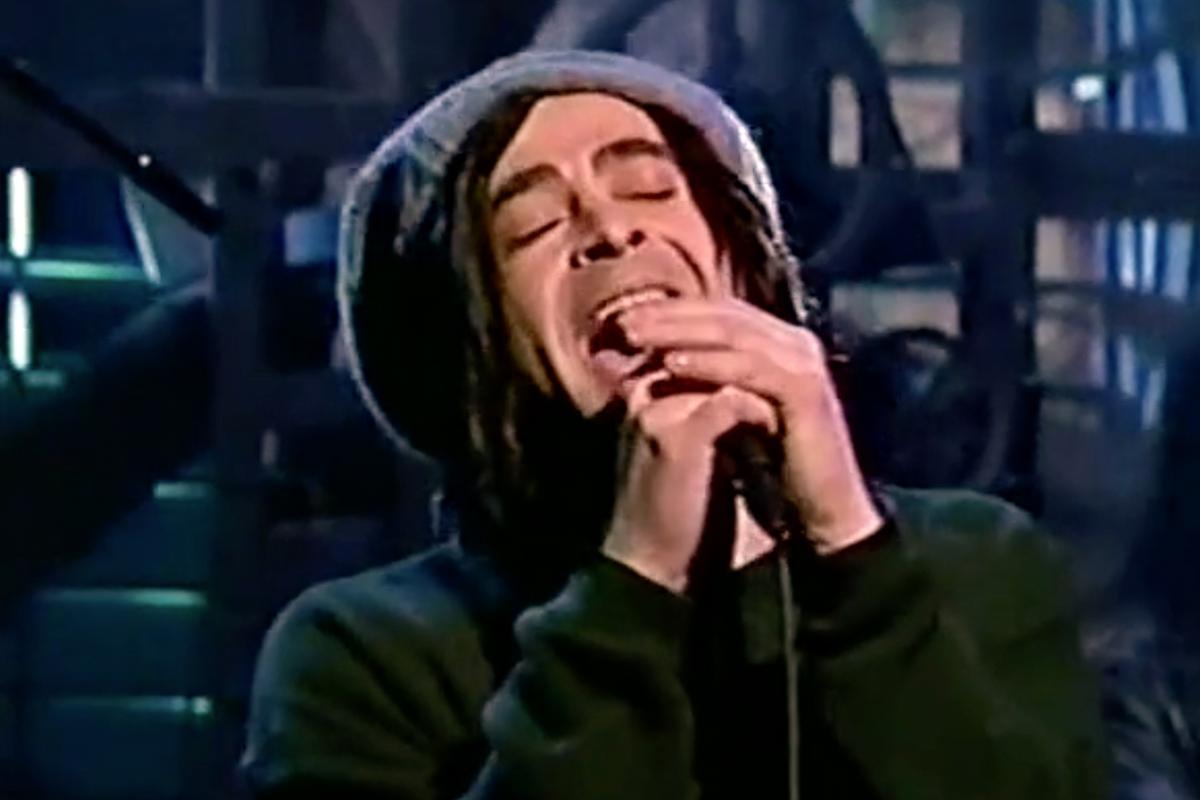
Though they threatened to walk and not perform, eventually cooler heads prevailed, things worked out and they were able to do the songs, as agreed and in the promised order. “Round Here” was the shimmering moment that Duritz had envisioned. “I thought we’d just played a f–king spectacular version of that song,” he shares in Have You Seen Me Lately. “Marci Klein was up in the balcony with Gary [Gersh, the band’s original A&R person] when we played it. She said, ‘Boy, your band…they’re really great. Your friend Adam…he’s a f–king asshole.’ And we’ve never been on Saturday Night Live again. Never. But it made our career.”
Watch Counting Crows Perform ‘Round Here’ on ‘Saturday Night Live’
August and Everything After made its debut on the Billboard Top 200 that same month and eventually peaked at No. 4 by April of 1994. The years that followed were challenging for the band, Duritz in particular, who grappled with the pressures of success and his own worsening mental health. When the time arrived to make the next album, the songwriter wasn’t sure there would even be a second album. He didn’t know if he wanted to continue to be in a band.
It’s just one layer of the many events that happened between the release and subsequent explosion of August and Everything After and the subsequent arrival of 1996’s Recovering the Satellites that make Have You Seen Me Lately a gripping watch. While only three years separate the two albums, the members of Counting Crows had lived a lifetime of unexpected experiences in that time.
“I thought Adam was an interesting [artist],” Amy Scott, who directed the film, shared during a interview with UCR you can listen to below.
Counting Crows DAT Tapes
Recalling her early exposure to Duritz and the music of Counting Crows, she added, ” I thought he predated emo in a way. I thought, ‘Oh, he’s an interesting guy that’s singing about his feelings and putting it on Top 40 radio,” she remembers now. “Decades later, I just really was interested in working with Bill Simmons. The Ringer and the Music Box Series does such a great job.”
Telling the tale of the band was an interesting challenge, from her viewpoint. “Because the Counting Crows story is not over yet,” she explains. “It’s not something where you can go, ‘Well, this is it, and it ended here’ — and then you could tell that arc of the story.”
“I also find those films really challenging to make and to watch. So if there was sort of a crucible moment for the band, it was those first two records, I thought,” she says. “Bill Simmons had done an interview with Adam that he asked me to listen to, to see if I also thought, as he thought, that there would be a pretty remarkable film with Adam, just based on his intelligence and his way of storytelling, which obviously was right on the money.”
There’s an interesting contrast between how the two albums were made, which fans get to witness in Have You Seen Me Lately. Even now, one marvels at how things somehow didn’t fall apart at any one point as they were working on each record.
Listen to Amy Scott on the ‘UCR Podcast’
During a 2016 chat with this author as Recovering the Satellites reached its 20th anniversary, Duritz ruefully remembered the time period. “Literally anything would have been easier than the first album,” he laughed. [Recovering the Satellites] did go easier. I don’t want to say that it was easy, but I mean, anything would have been easier than the first album, because it was just the worst experience.”
READ MORE: Counting Crows Take a Strong Step Forward With ‘Recovering the Satellites’
“And I think it’s a great record, but I think before that album, if you can imagine this, we had a sound sort of like late-model Roxy Music, like Avalon-era Roxy Music,” he explained. “That’s kind of what our band sounded like. And while I liked it, it just felt really dated and really glued to a part of a time that it had come from, as opposed to being our music.”
“When we went in to make the [first] record, I kind of unceremoniously jerked everyone out of that. I took away all of Dave Bryson’s guitar effects, took away half of Steve [Bowman]’s drum kit, took away Matt’s fretless basses. I made Charlie [Gillingham] — although Charlie didn’t care, he was thrilled – play piano and organ,” he detailed. “There were no synthesizers really on the first album. And that was hard on everybody.”
“We were trying to find something that was more us, and I think we did. But it was a brutal process,” he continued. “Especially because it was being headed by a guy who had no idea how to lead a band. I learned on the job there, and I wouldn’t say I did the greatest job at it. We survived it and the album’s great, so maybe that’s the way to judge it, but I was pretty hard on everybody, because I didn’t know what the f— I was doing. But I mean, nobody does. You have to learn in life as you go anyway.”