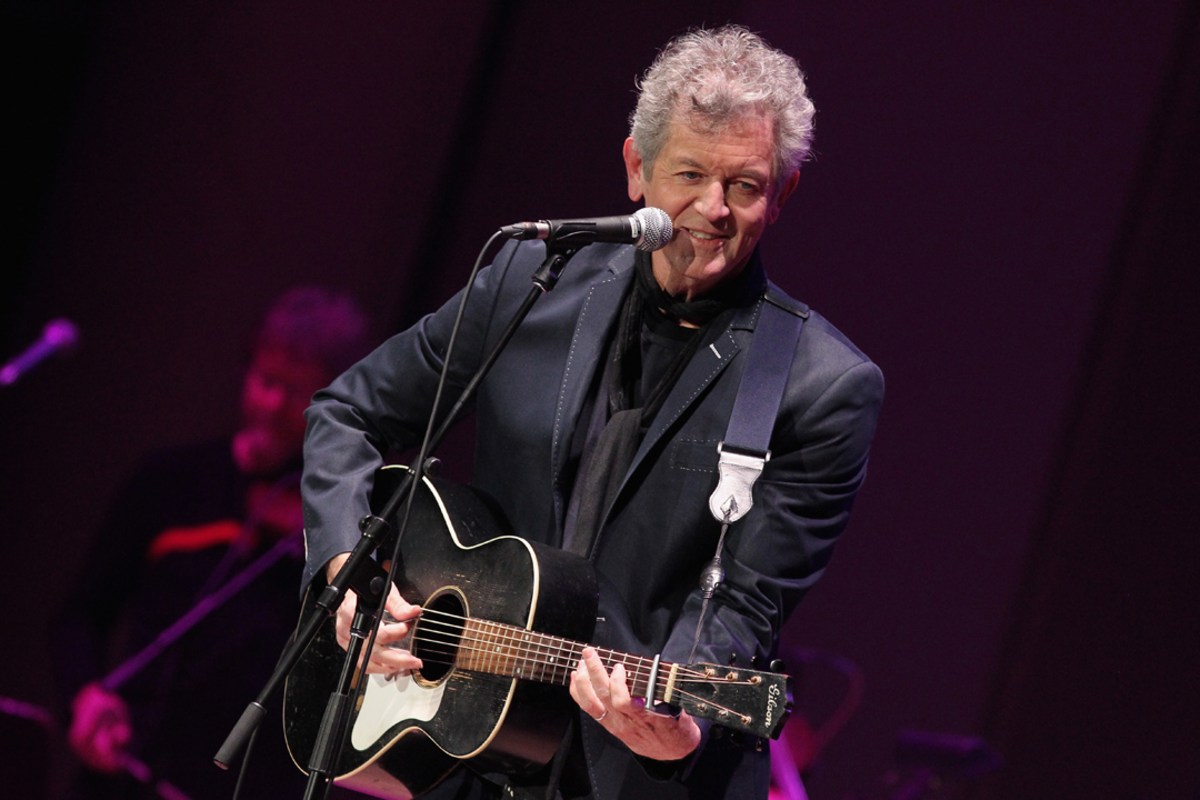

Rodney Crowell made his reputation out of writing some of the most fiercely intellectual, against-the-commercial-grain songs in country music, but he took a completely different route for his debut single. Crowell’s first-ever release as a country solo artist was a light-hearted version of “Elvira,” but it’s about as different from the Oak Ridge Boys‘ better-known version as it could be.
Dallas Frazier wrote “Elvira,” and he first recorded it in 1966, reaching No. 72 on Billboard‘s Hot 100. Kenny Rogers & the First Edition covered the song for their Something’s Burning album in 1970, but did not release the song as a single.
Crowell’s rendition of “Elvira” appears on his 1978 debut album, Ain’t Living Long Like This, offering up a somewhat slower, blue-and-soul-infused rendition of the song. Crowell’s arrangement includes soulful female backing vocals and piano solos that wouldn’t be out of place at a smoke-filled New Orleans bar in an old movie, creating a very different feel. Released as the lead single from Ain’t Living Long Like This on July 14, 1978, “Elvira” reached just No. 95 on Billboard‘s country chart.
The Oak Ridge Boys were Crowell fans, and they cut the song for their Fancy Free album in 1981, releasing it as the lead single from the album on March 12. Their version was decidedly more up-tempo, featuring Joe Bonsall on lead vocals and bass singer Richard Sterban in an unforgettable solo spotlight on the song’s now-iconic chorus.
The Oak Ridge Boys’ version of the song proved definitive, reaching No. 1 on Billboard‘s Hot Country Singles chart and crossing over to reach No. 5 on the all-genre Billboard Hot 100. “Elvira” remains one of the Oak Ridge Boys’ career-defining songs.
See Country Hits That Other Artists Passed On