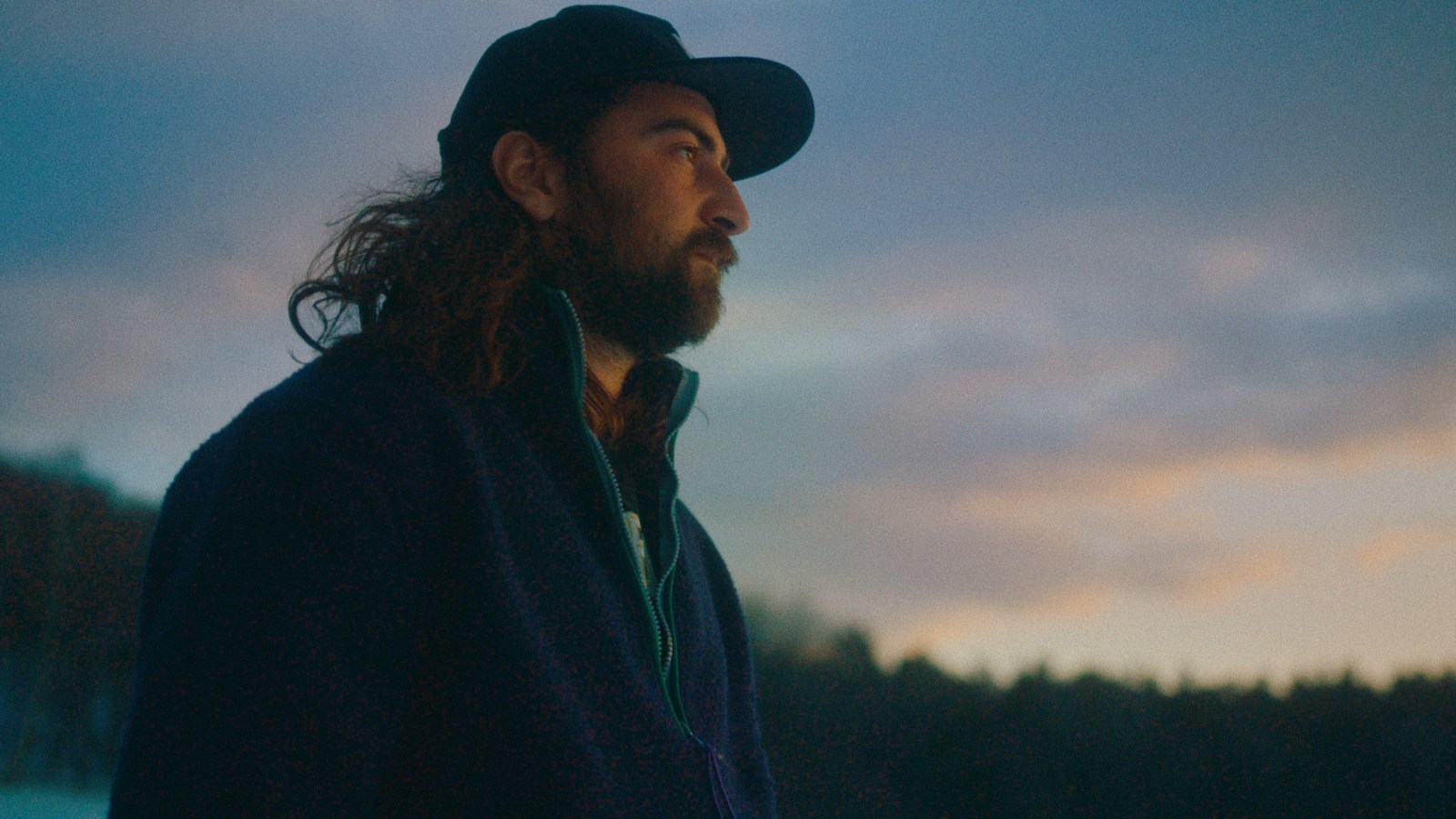

Back in 2021, Noah Kahan was sitting in a car with his manager when they started batting around the idea of making a documentary on life as a touring artist. “I had never seen what tour really looks like [in a movie], except for promotional documentaries with screaming crowds and partying,” says Kahan, 29. “And it’s just such a more boring life than that — the travel, and the little things behind the scenes.”
“Stick Season,” the song that would make Kahan a household name, was a year away from release when they had that conversation, and he was still a moderately successful singer-songwriter from New England, performing to a couple thousand fans or so each night at midsize theaters. “That’s what I thought was going to be my whole career, which I was so fine with,” he says. “In my mind, these were my prime years of touring. I was like, ‘I don’t know how long it’s going to last. We should start to capture this.’”
You can see what happened next in Noah Kahan: Out of Body, a remarkably revealing new film coming to Netflix on April 13. Directed by Australian filmmaker Nick Sweeney (AKA Jane Roe), the 94-minute documentary follows Kahan closely as he becomes a stadium-level superstar, and it doesn’t flinch from showing the challenges that went along with his astonishing rise. We see him working through his complex relationships with his parents and siblings; struggling with feelings of body dysmorphia and imposter syndrome; and facing the pressure of writing and recording his next album, The Great Divide (out April 24). The week of the film’s premiere at this year’s SXSW festival, Kahan and Sweeney sat down with Rolling Stone in Austin, Texas, to talk about it all.
Noah Kahan (center) and Nick Sweeney (right) speak onstage at the premiere of Noah Kahan: Out of Body at SXSW 2026.
Cris DeWitt/SXSW Conference & Festivals
Though Kahan is known for his skill in transmuting tough emotional subjects into anthemic verses and hooks, he found that making this film demanded a different degree of honesty.
“It’s harder,” he says. “[Writing songs,] you always have the shield of the creative process, or your own interpretation of the story you’ve made, to hide behind. And what you see is what you get in the documentary. It’s incredibly therapeutic to watch, but also really difficult to watch, because you have to revisit pain.”
He points to one strikingly vulnerable scene where he’s backstage with wife-to-be Brenna Nolan before headlining a festival. “And I’m just in misery about music and about creativity … One thing that I’ve thought about a lot as I’ve watched the documentary is how consumed I was by the fears I had. I could see the tunnel vision.”
Sweeney was already a fan of Kahan’s lyrical approach when he became involved in the film project around the end of 2023. He quotes a line from Kahan’s 2022 song “New Perspective”: “The intersection got a Target/And they’re calling it downtown.” “That line always resonated with me,” Sweeney says. “It’s very detailed, the things he sings about. It’s like an establishing shot in a film, a musical form of that.”
As filming went on, he was surprised by how few restrictions Kahan put on what the cameras could show. “I was like, ‘Is this guy really going to let me do that?’” Sweeney recalls. “And nothing was off limits. Like, absolutely nothing. I was always waiting for him to push back and be like, ‘Yeah, let’s not do that.’ And he never did.”
Working with a small crew that included two of Kahan’s high school classmates who are now filmmakers, Sweeney captured candid, unmediated footage of the Kahan family discussing the songs he’s written about his parents’ divorce and other sensitive topics. “There’s discomfort, naturally,” Kahan admits. “It’s weird to have a documentary crew in your house. I would have been concerned if they were like, ‘Hell yeah, let’s do it.”
His fraught relationship with his father ended up yielding many of the film’s most compelling scenes. “I’ve broached it in my songwriting before, but the conversations with my dad and about my dad were revelatory for me,” Kahan says. “It’s so much easier to tuck away — you know, I see my dad and I’ll be frustrated by our interaction, and then I’ll go away on tour. But I knew that the reflections I was having with my dad were going to be seen by other people, and seen by my dad. That was really hard.”
He adds: “In those moments you’re like, ‘Is this worth it? Is it worth it for me to have this uncomfortable day with my mom or my dad be filmed?’” Ultimately, he says, “You have to just trust that the process is going to heal you in some way that makes that discomfort worth it.”
In one particularly moving scene, Kahan and his father perform Cat Stevens’ 1970 classic “Father and Son” together at home on acoustic guitars, bringing the song’s themes of intergenerational conflict and underlying love to the fore. “Oh, my God, I cried while I was filming,” Sweeney says. “There’s all this stuff that’s been building throughout the whole thing. And then they just play this song. It was really powerful… There’s a moment where it goes out of focus because I’m wiping tears.”
“Nick was so moved by it,” Kahan adds with a smile. “And my dad and I were like, ‘All right, let’s go get some lunch.’”

Kahan watches the film at its premiere.
Aaron Rogosin/SXSW Conference & Festivals
More seriously, he says, those on-camera conversations with his family did some important emotional work. “Even though those problems still exist and nothing’s ever really solved in your family — there’s always going to be new things — I feel like it gave me closure on some hard things. And it allowed me the freedom to write about these things.”
After filming wrapped about one year ago, in the spring of 2025, Sweeney undertook the task of editing down all the footage they’d gathered, which also included tons of gorgeous nature shots and interviews with everyday people from the small-town Vermont region where Kahan grew up. In the end, they whittled those parts down to “only the truly essential stuff,” Sweeney says. “I could make a whole ‘nother film, literally, like a slow cinema meditation.”
“I wish you would!” Kahan says. “That’d be cool.”
With his new album out this month, Kahan is looking forward to moving on from the chapter that this film represents. “I’m really excited to experience what’s next for me — maybe without a documentary crew this time,” he says. “Doing something that’s already emotionally exhausting, playing a show, then having difficult conversations the next day with your family, it is hard. But I think my family is better for it. I feel like I’m a better person for it. I’m more in touch with myself. I’ve never had a better relationship with my family than I do right now.”