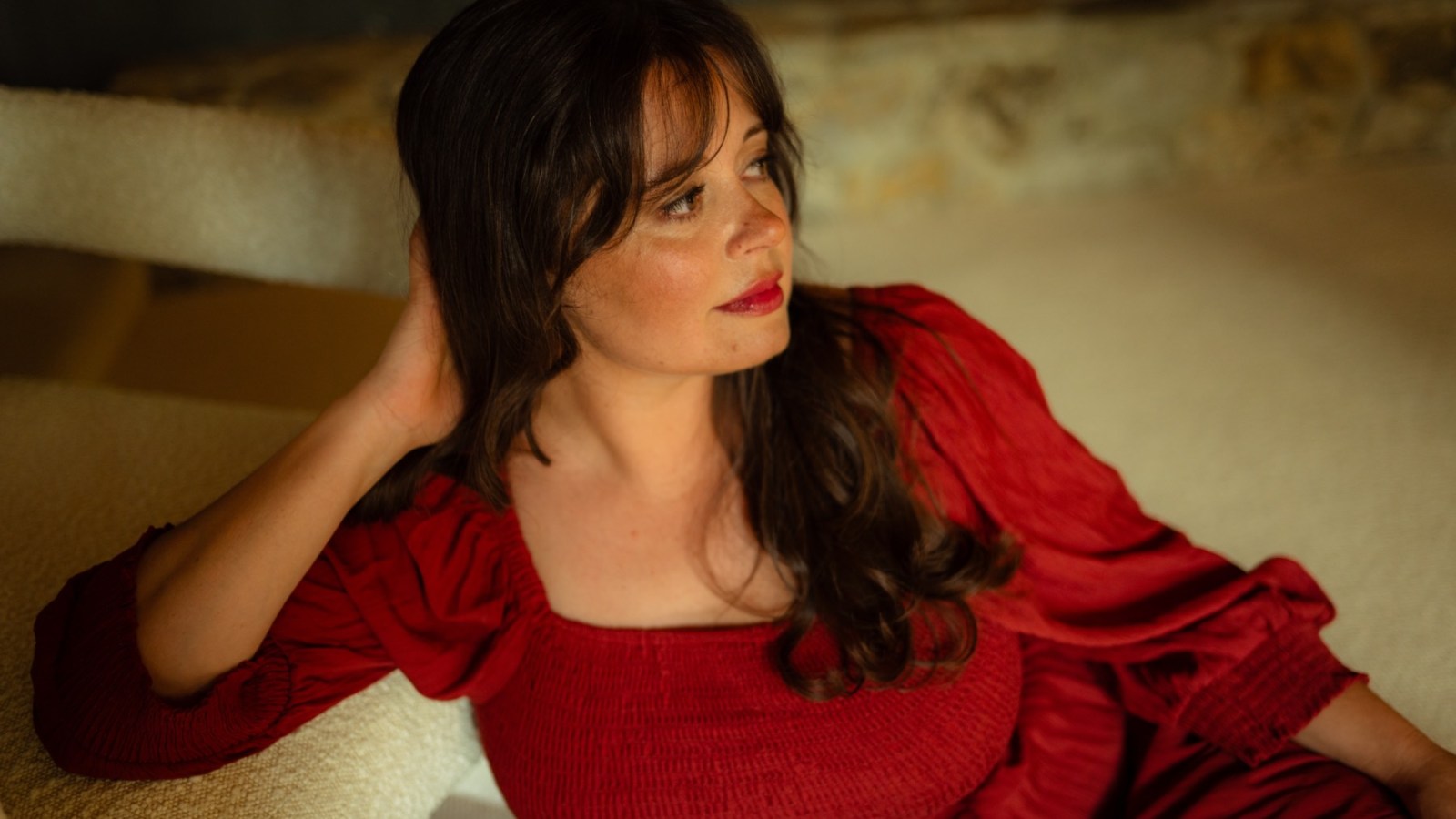

If you ask singer-songwriter Emily Scott Robinson to give you the elevator pitch for her new batch of music, she’d suggest, “Very sorrowful, yet very uplifting.”
“For my music, and for this album? That would probably be it,” Robinson tells Rolling Stone during a call from her home in the high desert prairie of southwest Colorado. “It’s finding the joy, the meaning, and the beauty through the heaviest times. That was really the lesson of the last five years in my personal life.”
Within that period, Robinson went through a divorce, lost friends and family members, got engaged, became a stepparent, and released Appalachia, her latest LP out via Oh Boy Records.
“I have witnessed funerals and wars/Worried mothers, empty shelves, and empty stores,” Robinson sings in the tender track “The Time for Flowers. “The storms will rage and the winds will blow/You are gonna find out that you’re stronger than you know.”
Part cathartic cleansing of her heart and soul, part love letter to western North Carolina in the aftermath of Hurricane Helene, which tore through the region in 2024, the record flows like the ancient French Broad River itself, a mighty rhythm of tones and depths.
“The grief of change and aging and watching the world change in the ways that it is, and also the depth of love that brings gratitude for the things that are beautiful and meaningful in life…,” the 38-year-old says. “It feels like I’ve been expanding my ability to hold both ends of that spectrum. And one of the ways I’ve been able to do that is doing it in song and writing about those experiences.”
Captured by producer Josh Kaufman and recording engineer D. James Goodwin at Dreamland Recording Studios in the Catskill Mountains of upstate New York, Appalachia achieves what many great Americana and indie-folk albums do by rooting itself in timeless, ethereal melodies and sonic textures.
“I’ll waltz you all around the room/My first of May magnolia bloom,” Robinson duets with John Paul White on “Cast Iron Heart.” “My sunset girl, my pretty bride/With lines around your hazel eyes.”
Raised in Greensboro, North Carolina, Robinson’s lifelong love of story and place was deeply influenced by her mother, who was a local journalist. Her introduction to singing came as a teenager, where she’d run through folk songs around a campfire at summer camp in Michigan. Upon returning home, she borrowed her mom’s guitar and started practicing. She was hooked.
Attending college at Furman University in Greenville, South Carolina, Robinson would wander over the nearby state line into North Carolina, absorbing all she could when it came to the musical, artistic, and cultural traditions of the Blue Ridge Mountains. She also found herself participating in numerous bluegrass and folk music circles across the Tar Heel State.
“I majored in history in college. I loved history because it was storytelling, and it was also the study of what stories get told,” Robinson says. “Where can we find all the stories being told, how do we preserve them? And I feel it’s a great privilege to get to preserve people and stories and songs.”
After graduation, Robinson moved to Colorado and became a social worker. At 26, she was encouraged by a friend to take a songwriting retreat. It was there where Robinson had the epiphany that she was in fact an artist and performer. By 2016, her debut album, Magnolia Queen, arrived, with the follow-ups Traveling Mercies (2019) and American Siren (2021) both landing on Rolling Stone’s year-end lists of the Best Country and Americana Albums.
“One of things you get to do as a songwriter is have the ability to shine a light on this one thing today,” Robinson says. “And I want to shine a light on it in a way that shows the beauty of the thing that could be missed by almost everybody who passed it by.”
Robinson has deep ties to the greater Asheville, North Carolina, region; she lived and worked in the area. She was also part of the vibrant music scene there for many years, and attended contra dances at Warren Wilson College in the flood-ravaged community of Swannanoa.
“There’s history and richness and traditions in [Western North Carolina],” Robinson says. “There’s so much value that can’t be measured in money. The glue that keeps communities together are the [musical] traditions.”
With Helene, her friends experienced unimaginable tragedy. In many ways on Appalachia, Robinson’s lyrical muse hones in on the humanitarian efforts that emerged in the aftermath.
“[My friends] were saying that even though there was so much destruction, there was also this coming together,” Robinson notes. “They said, ‘I never want to forget how this feels, and I don’t want to go back to the way it was before, now that I know my neighbors and feel this sense of faith, love and trust in humanity.’”
Perhaps the most poignant, stirring song on Appalachia is the final track, “The Fairest View.” The tune is dedicated to Robinson’s late friend, David Hamilton, who died the week before Robinson entered the recording studio. It features their mutual friend, singer-songwriter Lizzy Ross.
When Robinson learned of Hamilton’s death, she was performing in Asheville, just down the road from Hamilton’s hometown of Fairview. On that drive, Robinson thought about how special her friend was. At the time, Hamilton was collecting native varieties of Carolina apples and building a small orchard on his family’s farm. Memories of their friendship rolled through her mind, and how, she says, “This person feels like maybe they belong to another lifetime, and are floating through this life in a beautiful way.”
“Songwriting is really an act of listening and getting out of the way of the story,” Robinson says. “Rather than imposing my own creative force or will on something, I think part of me was just born with this gift of paying attention and having that honed antenna. You have to be curious to find the stories.”