
Many successful bands can sell out arenas, but it takes a certain type of act to be labeled arena rock.
It’s a style that emerged in the ‘70s before becoming inescapable in the ’80s. Everything about arena rock is big – characterized by anthemic tunes, soaring choruses, powerful riffs and a certain quality that caters to audience sing-alongs,
Bombastic? Yes. Loud? Absolutely. Cheesy? Sure, at times. But that’s what comes with the music style that is larger than life. Arena rock is bold and audacious, with the ability to get fans to put their fists (or lighters) in the air. It’s a distinctively powerful style that could never be contained to a small club or intimate setting.
We analyzed rock’s most legendary acts and picked four bands that define arena rock.
Richard E. Aaron, Getty Images
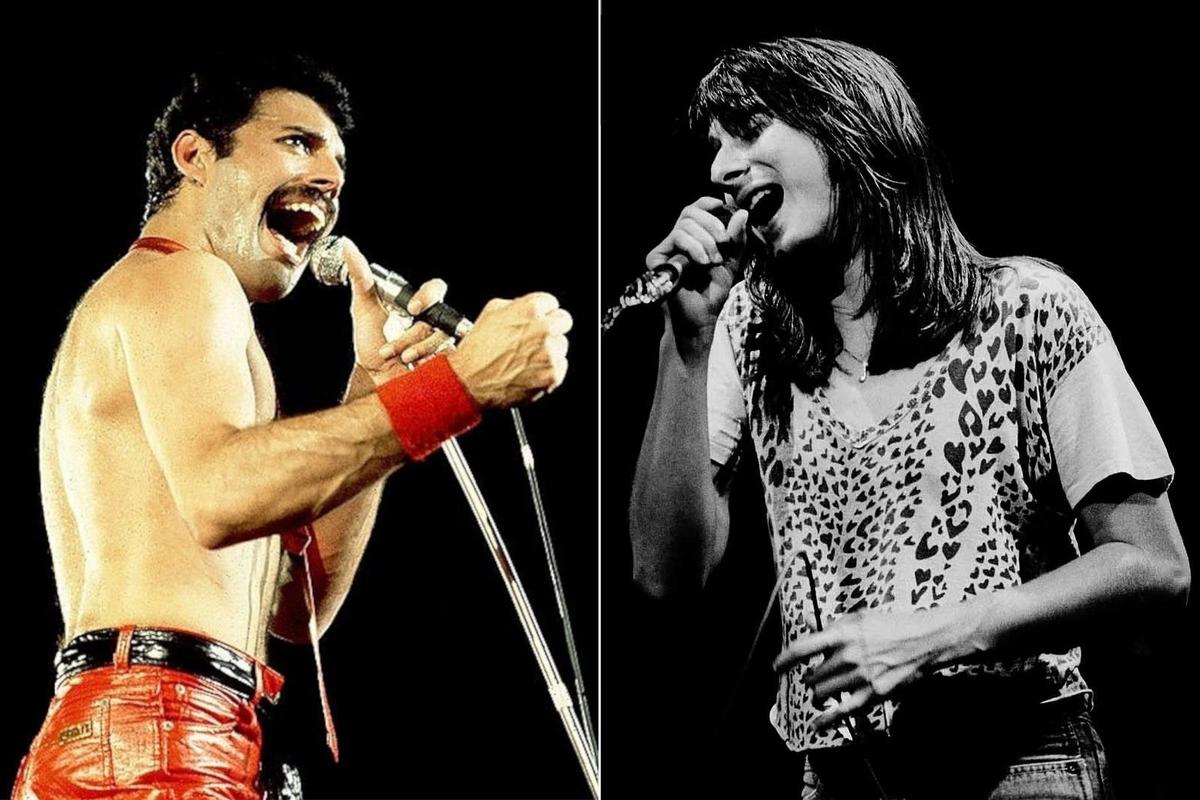
Queen
If there was any singular group that helped define the characteristics of arena rock, it was Queen. Their style wasn’t designed simply to get attention or make fans move, it was created to rattle people to the core.
The band’s early years featured an intriguing, yet not fully refined hard and prog rock blend. Things really began to click in the mid-’70s when Freddie Mercury added a more operatic influence to the group’s sound. Lush harmonies, thunderous guitars and Mercury’s distinctively powerful voice became Queen’s calling card. Tracks like “Bohemian Rhapsody,” “Killer Queen” and “Somebody to Love” were designed to rouse the masses – and fans happily embraced every note.
Then came 1977’s News of the World and the classic song “We Will Rock You,” a tune Brian May designed specifically for audience participation. “What could you ask them to do? They’re all squeezed in there, but they can clap their hands, they can stamp their feet, and they can sing,” the guitarist thought to himself. His creation became an anthem that effectively set a blueprint for what arena rock could become. Nearly 50 years after it was recorded, it continues to reverberate around the globe.
Roger Ressmeyer, Getty Images
Journey
There is perhaps no band more closely linked to the arena rock sound than Journey. Of course, things didn’t start out that way. The band’s early albums feature a more prog rock, jazz fusion sound, and it wasn’t until the late ‘70s that they began melding in a noticeable pop influence.
Singer Steve Perry arrived in 1977, with keyboardist Jonathan Cain joining in 1980. Both of these additions helped propel Journey into a new sonic frontier, one which aligned perfectly with the rise of arena rock.
It’s no coincidence that Journey’s most commercially successful era came with this evolution. 1978’s Infinity offered a glimpse of the style – with hits like “Lights” and “Wheel in the Sky” – but the early ‘80s trio of Departure (1980), Escape (1981) and Frontiers (1983) really cemented the band’s arena rock prowess. “Any Way You Want It,” “Don’t Stop Believin’,” ”Open Arms,” “Separate Ways (World Apart),” “Faithfully” – the onslaught of soaring, anthemic hits was incomparable.
Decades after their heyday, Journey’s arena rock superiority remains unmatched. Their material is beloved by generations of fans and it’s almost impossible to attend a sporting event in America without hearing one of their songs.
Paul Natkin, Getty Images
Bon Jovi
Unlike some of the other bands in our Big 4 that gradually found their arena rock sound over the course of several years, Bon Jovi pretty much arrived with the elements all intact. No, fame didn’t immediately welcome the band – their first two albums only generated marginal attention – but sonically the group already had the characteristics necessary for their arena rock breakthrough.
That arrived in 1986 with their monumental album Slippery When Wet. With massive hooks, radio-friendly melodies and captivating lyrics, the album became one of the era’s best sellers. “You Give Love a Bad Name”, “Livin’ on a Prayer” and “Wanted Dead or Alive” all helped Bon Jovi capitalize on glam metal’s mainstream moment, but it was the band’s unifying force that kept fans coming back for more. Bon Jovi’s brand of arena rock was designed for mass appeal, with fans, arm-in-arm, singing along at the top of their lungs.
“When it comes down to Jon and I writing a song, it’s pure. We’re not thinking about business,” guitarist Richie Sambora recalled in the 2009 documentary Bon Jovi: When We Were Beautiful. “We’ve written specific songs earlier in our careers saying, ‘This is going to work in an arena’ or ‘This will work in a stadium.’ They were specifically made to get the crowd ready, get everybody’s dander up, and deliver the knockout punch.”
Chris Walter, Getty Images
Van Halen
Sure, Van Halen cut their teeth playing small clubs in Los Angeles, but there was no way those rooms could ever contain them.
Everything about the band was oversized, from Eddie Van Halen’s gargantuan riffs to David Lee Roth’s onstage theatrics. Armed with unbridled energy and earth-shaking tunes, Van Halen quickly rose to become one of the biggest acts of their era.
Their swagger was unmatched, but (most importantly) they had the material to back it up. Tracks like “Jump,” “Runnin’ With the Devil,” “Hot for Teacher” and “Panama” maintained plenty of rock fury, but mixed in just enough pop sensibilities to become concert sing-alongs. Meanwhile, the uptempo nature of the material kept fans moving, gyrating and dancing along to every note.
Of course, the biggest weapon in Van Halen’s arena rock arsenal was Eddie’s guitar wizardry. A virtuoso player who completely revolutionized what the instrument could do, he commanded the attention of every fan in attendance the second he walked onstage. “A guitar is a very personal extension of the person playing it,” Eddie once explained. “You have to be emotionally and spiritually connected to your instrument.”
Van Halen’s music was always destined to shake the world, a rare combination of prodigious talent and muscular bravado the likes of which rock fans have rarely seen.
Top 100 ’80s Rock Albums
UCR takes a chronological look at the 100 best rock albums of the ’80s.
Gallery Credit: Nick DeRiso and Michael Gallucci