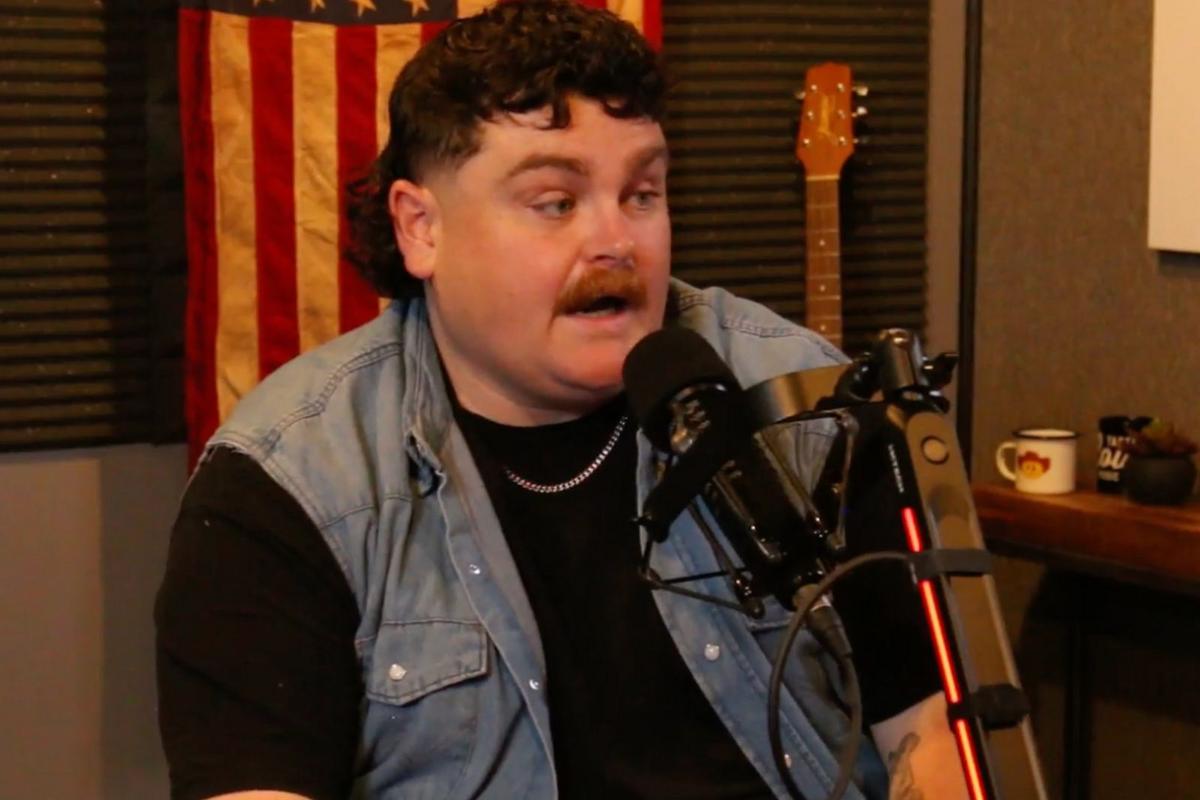

Bryan Andrews had every reason to believe that he was burning a big bridge with the Country Music Association after the CMA Fest performance when he brought Rep. Justin J. Pearson onstage.
The CMA had already told him not to get political when they originally asked him to play. And then, although they gave him a pass for Pearson to come to the show, they warned him not to bring the Tennessee State Representative onstage.
“They might not like it, but dude, they had to know something was coming,” Andrews tells Taste of Country Nights‘ Evan Paul.
Asking Andrews not to get political onstage is kind of like asking a fish to stay out of the pool: Every well-known song he’s released has a strong leftist political perspective. A month earlier, he’d released a focus track called “Yeehaw” that prominently features the hook: “Yeehaw, f–k the law / Land of the free ain’t free for all.” What, if not politics, did the CMA expect Andrews to sing about?
Just weeks before CMA Fest, Pearson gave an impassioned — and viral — speech on the Tennessee house floor as State Representatives voted to effectively eliminate District 9, Memphis’ only majority-Black district. At the time of the festival, Pearson’s name was still buzzy in association with his vocal, fiery opposition to legislation that would suppress Black voters’ voices.
Read More: Who is Bryan Andrews? Meet the Anti-MAGA, Anti-ICE Country Singer
“I did that s–t for a reason,” Andrews says, thinking back to how he defied the CMA’s request to avoid bringing Pearson onstage during his set at the festival. “I brought him up there because he just got gerrymandered out of his seat…so I wanted to make damn sure that Justin J. Pearson got on that stage in f–king Dixie with me.”
How Did the Country Music Association Respond to Bryan Andrews Getting Political Onstage?
According to Andrews, the CMA hasn’t said anything to him about his set. He’s not sure whether or not he’ll be invited back next year.
CMA policy typically reserves appearances from public officials for special moments that are initiated and approved by the organization themselves, so they would generally ask all performers to avoid bringing public figures onstage.
“I don’t know if they’re too p–sed off or anything, and if they are, I don’t hold it against them,” he says. “Because they told me not to do it, and I did it anyways. If they don’t wanna ask me back, that’s totally fine. No hate to the Country Music Association or anything like that.”
Andrews wants to play more mainstream stages like CMA Fest. He named the Grand Ole Opry and the Ryman Auditorium as two more dream venues he’d love to play. But if those opportunities come at the expense of his message, then, from Andrews’ perspective, that defeats the purpose.
Why Is It So Important to Bryan Andrews to Have Mainstream Music?
Andrews says he loves the more Americana-focused styles of some of his fellow leftists, like Margo Price and Tyler Childers. But he grew up listening to lots of rock, and lots of down-the-middle country. He wants to make the kind of music he likes, and he also wants his music to find an audience that doesn’t always agree with him.
“I definitely make it a point to get into mainstream spaces,” he says.
Read More: Here Are the Lyrics to Bryan Andrews’ Song “Yeehaw”
That’s why the pro-workers rights, anti-government message is what ties his new Independence Day mixtape together — not any particular genre. The project is a hodge-podge of different styles, and Andrews says he wasn’t thinking about putting out a batch of songs that were sonically similar. The important thing was including lyrics he wants people to hear.
He also wants to find common ground. As his base has grown, Andrews has learned that some people are simply never going to listen to what he has to say. But there are plenty of listeners who disagree with him, yet remain open to a conversation.
That’s why he hopes to “move away from the accusatory aspect of some of these songs” and make his message more about collective liberation, like he does in “Yeehaw.”
“In my mind, it’s 99 versus one out here. The one percent is f–king killing us all,” he explains. “They’re not gonna write ‘Don’t kill Trump voters’ on the shells of the bullets they use to kill all of us.”
“Like, ‘Hey, at the same point, we gotta be on the same f–king team,'” Andrews adds. He points to group of people like small-town leftists and small-town libertarians, who disagree on some points but can come together on others.
“I think most people in small towns know what it’s like to be taken advantage of by big corporations when they run businesses out of town, like when a Walmart comes to town and your local mom-and-pop grocery store can’t survive anymore,” he offers as an example. “…I think spaces where libertarians would meet me on that is that they’d say, ‘Okay, well, we definitely need regulations on corporations, businesses, things like that. That’s where we can work together.”
“It’s to help the working man,” Andrews underscores. “That’s all it’s about to me.”
30 Outlaw Country Songs That Define The Movement
With its roots in the ’60s and the honky-tonk style forged by Hank Williams, outlaw country music began to snowball in the ’70s as more and more artists bristled against the genre’s commercialism, social conventions and the slick and shiny “Nashville Sound.”
Though some artists like Johnny Paycheck and David Allan Coe had served jail time before their success, the “outlaw” label applied more broadly to those artists who rejected the status quo in Nashville. Many of the definitive songs of the movement speak directly to that rebellion, while others simply embody an artist-driven, independent musical vision that sidestepped Nashville’s country hit formula of the day.
Keep reading for a round-up of 30 songs that define the outlaw country movement.
Gallery Credit: Carena Liptak