
In keeping with their massive size, rock’s very best triple albums cross a lot of genre boundaries. They span generations too, as the following ranked list includes studio projects from the ’70s, ’80s and ’10s.
All of these acts emerged during classic rock’s original album-focused period, long before streaming services returned individual songs to a place of greater cultural cache. The latest studio project was suddenly thought of as a statement, rather than simply aggregated new material. For the most prolific acts, those statements eventually got longer and longer.
It was very much of its time. Studio LPs had become conceptualized as the ’60s drew to a close, with overriding themes, interlocking songs and era-specific approaches. Even the covers became their own works of art. Sometimes, a single disc simply wasn’t enough to contain their musical gumption.
What’s the Best Rock Triple Album?
Still, there’s a big difference between carrying creativity across two discs of music and stretching all the way to three. The idea has to have a different level of depth of quality. The musical approach has to have a new complexity to hold a listener’s attention for so long.
READ MORE: They Hated Their Own Albums
There needs to be a lot of songs. A whole lot of songs. Songs that fit together without becoming rote. Songs that explore new narratives, both lyrically and musically, without losing their sense of place. Songs that continually surprise, but never feel gimmicky or too of-the-moment.
The ‘Big 4’ of rock’s studio triple albums found their way to the top in decidedly individualistic ways. One is heavy and expansive, one is surprisingly quiet and rootsy. One explodes our idea of what punk music can be, while another quickly dismantled one of rock’s biggest misconceptions.
Here’s our ranked look back at four studio triple albums that changed rock history:
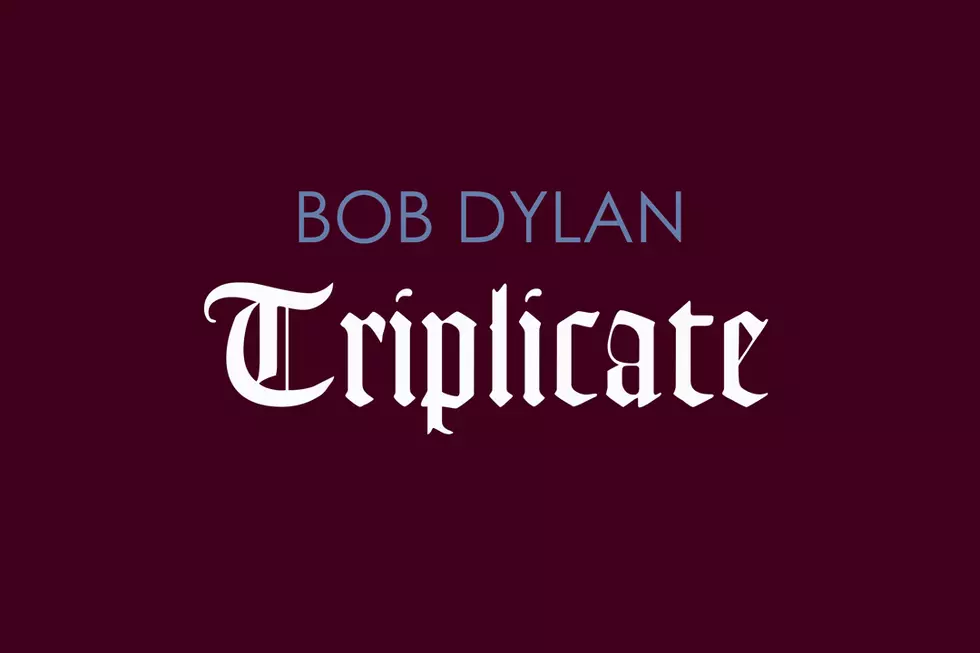
No. 4. ‘Triplicate’ (2017)
From: Bob Dylan
Completing a surprising trilogy, Bob Dylan succeeded once again by being Bob Dylan. He gave fans a triple album of songbook-era songs, but no big band; a Frank Sinatra tribute, with none of his most familiar songs; and another promise of jazz, with Americana instead.
Triplicate, like Shadows in the Night and Fallen Angels before it, was what every great Dylan album has always aspired to (and what some of his worst were sunk by): It’s the opposite of what you thought it would be. This willingness to frustrate our desires is what makes him one of history’s most interesting singer-songwriters, even if you wished he’d rock out a little on Triplicate.
READ MORE: Top 10 Bob Dylan Songs

No. 3. ‘The Book of Souls’ (2015)
From: Iron Maiden
There was as much gumption on the three-disc Book of Souls as in anything Iron Maiden has done, much to thrill die-hards but just as much to challenge their preconceived notions. Iron Maiden pushed themselves when they didn’t have to, composing in an entirely different way and emerging with something that built on their stirring heritage rather than resting on it.
At more than 90 minutes, The Book of Souls was the lengthiest project Iron Maiden had ever attempted, and the LP concluded with the longest single track they’ve ever released. But this project was largely created in the studio, and a sense of visceral engagement runs through everything.
READ MORE: Iron Maiden’s Most Interesting History Lessons

No. 2. ‘Sandinista!’ (1980)
From: The Clash
London Calling had been a double-album statement of purpose. The Clash went one disc – and several genres – further with its gold-selling international Top 25 follow-up. They were coming off globe-trotting tours and recording in places as disparate as Manchester, England; Kingston, Jamaica; and New York City.
It all filtered into the expectation-smashing Sandinista, which set new standards for what punk could be. The Clash simply took ownership of incredibly rangy influences from funk to reggae, rockabilly to R&B, calypso to rap. Mick Jones summed things up, years later: “There’s more marimba on it than any other punk record.”
READ MORE: Top 40 Punk Albums

No. 1. ‘All Things Must Pass’ (1970)
From: George Harrison
Typically relegated to a song or two on each Beatles album, the criminally overlooked George Harrison began his solo career with a treasure trove of ideas. He then surrounded himself with a group of new collaborators who were so talented that another respected band – Derek and the Dominoes – emerged from these sessions.
The result was an overwhelming creative triumph, even if All Things Must Pass loses a little stream at the end when everyone settles into loose jams. Harrison achieved chart-topping seven-times-platinum success while scoring the first-ever solo Beatles No. 1 single with “My Sweet Lord.” Had he never done anything else, his legend would still be secure.
Top 10 Double Albums
Releasing a double album in the ’60s and ’70s was a rite of passage. But which one was best?
Gallery Credit: Michael Gallucci