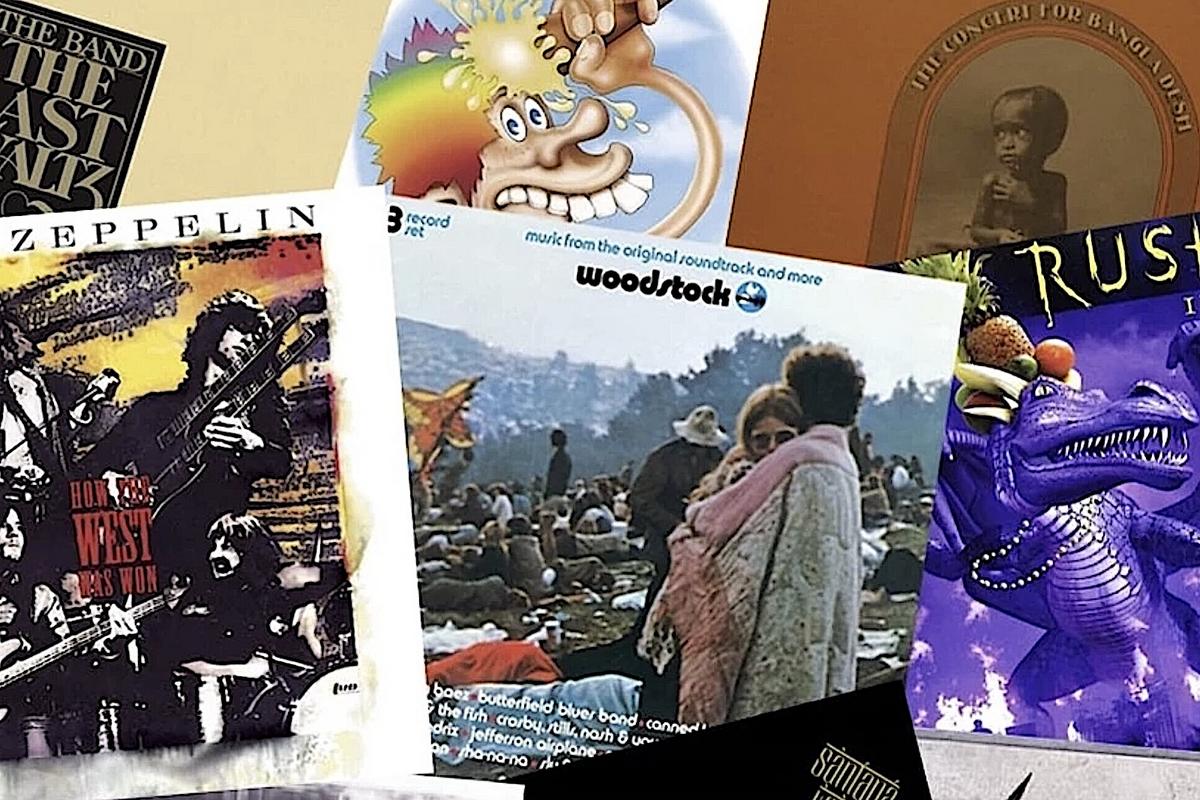

Just based on sheer numbers, live projects are clearly well suited for the three-disc treatment. Maybe it’s because songs tend to stretch in exciting new ways on stage. Maybe it’s the typical length of a show.
The result: Classic rock has produced scores of live triple albums – and some of them helped define the genre. They don’t tend to rise to the top of the charts anymore, much less sell millions (and millions) of copies. Modern acts aren’t defined by them as they might have been before.
It all tends to give live triple albums a remarkable gravitas. To paraphrase the old saying, they don’t make ’em like that anymore. At the same time, there are far fewer studio triple albums to choose from. Making the Big 4 among concert recordings isn’t so easy.
The ‘Big 4’ of Live Triple Albums
Triumphs like George Harrison‘s All Things Must Pass and the Clash‘s Sandinista became justly celebrated, but they were vanishingly rare. Their three-disc live counterparts happened with far more regularity during the classic rock era.
As a result, some of the genre’s biggest names – and some of the genre’s most celebrated triple concert recordings – didn’t make the following very exclusive list.
READ MORE: The Very Best Studio Triple Albums
It doesn’t help that a few groups have more three-disc live entries than others. Members of the Beatles, for instance, released two of the best-known in history. Others, like the Grateful Dead, ended up issuing way more than their share thanks to posthumous releases, expanded reissues and limited-edition sets.
So, which outsized classic-rock concert recordings eventually rose to the top? Here’s a ranked look back at the best-ever live triple albums:
No. 4. ‘Europe ’72’ (1972)
From: Grateful Dead
The Grateful Dead lacked some down-home grit after the sudden 1973 death of Ron “Pigpen” McKernan, a groove-focused keyboardist, volcanic harp player and bone-deep lover of the blues. Europe ’72, his unexpected farewell, underscores what was lost. (For proof, head straight to “Mr. Charlie,” a rollicking collaboration between McKernan and lyricist Robert Hunter.)
McKernan provided an earthy balance to the Grateful Dead’s patented psychedelic flights of fancy, heard here on lengthy explorations of “Sugar Magnolia” (seven minutes), “Truckin'” (13 minutes) and the album-closing “Prelude/Morning Dew” (nearly 19 minutes). The newer material is first-rate, too.
READ MORE: The Top 20 Jam Band Albums

No. 3. ‘Woodstock: Music From the Original Soundtrack and More’ (1970)
From: Various artists
Woodstock was only a partial accounting of the historic day, featured some obvious overdubs and even added two songs (including Crosby Stills Nash and Young‘s “Sea of Madness”) that weren’t performed at the festival. The Grateful Dead and the Band were initially absent. Things were reordered.
Yet, Woodstock still stands as a monument to a time when rock music had perhaps its biggest cultural impact. There’s no denying its importance – both as an artifact and as a musical accomplishment. Sure, the stage announcements are entirely superfluous, but these performances by Santana, Richie Havens, Sly and the Family Stone and Jimi Hendrix are unmatched.
READ MORE: 10 Stars Who Didn’t Play Woodstock – and Why

No. 2. ‘How the West Was Won’ (2003)
From: Led Zeppelin
As they set up for a pair of June 1972 concerts in California, Led Zeppelin was no longer searching for the just-right blend of their own influences and creativity. The career-defining Led Zeppelin IV had just been released, with the somehow deeply underrated Houses of the Holy just over the horizon.
This was also well before any thoughts of adding acid-washed concert-film dream sequences, as they quite unfortunately did in 1976’s Song Remains the Same. The only complaint was how long these performances had gone unheard. How the West Was Won found Led Zeppelin at the height of their considerable on-stage powers. Better late than never.
READ MORE: Ranking All 92 Led Zeppelin Songs
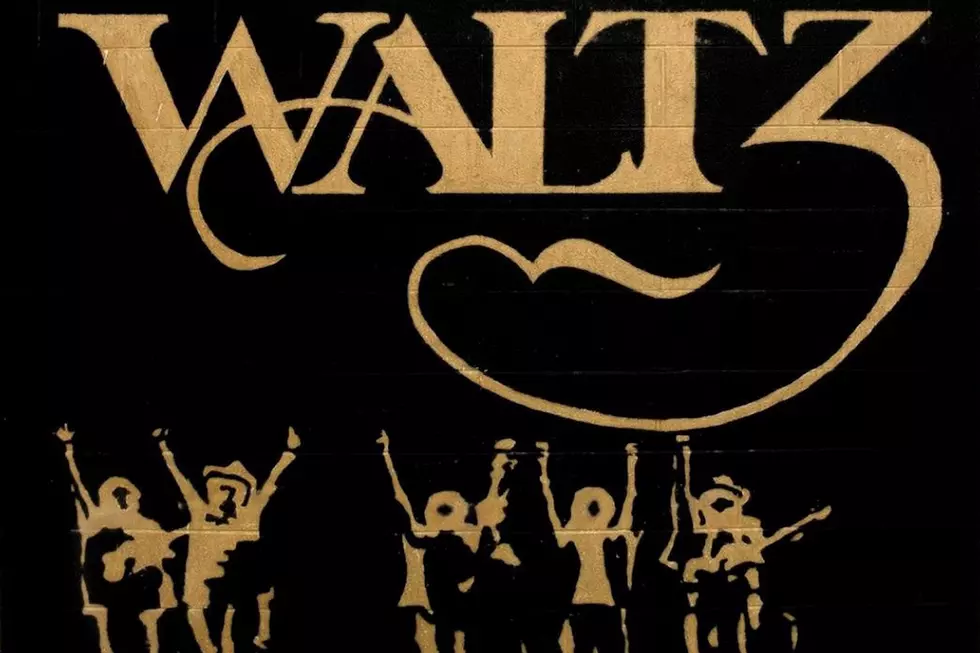
No. 1. ‘The Last Waltz’ (1978)
From: The Band and various artists
Conceived as a gala farewell concert, The Last Waltz saw the Band paired with contemporaries, inspirations and friends from Joni Mitchell to B.B. King, from Eric Clapton to the Staple Singers. The Band went first, running through their best-known songs with Allen Toussaint’s muscular horn charts providing new momentum.
They’d soon be joined by Van Morrison, Dr. John and Neil Young as the power and emotion of the night somehow kept building. Finally, in a show-closing set, Bob Dylan and the Band reconnected. The Last Waltz ended with the same startling, genre-rattling energy that hurtled them both to previously unimagined places in the ’60s.
READ MORE: Top 10 Songs by the Band
Remembering the Grateful Dead’s Bob Weir on the ‘UCR Podcast’
Top 100 Live Albums
These are more than just concert souvenirs or stage documents from that awesome show you saw last summer.
Gallery Credit: UCR Staff
Denis Leary Doesn’t Understand Why Led Zeppelin Won’t Reunite