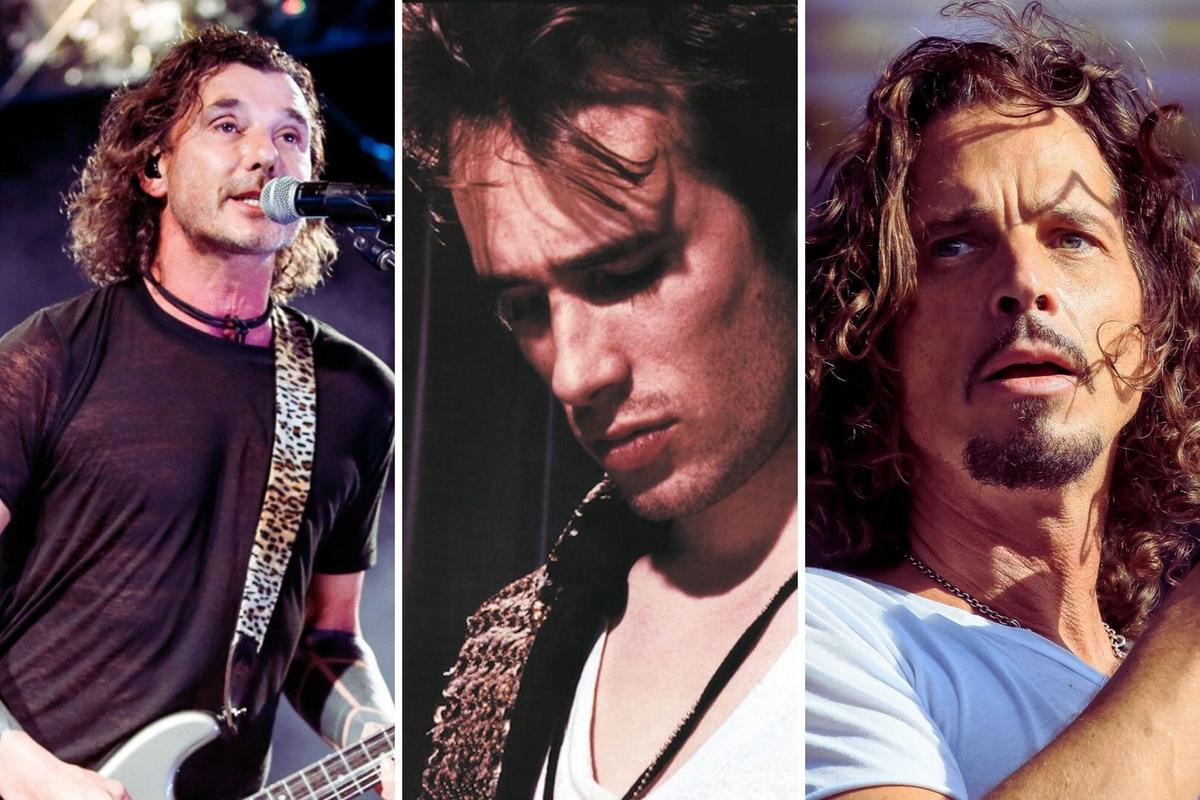

Here are 11 of the best alternative rock ballads of the 1990s.
The 1990s were a pivotal decade for the alternative rock genre. While the genre is most often remembered for grunge-influenced angst, it also produced some of the most emotionally resonant ballads in modern rock history. These songs proved that alt-rock could convey vulnerability, heartbreak and introspection just as effectively as it could anything else.
READ MORE: 10 Times Thrash Bands Released a Ballad (And It Ruled!)
The ballads from this era often more times than not combined stripped-down instrumentation with expressive and deeply personal lyrics, creating moments of quiet and reprieve that stood out against the genre’s louder, more bombastic tracks.
Not all of these songs were immediate hits when they were released, with some having to marinate in the ears of audiences before their genius was recognized. As they grew in cultural significance, they influenced both peers and the next generation of alternative artists to get real, raw and slow it all down.
-
Bush, “Glycerine”
When Bush released “Glycerine” as part of their 1994 debut Sixteen Stone, the song quickly distinguished itself from the album’s louder, more aggressive material (apart from the first three minutes of “Alien”); and like many other songs on the album, became one of Bush’s defining songs.
Composed by frontman and guitarist Gavin Rossdale, “Glycerine” examines the fragility and danger that can exist inside the inner workings of an intimate relationship. The title of the song is derived from the term nitroglycerine; best known as a crucial ingredient in explosives and dynamite (while simultaneously being prescribed as heart medication when it’s diluted — weird, right)? When you combine the title of the song with lyrics such as, “Our old friend fear, and you, and me,” the song’s meaning becomes far clearer.
In an interview with Howard Stern, Rossdale admitted that the song was about his ex-girlfriend Suze DeMarchi, singer for the Australian hard rock band Baby Animals.
Produced by Clive Langer and Alan Winstanley, the arrangement of the song is intentionally sparse although not at first, when Rossdale wrote the song, he had every intention of having the rest of the band join in. But, like many other alt-rock ballads of the time and probably for the better, “Glycerine” is driven by a lone distorted guitar that varies in intensity accompanied by swelling orchestral instrumentation, making it a stand out in Bush’s catalog. Rossdale himself even described the song as being unlike anything that he had ever written at the time. He famously asked his bandmates if he had accidentally stolen someone’s song.
“Glycerine” as well as the rest of Sixteen Stone remains as relevant as ever over 30 years later.
-
Radiohead, “Fake Plastic Trees”
Believe it or not, Radiohead are so much more than just their debut single “Creep,” although after the single garnered so much success, their band’s label – EMI – pushed for the band to write another song that hit the charts just as hard. The band got to work on their second studio record The Bends (1995); while recording and the existential ballad “Fake Plastic Trees” was born.
The song, with Thom Yorke’s vocal over a simple acoustic guitar, expresses the philosophical idea of materialism and overall inauthenticity in the modern world; how our overconsumption and need for more, whether it’s items or “better” physical attributes, is contributing to a cycle of never being truly satisfied.
Yorke was inspired to write “Fake Plastic Trees” after seeing Jeff Buckley (also featured on this list) live: “It reminded me of this vulnerable part of me that I was choosing to hide,” he told Jason Thomas Gordon in his book The Singers Talk. It was shared that Yorke cried when he heard “Fake Plastic Trees” played back to him for the first time, stating “When you record, you’re going through one set of feelings, but the one thing you’re not really aware of is you… It’s like seeing yourself in the mirror for the first time, catching yourself unaware.”
Unfortunately, to EMI’s dismay, “Fake Plastic Trees” did not achieve the same immediate commercial success as 1993’s “Creep” did; but the song did get featured on the soundtrack for the unexpected blockbuster hit that was Clueless. The song’s inclusion on the soundtrack continued to expose Radiohead to American audiences.
-
The Smashing Pumpkins, “Disarm”
“Disarm” was released in 1993 as a single from The Smashing Pumpkins’ second full-length record, Siamese Dream and quickly emerged as one of the band’s most widely recognized songs.
Written by Billy Corgan, the track draws heavily from his childhood experiences, particularly his troubled relationship with his parents. While Siamese Dream often balances vulnerability with distortion and aggression, “Disarm” stands apart for its directness. The lyrics address emotional neglect, resentment and the lasting impact of early trauma. Despite the lyrics’ candor, they rely on implication and repetition to convey their weight.
Musically, “Disarm” represents a significant departure from the band’s typical, heavier sound. Being a ballad, the song is centered on acoustic guitar and layered string instruments, with subtle percussion that builds up tension without it ever needing to explode.
Corgan went into depth on the personal feelings and experiences that inspired the song and how despite its aggressive subject matter became a ballad, in 1993 interview with Rage: “I didn’t have the guts to kill my parents, so I thought I’d get back at them through song. And rather than have an angry, angry, angry violent song, I thought I’d write something beautiful and make them realize what tender feelings I have in my heart… and make them feel really bad for treating me like shit.”
The track’s accompanying music video fits along the song’s dark themes, featuring stark imagery and reinforced the introspective tone of “Disarm.” The song performed well on alternative radio and even entered heavy rotation on MTV helping to solidify Siamese Dream as a staple within The Smashing Pumpkins’ discography.
-
Pearl Jam, “Black”
Leave it to alt-rock and grunge to turn heartbreak into one of the most beautifully poetic and devastating songs to date. The emotional baggage of “Black” came from Pearl Jam frontman Eddie Vedder, who poured soul-bearing lyrics over a demo Stone Gossard had originally titled “E Ballad.”
The song captures the complicated, overwhelming emotions that accompany a first love including its intensity, its innocence and its inevitable ache. What makes these lyrics especially painful is Vedder’s ability to articulate the quiet devastation of loving someone you cannot keep. Rather than anger or bitterness, he expresses something far more heartbreaking: acceptance.
Vedder has often described “Black” as being deeply personal. In fact, the band famously blocked Epic Records from releasing it as a single, even under heavy pressure from the label. In a 1993 interview with Cameron Crowe for Rolling Stone, Vedder explained, “Some songs just aren’t meant to be played between Hit Number Two and Hit Number Three. That’s not why we wrote songs. We didn’t write to make hits.”
Despite never being released as an official single, “Black” took on a life of its own, becoming one of Pearl Jam’s most cherished and emotionally enduring songs.
-
Mazzy Star, “Fade Into You”
Mazzy Star brought to life one of alt-rock’s most recognizable tracks when they released 1993’s “Fade Into You.” The song, written by vocalist Hope Sandoval and guitarist David Roback, sounds like a blissful love song to anyone who hasn’t truly absorbed the song’s lyrics or wondered beyond the surface level details of the song.
Released on 1993’s So Tonight That I Might See, “Fade Into You” seems to center on unrequited love and longing that is never returned. It lives in the space of emotional imbalance; accepting that you love someone more than they will love you, but instead accepting it with tenderness rather than anger.
The lyrics are intentionally vague, avoiding one clear narrative in favor of conveying mood and feeling. Roback told the LA Times back in 1993 that, “You have to leave something to people’s imagination, so they feel they can participate. Music is music. We don’t want to be part of that over-determination. We feel you should be able to shut your eyes and listen to it.”
Musically, it’s quite simply ethereal, with Sandoval’s vocals soaked in reverb and Roback’s slide guitar that gave the song its texture. What really makes this song such an impressive ballad is its lack of needing any power to prove its point; there’s no climax or resolution, but simply stillness.
Though it became Mazzy Star’s most recognizable tracks and one of the most recognizable songs of the 1990s, the band themselves rejected stepping into the spotlight, rarely touring or engaging with traditional promotion. The band’s distance from the mainstream only contributed to the mystique of the song, allowing listeners to take it’s true meaning into their own hands.
-
Soundgarden, “Black Hole Sun”
Although Seattle-based Soundgarden were known for heavier tracks a la “Jesus Christ Pose” and “Outshined,” Soundgarden’s musical prowess extended far beyond redefining the heavy in heavy metal, but also helping to redefine what a vulnerable, soul-bearing ballad sounded like in the 1990s.
Released in 1994 on one of the band’s most commercially successful records, Superunknown, “Black Hole Sun” became an anthem for not only grunge, but alternative music as a whole. The idea for the song came to Soundgarden frontman Chris Cornell on his drive home from the recording studio in Seattle, Washington after hearing a news anchor on the radio utter the phrase. That one singular moment launched Cornell into a wave of inspiration that led to him writing what would become Soundgarden’s biggest hit in the span of fifteen minutes. Despite not being a traditional ballad, the moody, hypnotic and atmospheric instrumentation of the track is enough to send you into a trance.
The true lyrical theme behind the track is pretty ambiguous; not really having any distinct rhyme or reason. Cornell himself described the song as being one of the only tracks he had written with no real understanding of what he was writing. “It creates a feeling, but I can’t tell you specifically what it is about. And if I can’t, how is somebody else going to connect to it? Maybe it’s just open enough that people can make it a soundtrack to their moment,” said Cornell in a 2014 interview with Uncut.
Audiences worldwide undoubtedly made it a soundtrack to their moment; “Black Hole Sun” became Soundgarden’s most accomplished release, even earning them a Grammy for Best Hard Rock Performance in 1995.
-
Nine Inch Nails, “Hurt”
There are few that can master lyrics as intensely and deeply personal as Nine Inch Nails’ mastermind, Trent Reznor. The Downward Spiral introduced us to the brutally gut-wrenching ballad “Hurt,” – that, you guessed it – hurt us all when we listened to it.
The song’s lyrics take a dive into the deep end of something far more introspective than just depression and addiction, but the emotional numbness and self-hatred that comes along with it. Lyrics such as, “I wear this crown of shit / Upon my liar’s chair / Full of broken thoughts / I cannot repair” are nothing short of unmerciful, paired with the song’s unnerving guitar and piano lines.
Reznor told USA Today, “I’m not proud to say I hate myself and don’t like who I am, but maybe there is real human communication that ends up positive even though everything being said is negative.”
Somehow “Hurt” got even sadder when country music legend (and rock ‘n’ roll pioneer) Johnny Cash covered it in 2002; less than a year before his death in September of 2003. Reznor described his first experience listening to the cover as feeling “invasive,” hearing someone else sing the most personal thoughts and feelings that he had ever expressed onto tape.
Despite his original feelings on the cover, it all changed for Reznor when he saw Cash’s accompanying music video that showcased Cash at seventy-years-old but also at various moments throughout the course of his life. “It really, really made sense and I thought what a powerful piece of art. I never got to meet Johnny but I’m happy I contributed the way I did. It felt like a warm hug. I have goosebumps right now thinking about it,” he told the UK-based tabloid The Sun in 2008.
Cash’s music video for his cover of “Hurt” has 323 million views on YouTube and counting.
-
Goo Goo Dolls, “Iris”
Written originally for the film City of Angels, “Iris” by the Goo Goo Dolls is one of the most widely recognized alt-rock songs and power ballads of the late ‘90s.
Frontman Johnny Rzeznik wrote the song after being asked to contribute to the City of Angels soundtrack by Rob Cavallo, the son of the film’s co-producer Bob Cavallo. Rzeznik had seen the film and, although not being very impressed by it, agreed to contribute to the soundtrack anyway.
“One of the reasons I wanted to do a song was because the soundtrack had U2 and Peter Gabriel on it and I wanted to be on the same piece of plastic as them. It made me feel like I was hob-nobbing with musical royalty. I thought that someday I could show it to my kids – tell them their old man was once on a record with Bono and Peter Gabriel,” Rzeznik told Classic Rock.
The song features a layered acoustic track that throughout the song’s almost five minute long runtime remains the arrangement’s steady foundation. As it progresses, the acoustic guitar is paired with soaring orchestral compositions, even featuring an atmospheric guitar solo that when all are combined results in a bombastic power ballad.
Rzeznik dove into the story behind the unfeigned lyrical content of the song in a 2013 interview: “While I wrote it, I was thinking about the situation of the Nicholas Cage character in the movie. This guy is completely willing to give up his own immortality, just to be able to feel something very human. And I think, ‘Wow! What an amazing thing it must be like to love someone so much that you give up everything to be with them.’”
Writing “Iris” for the film ended up being one of the best possible moves for Rzeznik and the Goo Goo Dolls, career – making the band as close to immortal as they could get. The song was added to the band’s sixth studio record Dizzy Up The Girl and broke a multitude of Billboard records, including staying at number one for a total of fourteen weeks on Billboard’s Hot 100 Airplay chart.
-
Mother Love Bone, “Crown of Thorns”
Mother Love Bone will forever be one of the most underrated alt-rock bands of the 1990s; albeit they reached the ‘90s just barely. Formed in 1987; the band was the brainchild of future Pearl Jam members Stone Gossard and Jeff Ament after departing the influential grunge act Green River. They recruited vocalist Andrew Wood and after bringing a few different drummers into the fold, eventually landed Greg Gilmore (ex-Ten Minute Warning).
“Chloe Dancer/Crown of Thorns,” the eight-and-a-half minute epic, is the last song on the band’s first EP, Shine (1989) and was written exclusively by Andrew Wood. The song is one of the band’s most haunting, memorable and beloved compositions. It details Wood’s relationship with his fiance, Xana La Fuente and his mounting struggle with addiction; a tragic foreshadowing of what was to come for Wood and Mother Love Bone.
In a 1990 interview with Michael Browning of RIP Magazine, Wood’s last interview ever, he said: “‘Apple’ and ‘Crown of Thorns’ are probably mostly about me. It’s kind of a synopsis of the whole past year. I’m lucky to be sitting here.” A day later and a day before the release of Apple – the band’s one and only full-length record – Wood was found dead in his home from a drug overdose. He had attended rehab and achieved sobriety for a little over three months prior.
The melancholic, eerie piano intro to the “Chloe Dancer” section of the song is poignant and soul-stirring; it’s impossible to listen to without feeling something – whatever that something means to you. It transitions seamlessly into “Crown of Thorns” which explodes into an emotional, grandiose track that serves as an epitaph for a talent gone far too soon.
The song to this day is still performed by Pearl Jam live; both Gossard and Ament paying tribute to Wood and the band that set grunge on a new path.
-
Alice In Chains, “Nutshell”
“Nutshell” was released on the 1994 EP Jar of Flies and is often cited as not only one of the saddest ballads of the early 1990s, but also one of the best.
The lyrics, written solely by Alice In Chains frontman Layne Staley, detail his growing struggles with depression and the isolating pressure of fame that he felt during the band’s rise to what some would describe as rock stardom. It’s also impossible to ignore how this song echoes Staley’s long time fight with addiction; a battle that ultimately claimed his life less than a decade later in 2002.
The song captures the beauty of less is more, with extremely understated instrumentation on the track ranging from Jerry Cantrell’s guitar, to acoustic bass from Mike Inez and very minimal drum brushing from Sean Kinney. “Nutshell” is about as stripped down as Alice In Chains got at the time and allowed listeners to hone in not only to the melancholic energy surrounding the song, but Staley’s excruciatingly pensive lyrics.
Although fans of Alice In Chains already knew the genius of the song, it developed a life of its own once the band opened up with “Nutshell” during their appearance on MTV’s Unplugged (“friends don’t let friends get haircuts” – if you know, you know). The studio version of the track already holds so much emotional strain, but hearing them perform this one in a live setting added an extra layer that somehow made it all the more painful.
The vulnerability of “Nutshell” is what has allowed this song to transcend generations. Over 30 years later, Staley’s admission of fragility is still as hard hitting as it was upon its release.
-
Jeff Buckley, “Lover, You Should’ve Come Over”
Appearing on Jeff Buckley’s debut record Grace – his one and only release before his tragic passing in 1997, “Lover, You Should’ve Come Over” stands as one of the most expansive and emotionally complex ballads of the decade, solidifying Buckley as one of alternative’s most poetic and emotionally raw acts.
Buckley wrote the song during a period of personal and artistic transition, drawing on themes of longing and emotional contradiction. The lyrics move fluidly between devotion, frustration and everything in between. Religious imagery and romance intertwine with one another during the song’s entire six minutes and forty-four seconds.
The track unfolds in distinct, separate movements rather than following a traditional song structure of ‘verse, prechorus, chorus, bridge’ etc. The song opens with restrained guitar and organ that both gradually expand as the arrangement allows it. Buckley’s vocal performance is as integral to the song as any of the instruments; his operatic falsetto is central to the song’s impact and shifts from conversational phrasing to soaring peaks.
While Grace was not a success overnight, the love and appreciation for Buckley – and especially “Lover, You Should’ve Come Over” – has grown in stature over time. Its combination of structural ambition, lyrical depth and impressive musicianship has solidified the song’s reputation and the effect it’s had on subsequent generations.